What the scientific bodies emphasise
The ESPEN and EASO consensus on sarcopenic obesity separates assessment into a sequence: initial suspicion or screening, evaluation of muscle function, and body composition where indicated. [1] For a patient, the key message is that weight or BMI alone cannot show whether muscle is being preserved. A person can carry excess body fat while also having muscle mass or strength that deserves attention.
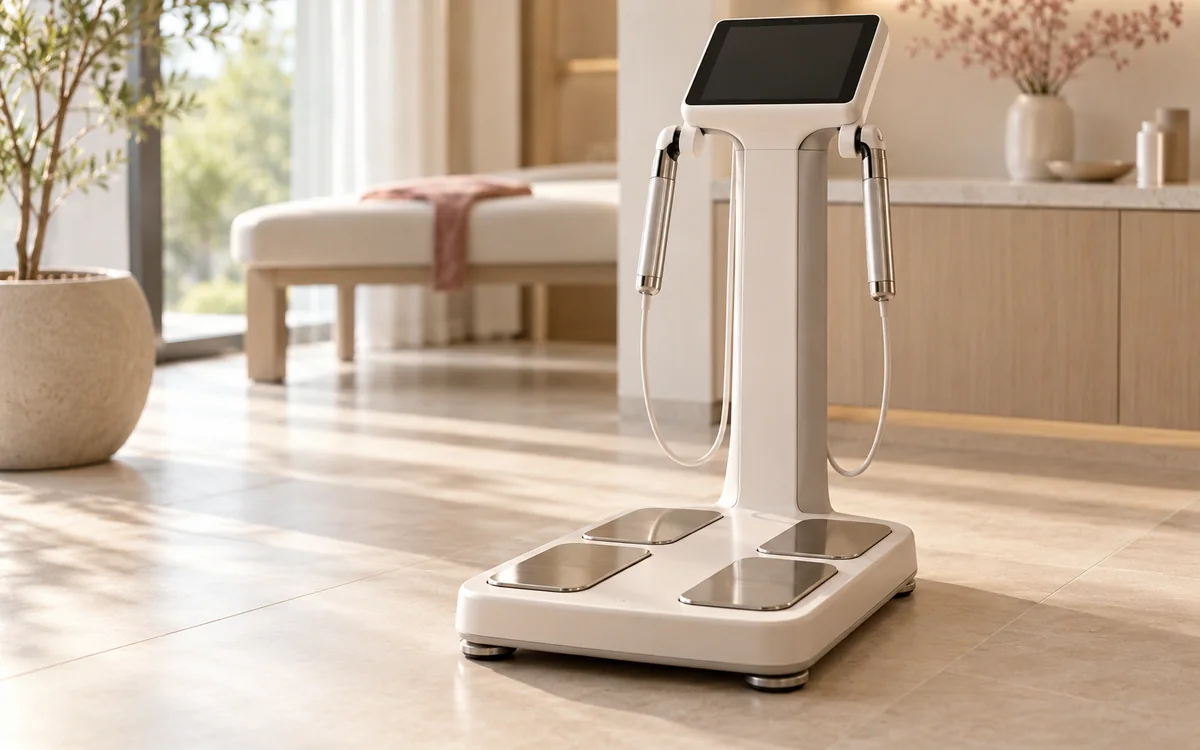
The same sequence appears in the broader European consensus on muscle-wasting conditions (EWGSOP2): it starts with a simple initial screen, such as a short questionnaire or noticing difficulty with movement, followed by a grip-strength measurement as a quick, practical indicator, then diagnosis is confirmed with body composition, and finally walking speed is measured to determine severity if weakness is actually present. [2] This does not mean everybody needs a long list of devices and tests. Assessment begins with age, illness, movement, weight change and difficulty with ordinary activities, then the clinician selects suitable measures. Bioelectrical-impedance analysis such as InBody can contribute an estimate of body composition, but it is interpreted with function and context rather than used as a diagnosis by itself.
Muscle assessment matters because weight and BMI do not distinguish fat from muscle. Weight may stay stable while muscle falls, or weight may fall through useful fat loss while an unwanted share comes from fat-free mass. Assessment therefore begins with function and strength, followed by an appropriate mass measure when the result will change the plan [1, 2, 6].
Reference cut-offs are not personal targets
The European consensus sets approximate reference values so the medical team can decide whether a further step is needed, such as grip strength below roughly 27 kilograms for men or 16 kilograms for women, and a walking speed at or below 0.8 metres per second as a sign of severe weakness warranting broader assessment. The initial screen itself is often a short five-item questionnaire covering strength, walking, rising from a chair, climbing stairs and falls, not a complex device; its purpose is identifying who deserves deeper testing, not diagnosing everyone the same way. [2] These are screening reference points, not personal targets to compare yourself against week to week, and their interpretation changes with age, sex and health status.
What matters is that these numbers help the team decide whether to pursue deeper assessment, not that they serve as a final diagnosis from a single comparison. Someone below the reference number may still be entirely normal depending on the rest of the picture, and someone above it may still need follow-up if other risk factors are present.
In settings without access to InBody or imaging, a simple measurement such as calf circumference (below roughly 31 cm) can serve as an alternative initial indicator, particularly in older adults, even though it is less precise than specialised methods. The idea is that having a simple tool is better than no screening at all, not that every setting needs the same most complex technology.
How this changes a weight-loss plan
A plan should no longer become a race towards the smallest number. If strength falls, food is inadequate or body composition moves in an unwanted direction, the team reviews the pace of loss, protein and energy adequacy, meal distribution, resistance work and sleep. Research suggests protein intake above the usual reference amount preserves muscle better during an energy deficit, particularly alongside resistance activity. [3]
With medicines that suppress appetite, asking about the ability to eat, drink and move matters as much as asking about the scale. Recent scientific reviews on GLP-1 medicines show that the proportion of muscle lost during rapid weight loss varies considerably between individuals, and that functional screening is a core part of safe follow-up with these medicines, not an optional extra. [4] New weakness or poorer function warrants review even when weight is falling.
Repeat measurement helps when conditions are broadly similar and the result is treated as a trend rather than a verdict on one day. Strength and practical abilities, such as climbing stairs or rising from a chair, sit alongside the report. Goals remain individual: the needs of a healthy younger adult differ from those of an older person or someone living with chronic illness or recovering from surgery.
No single device gives the whole truth. Bioelectrical impedance is influenced by hydration, meals and exercise; DXA measures body components differently; and calf circumference can be a proxy in selected settings. The useful approach is to repeat the same method under similar conditions and interpret the trend alongside strength and performance, not chase a tiny difference between visits [2, 7].
What does the assessment include?
A practical assessment has four layers. First comes a short question about difficulty climbing stairs, rising from a chair, walking or carrying everyday objects. Second is a strength measure, such as handgrip with a suitable dynamometer or a chair-rise test. Third is an estimate of muscle quantity using body-composition equipment or appropriate imaging. Finally, physical performance such as gait speed may help grade severity [2, 6, 7].
A number should never be read apart from the person. Age, height, sex, health status and measurement method all affect interpretation, and international references note that cut-offs vary between populations and devices. “Low muscle” therefore needs a documented method and clinical context, not comparison with an app image or a commercial device threshold [2, 8].
Turning results into a follow-up plan
If assessment shows weak strength or loss of mass, the plan looks for the cause before offering generic advice. Low food or protein intake, rapid weight loss, inactivity, chronic pain, acute or chronic illness and some medicines may all contribute. The clinician or dietitian connects the measure with medical history, diet and indicated tests, then sets realistic nutrition, activity and follow-up goals [5, 9].
Progressive resistance exercise has a central role for many people, but its type and intensity must match ability, disease and injury. Protein matters, yet adding powder without accounting for food, kidney function or total energy is not a plan. Repeating the same assessment after a suitable interval shows whether strength and function are improving, which matters more than forcing a device number to change quickly [7, 9, 10].
Early intervention genuinely makes a difference
Muscle weakness is not always linked to age alone. It can be caused by chronic illness, physical inactivity, or inadequate energy or protein intake, known as 'secondary' muscle loss, as opposed to the 'primary' type linked to ageing with no other clear cause. [2] This distinction matters practically: when the cause is secondary and specific, such as protein shortfall during a harsh diet or temporary inactivity after illness, early intervention with nutrition and movement can often halt the decline or even partially reverse it.
This runs counter to a common assumption that muscle weakness is simply something to accept as inevitable. Early detection, even through a simple screen such as a questionnaire or a grip-strength measurement, opens a real window for intervention before the situation progresses to something harder to treat.
The practical clinic step
Before follow-up, note any change in strength or activity, how many meals you could manage, and symptoms that reduced intake. Bring a medicine list and recent blood results. Dr Shimaa Fouad reviews this information with InBody, measurements and dietary history, then adjusts the weekly plan rather than continuing a deficit that does not suit your body's response.
UK guidance places weight management within an integrated treatment pathway that considers overall health rather than the weight number alone, and this includes attention to muscle as part of the picture, not a detail left to chance. [5] Do not wait for a routine appointment if there is marked dizziness, weakness or loss of an ability you previously had. Medical assessment determines whether inadequate nutrition, medicine, illness or referral is involved. The practical meaning of this update is simple: successful weight care includes preserving a capable body, not merely reaching a lower number.
If you need to connect this information with your health history and current plan, you can book an assessment and review the decision with the clinician or dietitian.