When Can Weight Loss Start? Recovery Comes First
After birth, the mother's body is not entering an ordinary dieting phase. Tissues are healing, blood volume and fluids are shifting, sleep is fragmented, feeding skills are developing, and there may be a caesarean wound, perineal injury, anaemia or another complication requiring follow-up. The World Health Organization therefore describes the first weeks as an ongoing period of care for mother and baby, covering physical and emotional recovery, nutrition, breastfeeding support and recognition of danger signs—not one appointment followed by an assumption that recovery is complete [1, 2].
There is no single postpartum week when dieting becomes suitable for every mother. A safer starting point is regular food and fluid intake, feeding that is becoming established, enough function for daily needs without worsening pain or dizziness, and reassurance from the maternity team about bleeding, wound healing, blood pressure and any pregnancy or birth complication [1, 2]. Gentle movement may return sooner after an uncomplicated birth, while a caesarean is abdominal surgery and generally needs longer recovery. This article cannot give obstetric clearance; readiness depends on the birth, complications and current symptoms [1, 5].
Early priorities are adequate meals, drinking in response to thirst, appropriate management of pain or constipation, and practical family help. Early scale changes are strongly affected by pregnancy-related fluid loss and uterine change, so they are not pure fat change. Once the first phase is stable, habits can change gradually and trends can be reviewed over weeks rather than chasing a daily number [1, 8, 9].
Seek urgent care for heavy bleeding, chest pain or breathing difficulty, fainting, a severe headache with visual changes, fever, one-sided leg pain and swelling, a worsening caesarean wound, or thoughts of harming yourself or the baby. These signs need medical assessment, not a diet adjustment [1, 2].
Breastfeeding, Hunger and Weight: There Is No Single Path
Producing milk uses energy, but it does not guarantee that every mother will lose weight quickly or return to her pre-pregnancy weight on the same timetable. Needs vary with maternal age, activity, weight, milk production, exclusive or mixed feeding, and the infant's stage [3]. Strong appetite, fragmented sleep, delayed meals, limited support, medicines and fluid retention can all influence the trajectory.
Systematic reviews comparing breastfeeding with postpartum weight change have found inconsistent results, and it is difficult to separate breastfeeding from gestational weight gain, eating patterns, activity, health and social factors. Breastfeeding has important benefits, but it should not become a scale-based success test, and a mother should not be blamed when weight remains stable [7]. Nutrition interventions may help some mothers, but studies differ and evidence about the best pattern and its full effects on the mother-infant pair remains limited [8, 9].
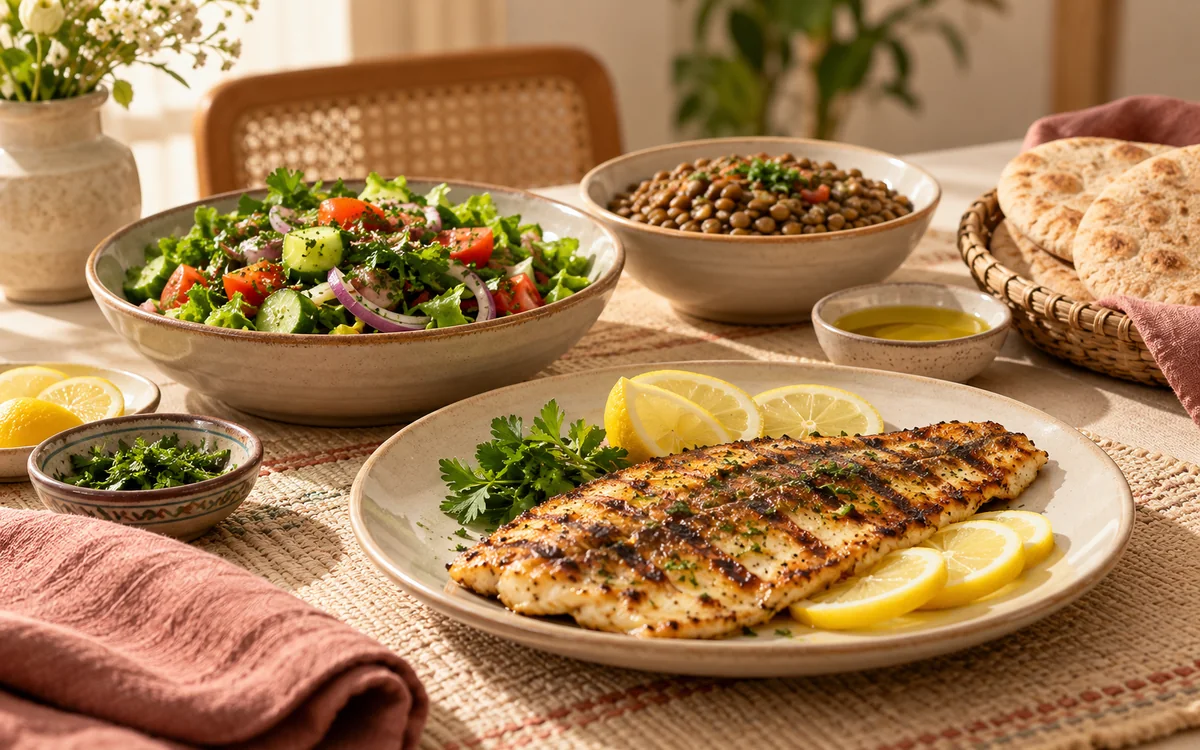
Hunger during breastfeeding is understandable, especially with night feeds. The answer is not to resist it until the end of the day. Build meals from protein, a fibre-rich carbohydrate, vegetables or fruit, and an appropriate fat source. Familiar combinations include eggs with bread and cucumber; ful with salad and yoghurt; lentils and vegetables; chicken or fish with rice and salad; or yoghurt with oats and fruit. These are examples, not a compulsory menu or a promise to increase milk [3, 9].
Keep an easy snack near the feeding space: fruit with yoghurt, an egg or cheese sandwich, hummus with vegetables, or nuts when suitable. I am breastfeeding, hungry all the time and want to lose weight explains hunger in depth without reducing it to willpower [3].
A Gradual Food Plan Without a Fixed Calorie Target
The US Centers for Disease Control and Prevention explains that energy and several nutrient needs rise during lactation and vary by person and feeding pattern [3]. This is why there is no fixed calorie target or universal menu here. A practical beginning is to regularize meals before reducing them: a protein-containing breakfast or first meal, a balanced main meal, and a prepared snack before hunger becomes intense. Drink in response to thirst and keep water accessible, but do not treat forced, excessive drinking as a remedy for low supply.
Once recovery and feeding are stable, choose one or two changes: reduce repeated sugar-sweetened drinks, add protein to breakfast, eat from a plate rather than a packet, or add vegetables to lunch. Review energy, hunger and the weight trend over weeks. If progress requires continuing deprivation, the plan needs review rather than more severity [8, 9].
Dietary variety helps cover protein, iron, iodine, choline, vitamins and other nutrients. A supplement does not replace meals, and every breastfeeding mother does not need the same product. Diabetes, thyroid or kidney disease, anaemia, a fully vegan diet, allergy, bariatric surgery or an eating disorder all call for an individualized plan with the doctor and clinical dietitian [3].
Rapid gain with obvious swelling, breathlessness or headache—or unintended loss with palpitations, marked thirst and frequent urination—needs medical assessment. Breastfeeding is not an automatic explanation for every change, and tests should follow the history and examination [1, 3].
Avoid Crash Diets, Prolonged Fasting and Keto
Crash dieting, deliberately missing meals for long periods, juice or tea detoxes, and unverified slimming products are poor choices during a phase requiring recovery and regular nourishment. Not every modest intake reduction will immediately stop milk production, but severe restriction makes maternal needs harder to meet and can worsen fatigue, dizziness and constipation. Recent reviews state that evidence about energy restriction during lactation and its full effects on mother, infant and milk composition remains limited [3, 9].
A ketogenic or severely carbohydrate-restricted diet is not a suitable unsupervised experiment. A 2024 systematic review found that the evidence consisted mainly of case reports and that marked restriction may contribute to a rare, serious condition called lactation ketoacidosis, especially alongside low intake, illness, vomiting or heavy exertion [10]. This differs from reducing sugary drinks and sweets.
Religious or intermittent fasting needs individual discussion, especially with a young or preterm infant, exclusive breastfeeding, hot weather, previous dizziness, diabetes or anaemia. This article cannot give a religious ruling. Severe dizziness, vomiting, abdominal pain, rapid breathing, confusion or inability to drink warrants ending the fast and obtaining prompt assessment [1, 10].
Do not self-start weight-loss injections or tablets. Weight-loss medicines during pregnancy or breastfeeding explains why decisions vary by ingredient, infant age and feeding pattern. Milk-supply herbs and fat burners should not replace a feeding and nutrition assessment either [3].
Monitor Milk Supply Through Feeding and Growth
No meal or drink can guarantee milk production, and one pumping session does not fully measure what an infant receives. The World Health Organization recommends practical support that helps mothers establish breastfeeding, including review of positioning, attachment and response to feeding cues [2]. If concern begins after changing food intake, the answer is not random sweets or herbs; it is a review of feeding and the health of mother and baby.
Useful signs include effective attachment, audible swallowing, regular feeds, breasts feeling softer afterwards, and the baby being appropriately alert. Age-appropriate nappy output and the growth trend matter more than breast appearance or impression alone. The NHS highlights swallowing, weight gain, nappies and observation of a complete feed by a trained professional as practical checks, and advises seeking help early when supply is a concern [6].
Arrange prompt review if the baby is unusually sleepy, difficult to wake, rarely heard swallowing, repeatedly loses attachment, produces fewer nappies, or is not following the expected growth trajectory. Maternal health also needs review for severe breast pain, fever, dehydration, unintended loss, vomiting or diarrhoea, or disabling fatigue. Sometimes attachment or breast-emptying frequency is involved; sometimes illness or medicine contributes. One food cannot diagnose the cause [2, 6].
If a dietary change coincides with concern about milk, do not intensify restriction. Record two days of meals and fluids, feeds, any pumping or formula, nappies, and maternal and infant symptoms. Take it to a lactation professional, paediatric clinician and dietitian as needed. Infant growth monitoring is clinical work, and a maternal eating plan cannot replace a feeding assessment [2, 6, 9].
Movement After Vaginal or Caesarean Birth and Your Next Step
Movement is part of restoring health, not a punishment for eating. The US Centers for Disease Control and Prevention considers moderate activity appropriate for most healthy people during the first postpartum year, but population guidance must still be adjusted for the birth and complications [4]. After an uncomplicated birth, the NHS says gentle movement can begin when the mother feels able, while running and high-impact work wait for recovery and review. After a caesarean or complicated delivery, recovery takes longer and the maternity team should advise before strenuous activity [5].
Start with a short duration and comfortable intensity, then increase time, pace or resistance one at a time. Stop and seek review if bleeding increases, sharp pain appears, a wound becomes more painful or drains, dizziness or pelvic heaviness develops, or an abdominal bulge appears. Hernia after pregnancy or caesarean birth explains the preliminary difference between diastasis and hernia; this page cannot diagnose a bulge from a description or photograph [1, 5]. Mesotherapy after pregnancy is separate: injections do not repair an abdominal wall, diastasis or hernia, and elective cosmetic questions wait until recovery and breastfeeding are complete [1].
Review the plan every two or three weeks. If energy is adequate, hunger is manageable, feeding and growth are reassuring, and recovery is progressing, continue or make one small adjustment. If marked fatigue, supply concern, pain or bleeding appears, step back and seek assessment. Success is a pattern the mother can sustain, not a rapid number [6, 8, 9].
When recovery is stable and the goal is food organization and gradual loss, you can book a consultation with the medical team at La Rose in Maadi or Fifth Settlement, or ask about online nutrition follow-up when suitable. Bring the birth date and type, complications, feeding pattern, medicines, and two days of food and hunger notes. Obstetric, lactation and infant-growth concerns remain with their respective clinicians [1, 3, 9]. We cover this in more depth in our guide to postpartum weight loss in New Cairo.