
16:8 Intermittent Fasting for Beginners
The 16:8 pattern means eating within an eight-hour window and avoiding food during the other 16 hours, including sleep, while drinking water and unsweetened drinks. It can help some people lose weight if it reduces their overall intake; changing the clock alone does not make it more effective than a suitable ordinary eating plan [1, 2, 3]. To begin, choose a window that fits work and sleep, and build up gradually rather than forcing a schedule that leaves you dizzy or prone to overeating. You can Book your appointment to review suitability with the nutrition team. If your first concern is whether fasting is appropriate for your health, see Is intermittent fasting suitable for me? This guide focuses on the practical 16:8 schedule, Egyptian meals and common mistakes [1, 4]. Your window need not match a friend's, and you do not need to fast every day if it prevents adequate, balanced eating. Success means a sustainable pattern that supports health, not simply a longer period of hunger.
The Eating Window and Other Schedules
An eating window is the period in which meals fit, not permission to graze continuously. A 16:8 example is food from 11 am to 7 pm, then no food until 11 am the next day; sleep counts toward the fasting hours [1]. An earlier 10 am to 6 pm window may suit another person better. A 14:10 schedule leaves a longer eating window and can be a gentler start. The 5:2 approach changes intake on two days of a week rather than setting daily hours, so it is a different pattern [1, 5]. Trials have used different windows, and their results should not be assumed identical for every schedule. If you leave early for work and need breakfast, an earlier window may be easier than waiting until midday. Map your sleep, work, exercise and family meals first, then fit a feasible eating period around them. A schedule that you repeatedly break may simply be a poor fit, even if it looks ideal on paper.
What Do the Weight-Loss Trials Show?
The 2020 TREAT randomized trial compared time-restricted eating with usual meal timing in adults with overweight or obesity. It found no clear advantage in weight loss or several metabolic measures during its study period [2]. In a 2022 trial by Liu and colleagues, people assigned calorie restriction with a limited eating window lost a similar amount of weight over a year to those assigned calorie restriction without the window; adding the time rule brought no clear extra benefit [3]. That does not mean 16:8 helps nobody. If it cuts late-night snacking, makes meals more regular and reduces total intake, it can be a useful tool. If you eat the same amount or more within the window, the clock alone is unlikely to compensate [1, 2, 3]. How to calculate a calorie deficit covers the energy-balance question in more detail; this article focuses on making meal timing workable and safe. A trial average is not a personal promise, because sleep, movement, medicines and adherence differ between people.
How to Start, Step by Step
First check whether fasting is suitable for your medical conditions and medicines, especially diabetes, pregnancy or a history of disordered eating [4, 6]. Then observe your current routine for two or three days without judging it: when is the first meal, the last snack, and the time you tend to eat without planning? Choose a realistic window that still allows two or three balanced meals. Move a late snack earlier or bring dinner forward gradually. You do not need to jump straight to 16 hours; a wider window can be a starting point, with any change made only if you feel well [1, 5]. Prepare a first meal with protein, vegetables and fibre, and a second meal that supports your activity instead of discovering late in the day that you ate too little. Drink water regularly and notice hunger, energy, concentration and sleep. Severe dizziness, repeated binge eating or missed essential food and medicine are reasons to stop the experiment and review it. The skill is designing a nourishing day, not enduring hunger for its own sake.
What to Eat in the Window: Egyptian Examples
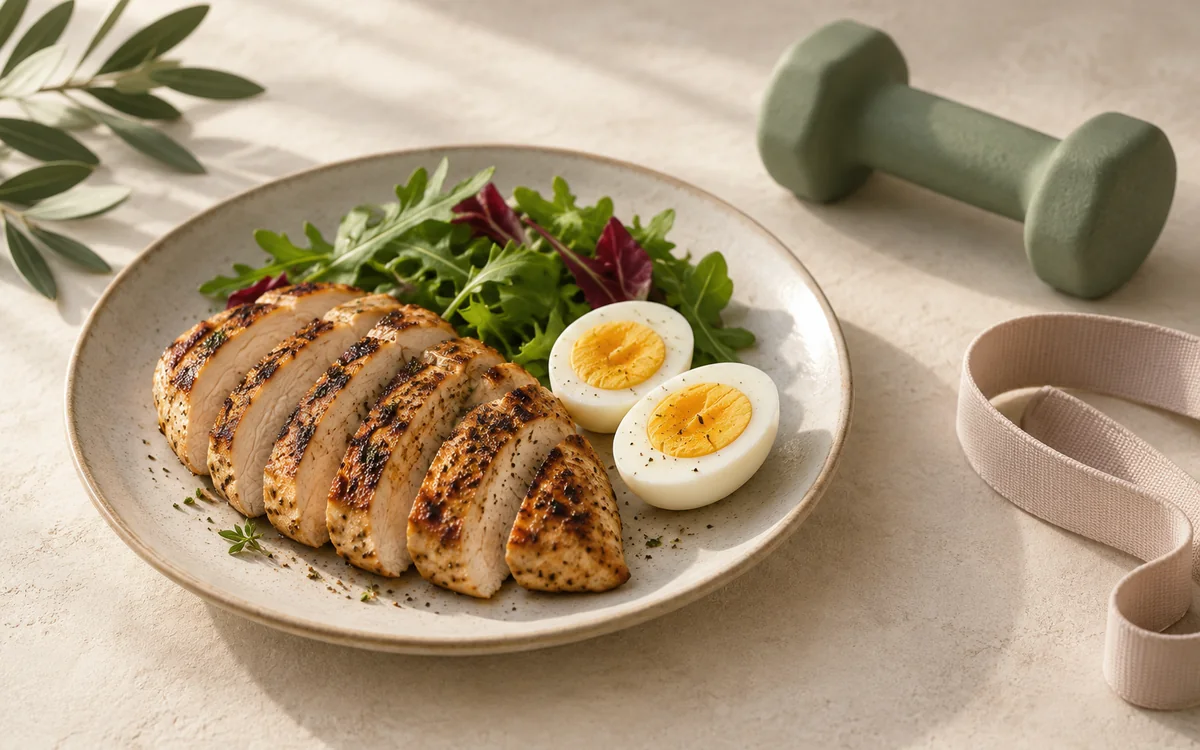
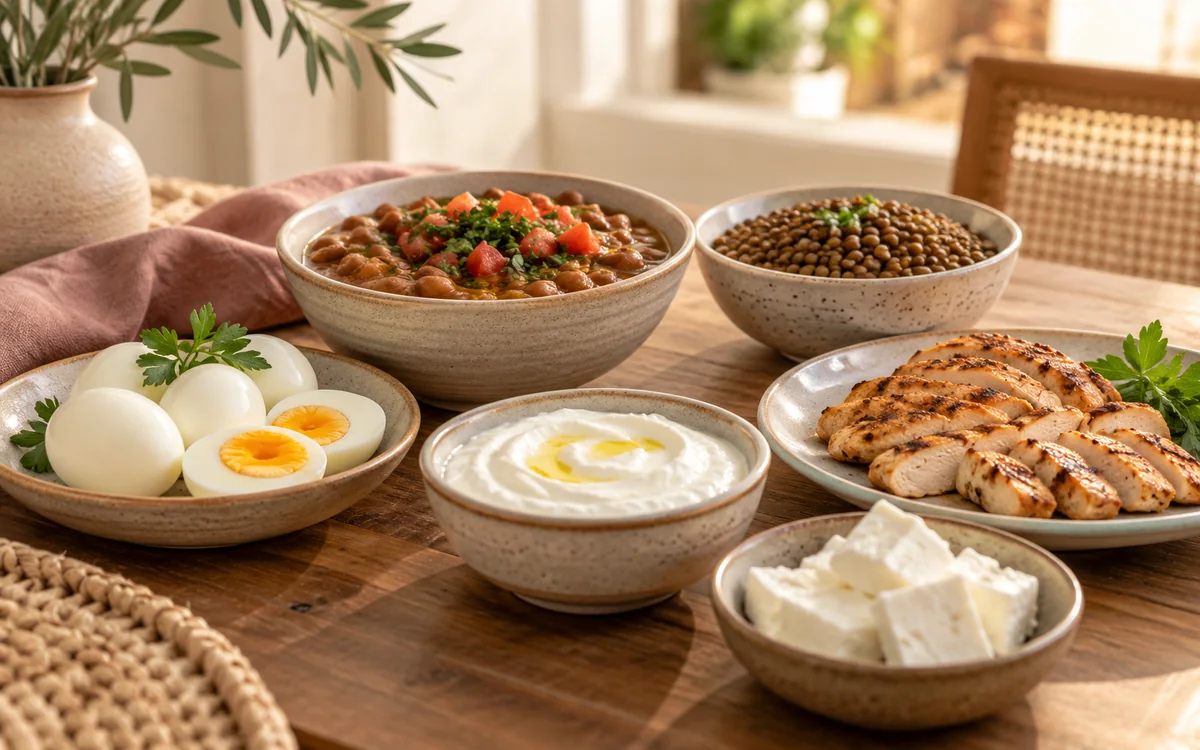
For a first meal, try foul with an egg, vegetables and a bread portion that fits your needs, or eggs, cheese, cucumber and tomato. Another meal could be grilled chicken or fish with salad or cooked vegetables, plus an appropriate portion of rice or bread rather than banning starch entirely [7, 8]. If you need a snack, yoghurt or fruit with a protein source may be steadier than pastries and sweet drinks. Portions depend on age, activity and health; these are examples, not a compulsory menu or a promise of weight loss. Protein across the day supports muscle and fullness, while fibre from vegetables, pulses and fruit helps make meals satisfying [7, 8]. See High-protein foods for weight loss for familiar food options, and 7-day Egyptian diet plan for a flexible week of meals. An eight-hour window is relatively short. If you turn it into only one enormous meal, meeting nutrition needs may become difficult and the experience may feel worse rather than easier.
Drinks During the Fast and Common Mistakes
During the 16:8 fasting hours, water is allowed, as are plain tea and black coffee without sugar, milk or other caloric additions [1, 5]. Juice or sweetened coffee adds calories and ends the food fast; there is no need for harsh compensation. Note what happened and return to your usual plan. Do not use coffee in place of water or sleep, especially if it disrupts rest or causes palpitations. Common mistakes include eating larger amounts because you have fasted, getting too little protein or vegetables, drinking sweet beverages and rushing into one oversized takeaway meal when the window opens [1, 7]. Many people focus on the start time but forget the quality and quantity of food across the day. If you feel ravenous every evening, adjust meal timing or content rather than extending the fast. Repeated headache or dizziness is not a sign of success; it can mean the plan is poorly matched to you or needs medical review. The fasting window is only a framework for meals, not a nutrient in itself.
Who Should Not Start 16:8 Without Medical Advice?
Pregnancy, breastfeeding, childhood, adolescence and a history of eating disorders call for a nutrition plan suited to the person's needs rather than self-directed weight-loss fasting [4, 6]. Type 1 diabetes, or diabetes treated with insulin or a sulfonylurea, can bring a risk of low glucose when meals change unless the prescribing team adjusts and monitors the plan [6, 9]. If you use Mounjaro or Wegovy, do not combine the medicine with a narrow fasting window without a plan from the prescriber. Appetite, nausea, hydration and other medicines vary between people. See Weight-loss injections and fasting for that specific situation [10]. Ask before shifting meals if you have another long-term condition or a medicine that must be taken with food. Dizziness, shaking, sweating, confusion or inability to eat and drink enough are reasons to stop and seek appropriate assessment. Continuing a fast that disrupts treatment or worsens an unhealthy relationship with food is not an achievement.
Is 16:8 Like Ramadan Fasting?
Both approaches set periods for eating, but Ramadan fasting is medically and practically different. People generally avoid water during daylight hours as well as food, sleep and meal timing shift, and the daylight period changes with season [11]. In a usual 16:8 plan, water and plain drinks remain available during the fast and the window can be moved around work and sleep. Do not automatically copy a weekday 16:8 schedule into Ramadan, especially with diabetes, medicines or appetite-altering injections. A clinician may need to review fluid intake, meal timing and treatment. Someone may find regular 16:8 easy but late meals and social gatherings during Ramadan difficult, or the reverse. The useful question is whether a plan lets you drink enough, eat balanced meals and use your treatment safely, not whether both plans share the word fasting. If dizziness or low-glucose symptoms occur, follow the clinical plan for your condition rather than forcing a particular clock time. Distinguishing the two prevents advice that sounds simple but does not fit real life [6, 11].
How to Check Whether 16:8 Fits
After a couple of weeks, review the whole day rather than only the scale. Can you fit at least two balanced meals with protein and vegetables? Are you drinking enough, sleeping and concentrating well? Do you wait until the window opens in extreme hunger and then eat very quickly? These answers matter more than formally reaching 16 hours [1, 4, 7]. Weight changes from day to day with fluid and food in the gut, so look at a trend over weeks alongside intake and activity [2, 3]. Repeated dizziness, shaking or sweating with diabetes medicines, or trouble eating and drinking enough, means stop and seek appropriate advice [6, 9]. If 14:10 or ordinary meal timing fits work and family better, that is a practical choice. Trials do not prove 16:8 is best for everyone. A useful schedule should make good food easier, not turn every workday or shared meal into a problem.
A Nutrition Plan That Fits Your Routine at La Rose
Dr Thoria Al Alfy contributes diet-plan content for La Rose and is a content author, not a bookable branch clinician. For clinical assessment in Maadi, Dr Alyaa Saeed Aboutaleb is available Saturday and Monday from 2 to 7 pm, and Dr Shaimaa Fouad on Saturday, Monday and Tuesday from 3 to 8 pm. Dr Shaimaa is also available at Fifth Settlement on Wednesday from 3:30 to 8 pm. Maadi is at 14 El Mokhtar Street, off El Nasr Street, behind QNB Bank, New Maadi. Fifth Settlement is at CMC Medical Mall, fourth floor, North 90th Street, behind the Air Force Specialized Hospital. Call or WhatsApp 010 4066 1893; schedules are confirmed when booking. Bring a medicine list, your work and sleep times, and an example of what you normally eat. The team can review whether 16:8 fits your circumstances or whether an ordinary meal schedule would make balanced eating and consistency easier [1, 3]. The goal is a plan you can actually follow.