Low Calorie Egyptian Dinner: The Direct Answer
An easy low-calorie Egyptian dinner rests on three things: a palm-sized portion of protein (eggs, cottage cheese, yoghurt, grilled chicken or fish, lentils or foul), half the plate as vegetables or salad, and a small portion of baladi bread or rice, cooked with little oil. This layout is close to the Healthy Eating Plate, which makes vegetables and fruit half the plate and splits the rest between whole grains and protein [8]. NHS guidance also encourages a mix of protein foods such as beans, pulses, fish, eggs and lean meat [1].
Most people do not need complicated recipes. They need a plate they can repeat after a long working day. This article gives ten practical Egyptian dinner ideas, two options that take about ten minutes, a way to estimate portions without scales, how to balance protein and fibre, when eating late becomes a problem, and which habits quietly add calories. If you would like a personal plan, the clinical nutrition team at La Rose can help: Dr Alyaa Said Abu Taleb in Maadi on Saturday and Monday from 2 to 7 pm, and Dr Shimaa Fouad for weight management in Maadi and Fifth Settlement. You can book here: Book your appointment.
The Plate Method: Setting Portions Without Scales
The easiest way to build a light dinner is to divide the plate by eye instead of counting calories. Fill half with vegetables and salad, a quarter with protein, and a quarter with starch such as bread, rice or potato. The Harvard plate puts whole grains at a quarter of the plate and does not count potatoes as vegetables [8], and NHS guidance explains that the Eatwell Guide applies across a day or a week rather than to every single meal [1]. So if one dinner drifts away from the pattern, that is not a failure.
If you want to estimate by hand: protein about the size of your palm, starch about the size of your fist, and oil or tahini about the size of your fingertip. This is an approximation, not a medical rule, but it works well at home and in restaurants. A smaller plate with a large salad bowl beside it is a practical trick many people find helpful for pacing a portion, though it is a tip rather than a proven rule.
Practical steps:
1. Start with the vegetables: a baladi salad, sautéed vegetables or a vegetable soup. 2. Add the protein next: two eggs, a tub of cottage cheese or a piece of grilled chicken. 3. Finish with a small portion of starch, such as half a baladi loaf. 4. Eat slowly and wait a little before taking seconds so fullness has time to register. 5. Serve oil and sauces by the spoon instead of pouring them over the food.
The last point matters because the difference between a light dinner and a heavy one is often not the food itself but the amount of fat added and the size of the plate.
Ten Low-Calorie Egyptian Dinner Ideas
These ideas are built on everyday Egyptian food, and each one pairs protein with vegetables. There is no fixed calorie figure for every plate because portion sizes and oil change the result, so focus on the structure rather than a number.
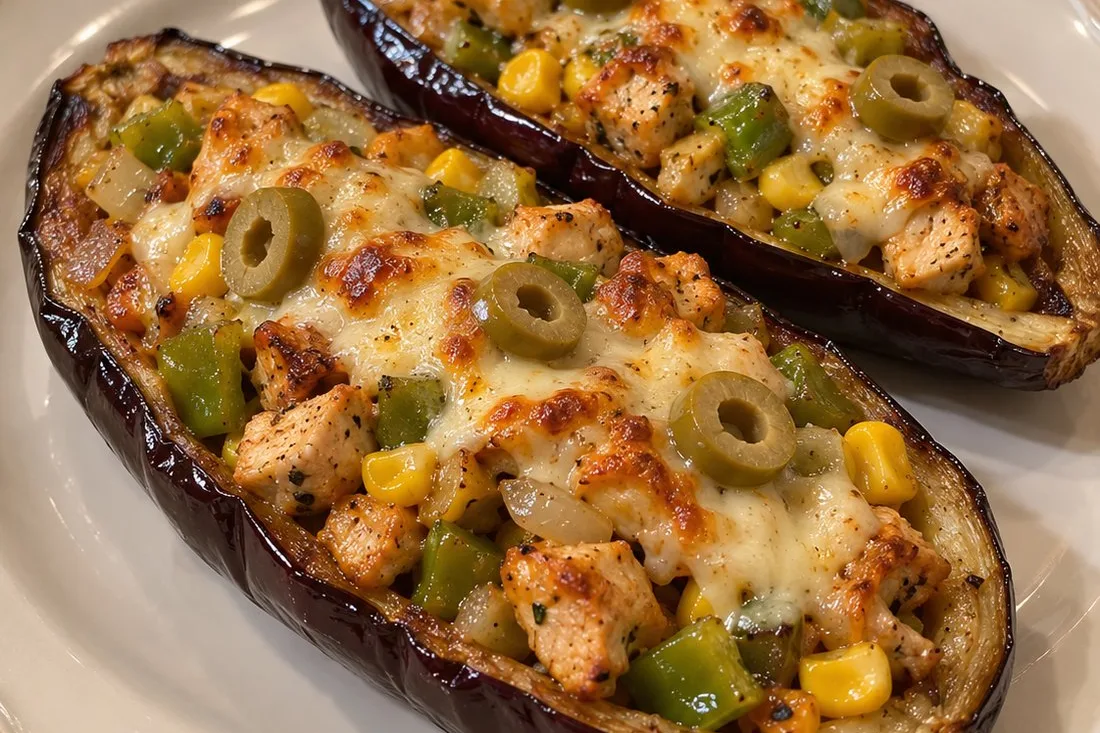
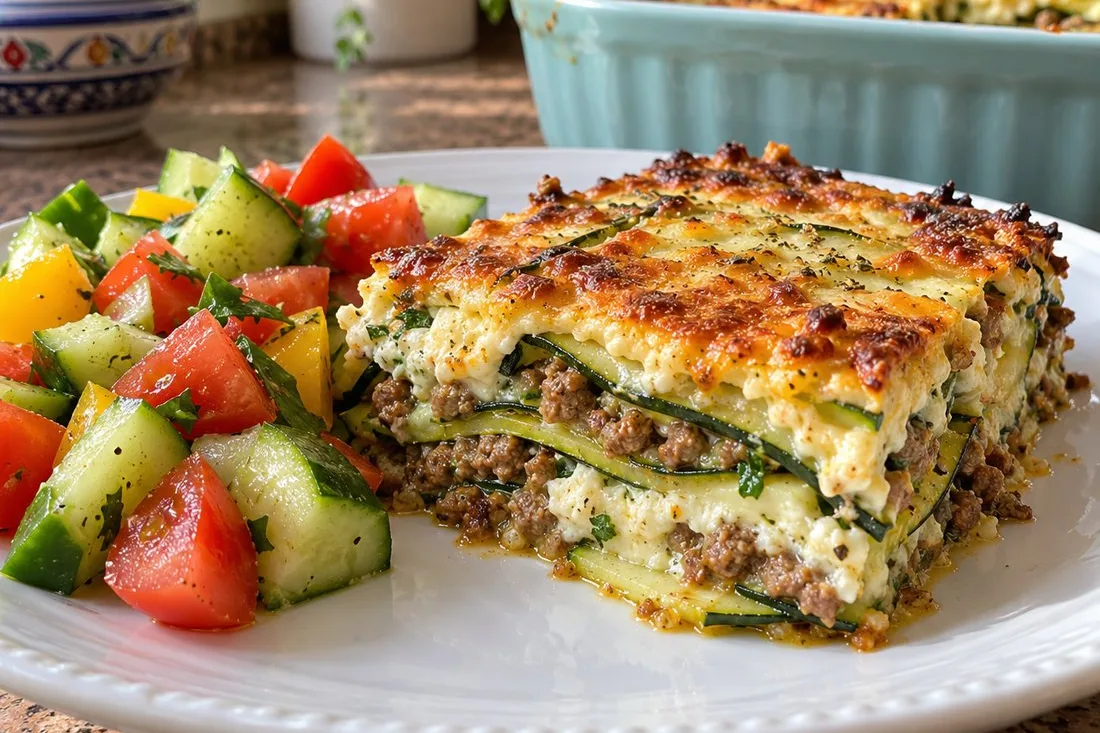
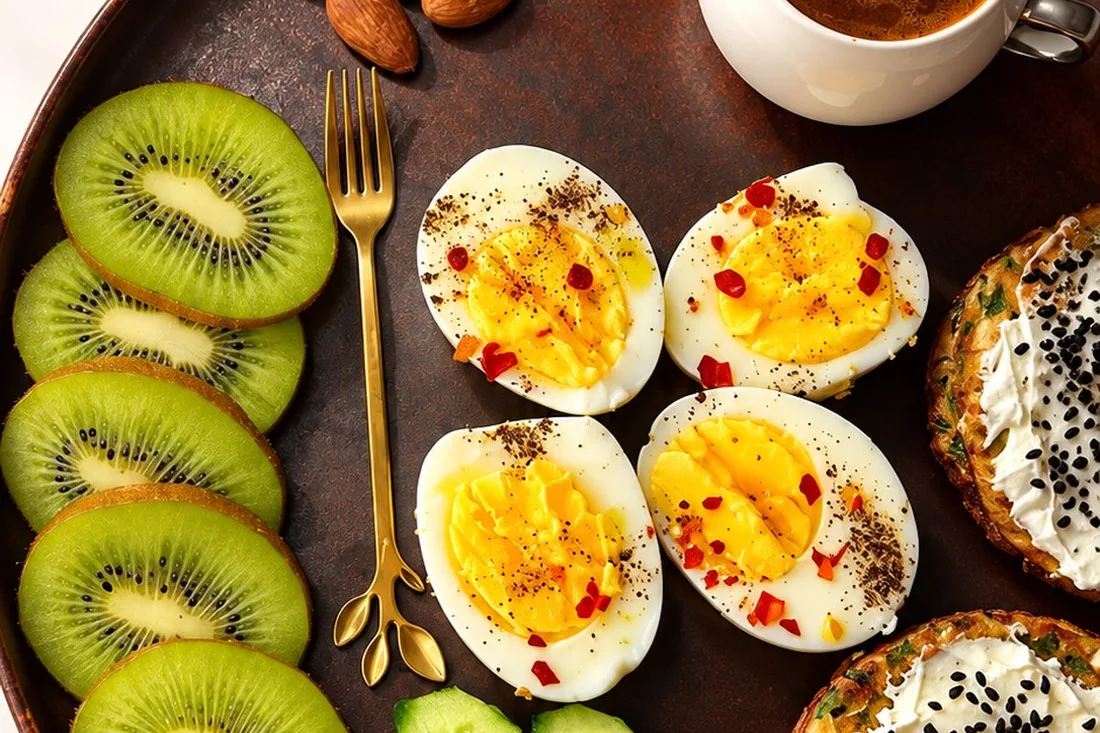
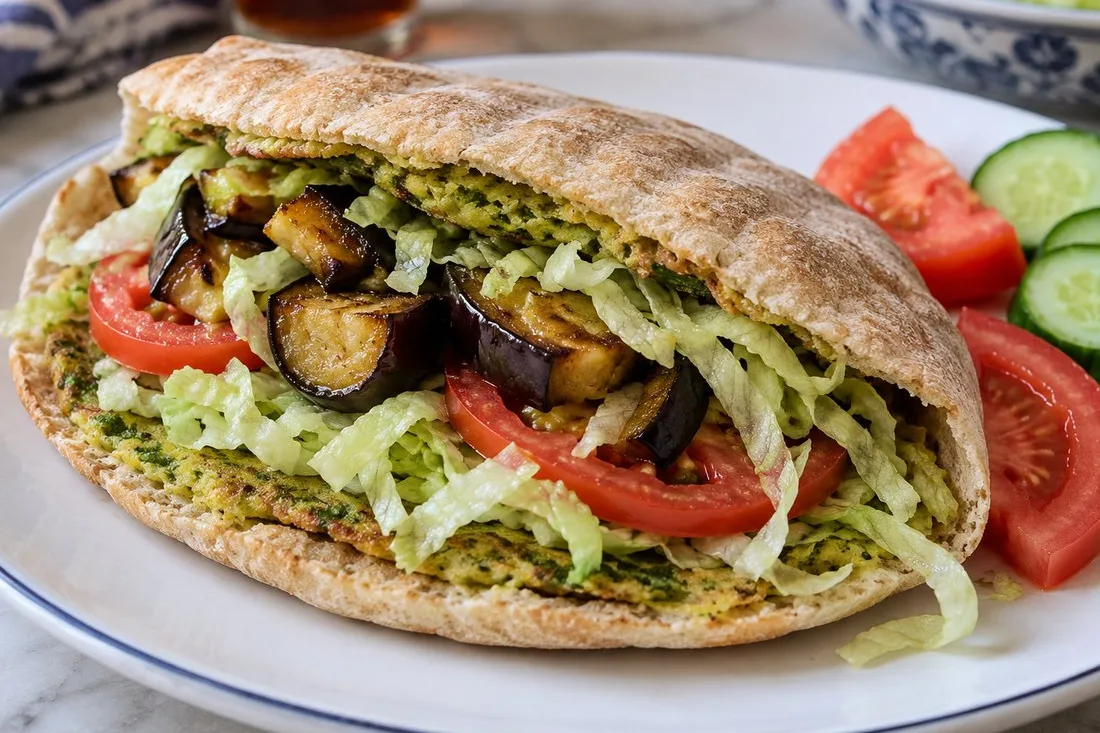
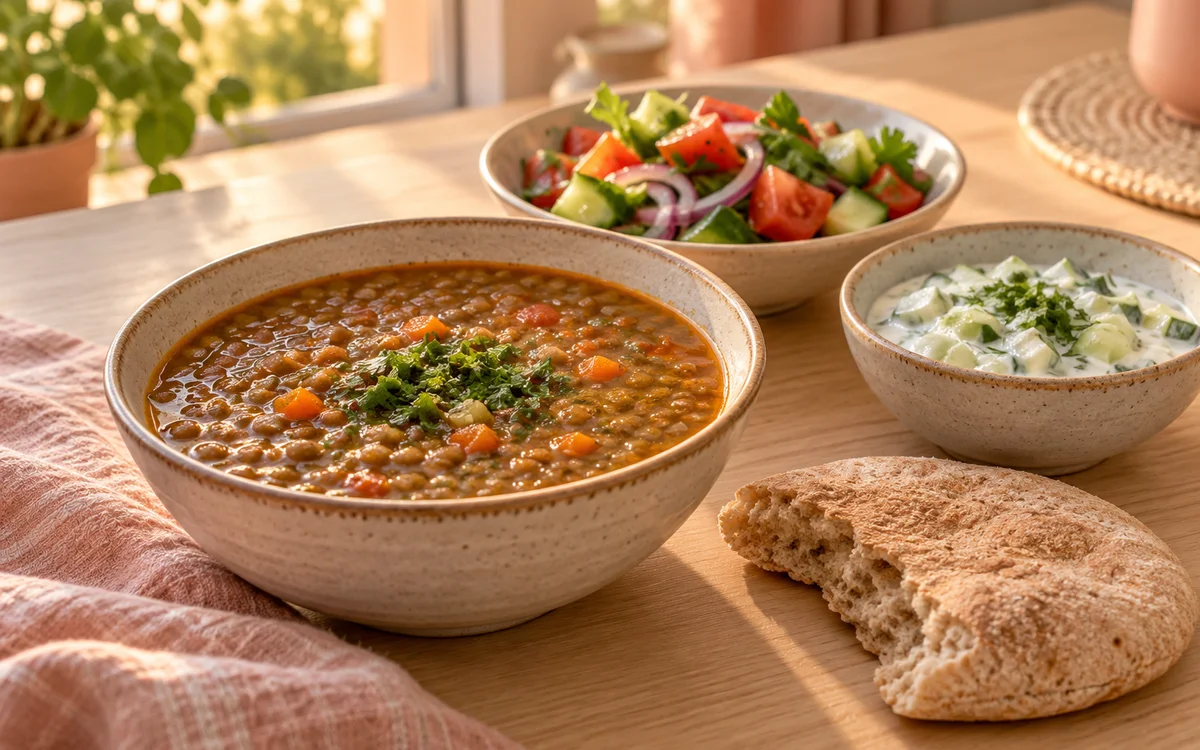
1. Foul medames with lemon and vegetables: a medium portion of foul with tomato, cucumber, rocket and a few drops of oil. Foul belongs to the beans and pulses group, which gives protein and fibre [1]. Go light on oil and bread and heavier on salad. 2. Boiled eggs or a vegetable omelette: two eggs with peppers, tomato and rocket, plus half a baladi loaf if you are hungry. One large egg provides about 8 g of protein [10]. For a family version, try the savoury egg and vegetable bake. 3. Cottage cheese with cucumber and mint: a tub of cottage cheese with cucumber, tomato and a little thyme, with a small piece of fruit if you like. 4. Yoghurt with cucumber: plain yoghurt with cucumber, mint and garlic, eaten with a green salad. Greek yoghurt provides about 10 g of protein per 100 g [10]. 5. Grilled or oven-baked chicken with vegetables: skinless chicken breast gives about 32 g of protein per 100 g [10], served with courgette or steamed broccoli. Try chicken stuffed eggplant as a lighter take on traditional stuffed vegetables. 6. Grilled or oven-baked fish: fish with salad and lemon. NHS advice is at least two portions of fish a week, one of them oily [1]. 7. A lentil soup with vegetables: blended lentils with carrot, onion and cumin, served with a salad. Lentils and other pulses are low in fat and provide fibre and protein [1]. 8. Courgette instead of pasta or rice: layers of courgette replace pasta or rice in a baked dish. You can try zucchini lasagna as a filling dinner. 9. Tuna or sardine salad: a drained tin of tuna or sardines gives about 25 g of protein per 100 g [10], with lettuce, tomato and lemon. Choose water or a small amount of oil and drain well. 10. Egg and turkey lettuce wraps: turkey and egg salad rolls use lettuce instead of bread, which is light for work and quick to eat.
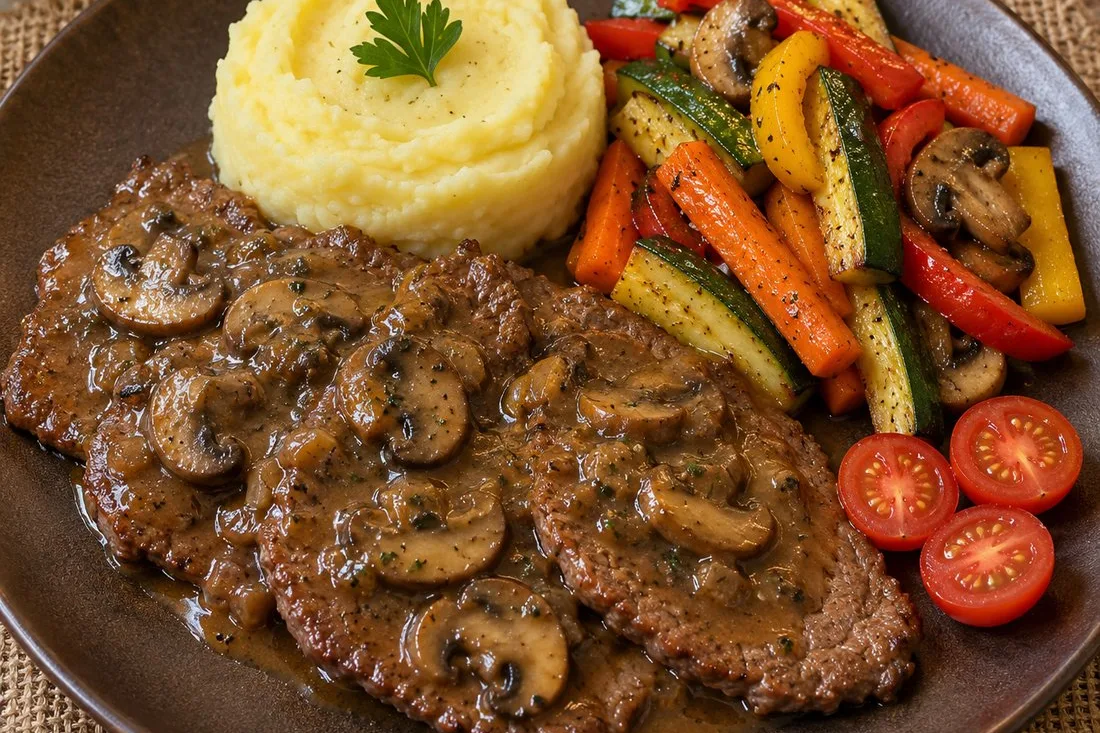
For a dinner for two, steak with mushroom sauce and sautéed vegetables shows that a satisfying meal does not have to be heavy, as long as you watch the sauce and the potatoes.
A Ten-Minute Dinner for Tired Evenings
The main reason people drop a diet in the evening is tiredness. When you walk in exhausted and hungry, the nearest option is delivery or bread and cheese. So keep a quick option ready in the cupboard and fridge.
Option one: two eggs fried with peppers or aubergine in a non-stick pan with a single drop of oil, with a ready-chopped tomato and cucumber salad and a small piece of baladi bread. It takes under ten minutes.
Option two: a tub of cottage cheese with cucumber, tomato, thyme and a spoon of yoghurt, with fruit on the side. No cooking at all.
On other days, tinned or ready-made foul can be warmed and mixed with lemon, cumin and parsley, and eaten with rocket. Choose a lower-salt tin, because the World Health Organization recommends adults eat less than 5 g of salt a day, and most salt comes from processed foods [3].
Tips that make preparation faster:
1. Wash and chop vegetables once at the start of the week and store them in boxes. 2. Boil several eggs and keep them in the fridge. 3. Make a big pot of lentil soup and portion it. 4. Keep grilled chicken ready to split across more than one dinner.
The idea is that a light dinner does not need effort, it needs preparation.
Protein and Fibre: Why the Dinner Keeps You Fuller
The plate that keeps you full is the one with protein and fibre together. Protein comes from eggs, cottage cheese, yoghurt, chicken, fish and pulses. A patient protein guide from a UK health trust advises including protein foods in two to three meals a day, and recommends a dietitian for a personalised amount [10]. For fibre, NHS advice is that adults aim for 30 g a day while most average about 20 g, with lentils, beans, chickpeas, vegetables and wholegrain bread as sources [4].
Vegetables in particular let you eat a bigger volume for fewer calories. According to the CDC, vegetables and fruit can reduce the calories in a meal without reducing the amount of food, because water and fibre add bulk, and up to a cup of vegetables can replace a cup of rice or pasta [9]. But take care: the CDC warns that fried vegetables, such as fried potatoes, are associated with weight gain, and total calories still count [9].
A simple build:
1. Protein: two eggs, a tub of cottage cheese or a portion of chicken or fish. 2. Fibre: a large salad, sautéed vegetables or lentil soup. 3. A small starch: a quarter of the plate as baladi bread or rice. 4. A little healthy fat: a spoon of olive oil or a little tahini.
Increase fibre gradually. If you add a lot suddenly you may feel bloated, so build up over days and drink enough water. NHS guidance suggests around 6 to 8 cups or glasses of fluid a day [1]. For protein detail, read high-protein foods for weight loss from everyday meals, and for how to work out a deficit, see how to calculate a calorie deficit.
Late Dinner and Sleep: When Does It Become a Problem?
Everybody asks whether eating after 9 pm makes you gain weight. The honest answer is that the evidence is not decisive. A scientific review of meal timing found that observational studies link eating a large share of daily energy in the evening with higher weight, but results are inconsistent: out of ten studies, four found a link between evening intake and body weight and five found none [5]. These studies also cannot prove cause, and factors such as sleep and total calories may be responsible [5].
What helps in practice?
1. Make dinner smaller than lunch when you can. The same review found that eating more energy at lunch was associated with lower odds of weight gain [5]. 2. Try to finish dinner three to four hours before bed, which reduces heartburn. The NHS advises not eating within 3 or 4 hours of bedtime if you have reflux [11]. 3. Cut back on fatty and spicy food at night, which are common triggers for heartburn [11]. 4. If you are hungry after dinner, have a small light snack such as yoghurt or cucumber, not a second full meal.
If you work shifts or finish late, the review notes that shift workers have higher rates of overweight and obesity [5]. So instead of worrying about the clock, focus on the size and type of the plate, and try to eat a proper lunch so you do not reach dinner extremely hungry. If poor sleep seems to affect your weight, read I sleep too little and my weight is stuck.
If you have heartburn most days, difficulty swallowing, repeated vomiting or unexplained weight loss, speak to an internal medicine doctor rather than changing your food alone [11].
Dinner Ideas for Families, Workers and Ramadan Nights
Not everyone at home needs a different plate. Make one base and let each person adjust the portion. A tray of chicken and vegetables baked in the oven works well: adults take a large plate of vegetables and a portion of chicken, while the children add more rice. Lentil or vegetable soup suits everybody, with a salad and yoghurt on the side.
For those working outside the home, prepare a box of tuna or boiled eggs with cucumber and carrot, or lettuce wraps. In a restaurant, choose grilled dishes without heavy sauces, ask for salad and vegetables instead of fried potatoes, and share the rice.
Ramadan has its own rhythm. Iftar usually starts with dates and water, then soup, salad and grilled protein. Cleveland Clinic Abu Dhabi describes three dates as a traditional and healthy start to iftar, and suggests filling the plate with vegetables and whole grains with lean protein such as grilled chicken or fish, avoiding fried food and eating slowly [6]. Suhoor should be a balanced meal with pulses and vegetables and low-fat dairy such as laban or low-fat labneh, with olive oil, olives and unsalted nuts [6].
Fluids matter. The same page suggests drinking plenty of water between iftar and suhoor (at least 10 glasses), eating water-rich foods like cucumber, tomato and watermelon, and cutting back on caffeine because it increases urination [6]. Sugary fizzy drinks add calories [6].
If you have diabetes, high blood pressure, kidney disease or are pregnant, do not change your routine in Ramadan without follow-up with a doctor. For a full weekly plan, see a weight-loss diet plan for a week with Egyptian food.
Mistakes That Add Hidden Calories
Often it is not the main food that causes trouble in a diet but the extras.
1. Oil: all fats are high in energy, so even healthy oils should be used in small amounts, and the NHS says to choose unsaturated oils and eat them in small amounts [1]. Use a measuring spoon instead of pouring, and prefer grilling or baking to frying. The World Health Organization also advises steaming or boiling instead of frying [3]. 2. Bread: baladi bread is useful, but it is eaten without counting. Decide how many loaves before you start, and keep it beside the protein rather than replacing it. 3. Sauces and dressings: tahini, mayonnaise and ready-made sauces add calories quickly. The CDC suggests flavouring with vinegar, spices, herbs, or a small amount of yoghurt or tahini dressings [9], and the WHO warns about salt and high-sodium sauces [3]. 4. Drinks: juices and fizzy drinks are liquid calories. The NHS says choosing low-calorie drinks helps and that alcohol can be high in calories [2]. For juice, whole fruit is better because it keeps the fibre [9]. 5. Eating in front of a screen: you eat faster and lose track of the amount, so serve dinner on a plate instead of from the packet. 6. Adding instead of swapping: the CDC warns that adding vegetables on top of your usual food rather than substituting adds calories [9]. 7. Processed foods: sausages, pastrami and processed cheese are often high in salt and fat. NHS guidance advises cutting back on red and processed meat [1]. 8. Skipping dinner entirely: if you go to bed hungry you may wake and eat a large amount. A small balanced dinner is better.
A simple rule: if the plate has protein, vegetables and a small portion of starch, then add only one spoon of oil.
When to See a Clinical Nutrition Doctor
A light dinner on its own will not solve every weight problem. See a doctor if you are above a healthy weight and want help, if your waist is more than half your height, or if you have diabetes, high blood pressure, high cholesterol, joint pain or sleep apnoea, or a family history of obesity, or episodes of binge eating [7]. Also, if a diet causes dizziness or weakness, or if you have kidney or liver disease, are pregnant or are breastfeeding, the plan needs to be personalised.
A doctor can guide you to a weight management programme, and to medicines or surgery when appropriate, and encourages gradual loss of about 0.5 to 1 kg a week [7]. A very low calorie diet should only happen under specialist supervision, because it is not suitable for everyone [7].
At La Rose, the clinical nutrition team works from two branches. The New Maadi branch is at 14 El-Mokhtar St, off El-Nasr St, behind QNB Bank. There you can see Dr Alyaa Said Abu Taleb, a doctor and clinical nutrition specialist, on Saturday and Monday from 2 to 7 pm, and Dr Shimaa Fouad for weight management on Saturday, Monday and Tuesday from 3 to 8 pm. In Fifth Settlement the branch is at CMC Medical Mall, 4th floor, North 90th Street, behind the Air Force Specialized Hospital, with Dr Shimaa Fouad on Wednesday from 3:30 to 8 pm. Schedules can change and are confirmed when you book.
Bring photos of your food for two or three days, your medicines and your previous tests. To prepare, read your first therapeutic nutrition visit, for the clinic details see the nutrition clinic in Maadi, and for the bigger picture read the best diet for weight loss in Egypt. For any question about cost, send a WhatsApp message to 010 4066 1893, or use the booking page: Book your appointment.