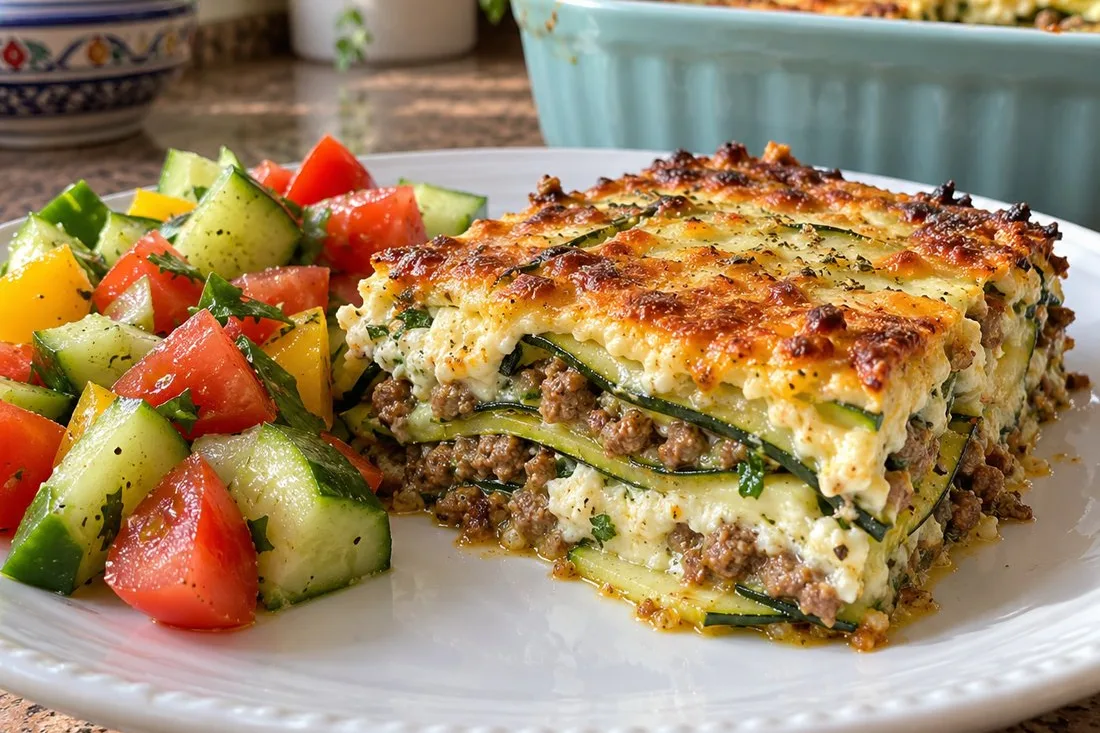
What can I eat if I have diabetes and want a hot dish that feels like lasagna?
If you have diabetes, you probably want a hot, cheesy dish that makes you feel you are eating like everyone else at the table, without the food feeling like a punishment. Zucchini lasagna does that by letting zucchini slices take the place of pasta sheets, so the dish comes out tender, filling and low in carbohydrate: only 9 g per serving, with 28 g of protein and 285 kcal.
By the way, this recipe isn't limited to people with diabetes. It suits anyone who wants a light dinner from the oven, anyone cutting back on starch, or a family that wants one dish everyone can eat. But if you have diabetes, it gives you a main dish that is easy to count.
The most important thing to say up front: food alone does not treat diabetes, and no recipe replaces or adjusts your treatment. Food is one part of a plan set with your doctor and dietitian, and every body responds to carbohydrate differently. What we offer here is a dish with clear numbers that you can place inside your plan and watch your own response to, along with your usual follow up [1, 2].
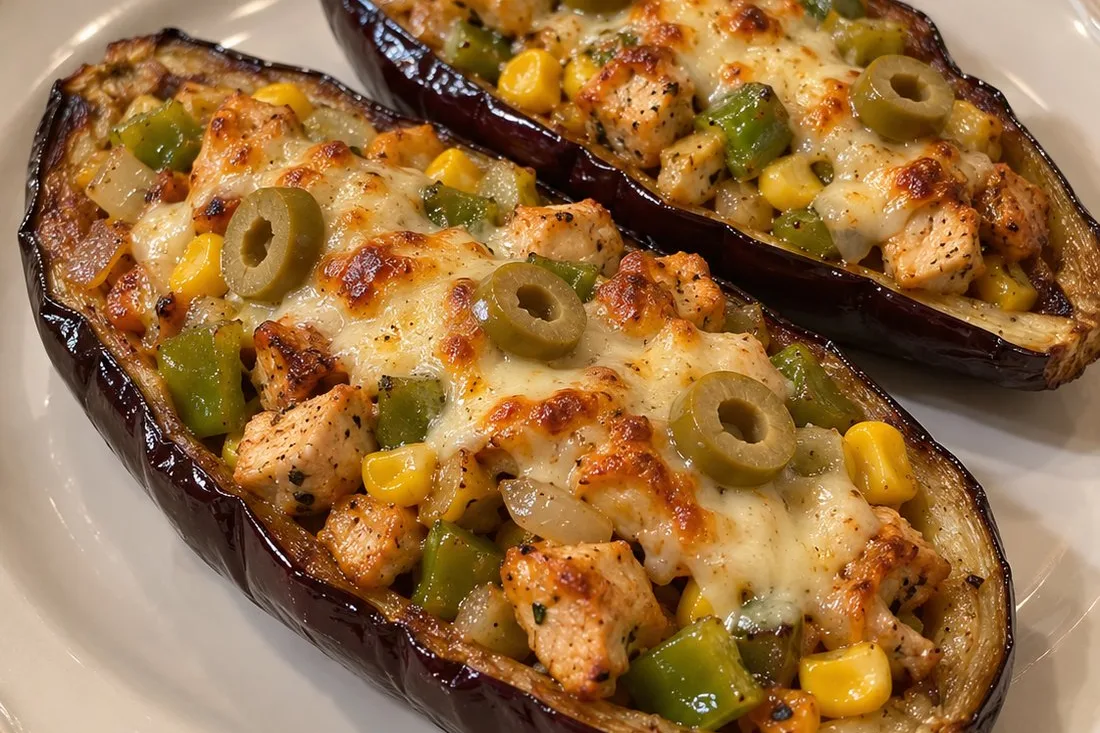
In the same line of measured light meals, the article on Light Dinner for a Diet: Chicken Stuffed Eggplant gives you another high-protein dinner to alternate with the lasagna.
How many carbohydrates are in zucchini lasagna, and what do the other numbers mean?
The recipe makes 4 servings, with 20 minutes of preparation and 35 minutes of cooking. The Recipe Guide numbers per serving are:
1. 285 kcal. 2. 28 g protein. 3. 9 g carbohydrate. 4. 15 g fat.
The 9 g of carbohydrate comes mainly from the zucchini, the tomato and onion in the sauce and a little lactose in the cheese. That is a big difference from pasta lasagna, where a serving carries much more carbohydrate. It makes the meal easy to count if you count carbohydrate, which is a planning method the CDC describes for diabetes meals [1].
The 28 g of protein comes from the minced beef, cheese and egg. Protein helps with fullness, and Harvard explains that varied protein sources (fish, chicken, pulses, eggs) are better than relying only on red meat [7].
As for fat, the 15 g is shared between the beef, the cheese and a spoon of oil. To lighten it, use very lean minced beef and low-fat white cheese, as the recipe already does.
All of these numbers are estimates and will move with the type of beef, the cheese and the size of the zucchini. If you change the sauce or add more cheese, recalculate from scratch instead of relying on the original figure.
Why zucchini instead of pasta, and do the fibres really make a difference?
Zucchini is a bulky vegetable, low in calories, with fibre and plenty of water. Used in place of pasta, it lowers the carbohydrate on the plate and adds vegetable volume without you noticing. The principle is no secret: half the plate as non-starchy vegetables is the basis of the plate method the CDC recommends for diabetes meal planning [1], and Harvard also makes half the plate vegetables and fruit [3].
Fibre helps in two ways. First, it slows digestion and adds to fullness [5]. Second, a large review of randomized trials linked fibre-rich eating with improvements in heart risk factors such as cholesterol and blood pressure [6]. Research on carbohydrate quality also found that fibre-rich foods and whole grains are tied to better health outcomes than refined starch [11]. None of this means fibre treats diabetes. It is one part of a healthy eating pattern.
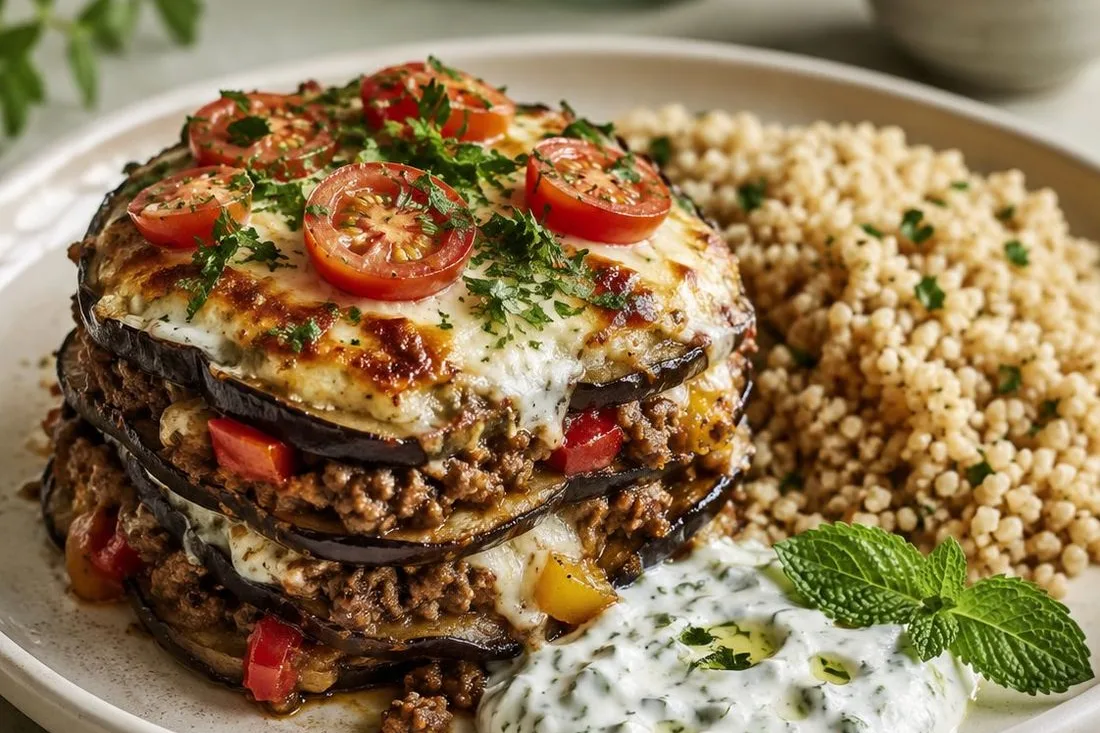
If you want variety, more than one vegetable can replace the pasta: grilled eggplant slices, cabbage leaves, or even slices of pumpkin. Eggplant needs to be grilled first so it does not soak up oil, which is explained in the article on Light Dinner for a Diet: Chicken Stuffed Eggplant.
One caution: zucchini releases water during baking, and if you do not drain it first the dish comes out runny. The next section covers that.
What ingredients do I need, and what are the Egyptian market swaps?
The quantities for 4 servings:
1. 3 medium zucchini (about 600 g), sliced thinly lengthways. 2. One teaspoon of olive oil. 3. 300 g lean minced beef, seasoned with cumin and black pepper. 4. 200 g low-fat white cheese. 5. 50 g grated mozzarella. 6. One egg. 7. Dried herbs (basil or oregano) and half a teaspoon of salt. 8. To serve: a salad of cucumber, tomato and half a small green pepper.
Swaps that work in an Egyptian kitchen:
1. Minced chicken instead of beef if you prefer it lighter. The Recipe Guide itself suggests minced chicken. 2. Cottage cheese or ricotta in place of the white cheese, for a smoother result. 3. If there is no mozzarella, a little grated rumi cheese is enough, though watch the salt. 4. For the sauce, fresh peeled and crushed tomatoes are better than a ready sauce, because jarred sauces can contain added sugar. 5. If you avoid eggs, the filling still holds but a little less firmly, so add slightly more cheese.
A simple idea: herbs, cumin and garlic give strong flavour without needing much salt. The World Health Organization advises keeping salt under 5 g a day [4], and most of us get more than that from cheese and processed bread, so controlling the salt in the sauce matters.
How do I make zucchini lasagna step by step?
1. Start by preheating the oven to 190 degrees C. 2. Sprinkle the zucchini slices with a light salt and leave them for 10 minutes, then dry them with a clean kitchen towel. This step matters a lot because of the water. 3. Sear the slices in a pan with a little oil for a minute on each side, or grill them in the oven for 8 minutes, until soft without browning heavily. 4. In another pan, cook the minced beef with the cumin and black pepper until it has completely changed colour, then add the crushed tomatoes and herbs and leave it 10 minutes on low heat. 5. Mix the white cheese with the egg and a few herbs. 6. In an oiled dish, layer zucchini, then the beef sauce, then the cheese mixture, and repeat. Finish with the mozzarella. 7. Bake for about 30 minutes until the top browns, and let it rest for 10 minutes before cutting so it holds together.
After cutting, serve it beside the cucumber and tomato salad. For the original quantities in front of you, open the Full recipe in the Recipe Guide.
If you want to prepare it a day ahead, make the sauce, the cheese mixture and the seared zucchini separately and layer them in the dish on the day you eat, so the meal stays better and saves you time.
Why does my zucchini lasagna turn out watery, and how do I fix the texture?
This is the most asked question about zucchini lasagna, and the answer is always water. Zucchini is about 90 percent water, and when baked it pushes that water into the dish. The fix is a handful of small steps:
1. Cut the zucchini into even slices about half a centimetre thick. Very thin slices fall apart and thick ones stay raw. 2. Sprinkle salt and wait 10 minutes, then press the slices with a towel. Look at the water that comes out. 3. Sear the zucchini briefly before layering. Do not put it raw into the dish. 4. Keep the sauce thick: leave it on the heat until it comes together, and do not add a runny sauce. 5. Rest the dish for 10 minutes after baking so the remaining liquid is reabsorbed.
If the dish still has liquid after baking, do not throw it all out. Spoon it off with a large spoon and cut the lasagna while it is warm. That is normal.
The lasagna can also come out too dry if the oven is too hot. In that case cover the dish with foil for the first 20 minutes and remove it at the end, so the top browns while the inside stays tender. The egg in the cheese mixture is what binds the layers, so do not forget it, and make sure the egg is fully cooked in the oven for food safety [8].
How do I set up the whole plate if I have diabetes: what goes beside the lasagna?
The balanced plate for diabetes at the CDC and NIDDK is simple: half the plate non-starchy vegetables, a quarter protein, a quarter carbohydrate [1, 2]. The lasagna covers vegetables and protein together, so the carbohydrate you add beside it is what gets counted. In Egyptian food that means:
1. A cucumber, tomato and rocket salad with a squeeze of lemon, as the base. 2. If you want starch, a quarter of a baladi loaf or half a cup of rice or bulgur. Whole grains are the better choice [11, 13]. 3. If lunch is lasagna, make dinner foul with tomato or lentils so you do not repeat the same type. Pulses bring protein and fibre together. 4. Stay away from sweetened drinks with the meal, and drink water.
Most important: every body has its own response, so agree with your doctor on when to check your glucose, and check after a new meal like this to see its effect on you. Checking gives you real information instead of guessing [2].
In the article on A review of diabetes and whole body health you will find a wider picture of how food, movement and sleep connect. And if you want a low-carb lunch for work, try the article on Turkey Egg Salad Rolls: a no-oven meal with 4 g of carbohydrate.
Are the eggs and cheese in the filling a problem if I have cholesterol or diabetes?
The recipe has only one egg shared among 4 servings, which is less than a quarter of an egg each, so this is a small matter. Even so, the scientific answer on eggs is not a plain yes or no. An umbrella review of observational studies found that moderate egg intake in the general population is not tied to a clear rise in heart disease [10], while pooled randomized trials found that eggs can raise cholesterol slightly [12]. That is why the answer is personal rather than one rule for everybody.
If you have diabetes, research is still working out the relationship in detail, so the honest guidance is to ask your doctor how many eggs per week suit you rather than follow a general rule.
As for the cheese, choosing low-fat, lower-salt types lightens the load on the heart and blood pressure. More generally, the World Health Organization advises cutting saturated fat and salt [4].
In practice: if your doctor told you to cut back on eggs, leave it out of the filling and replace it with a spoon of Greek yogurt or a little more cottage cheese, and the dish will hold together or close to it.
Keep in mind too that zucchini lasagna is not the meal to build your whole day on. Rotate proteins, with beef one day, fish another and pulses another, which is general advice for anyone [7].
How do I store zucchini lasagna, and can I freeze it?
Lasagna contains meat, cheese and egg, so treat it like any sensitive cooked food. The USDA advises putting leftovers in the fridge within two hours, or within one hour in hot weather above 32 degrees C, and gives a fridge life of about 3 to 4 days [9].
1. Cut it into portions after it rests, and put them in airtight boxes while still a little warm so they cool quickly. 2. In the fridge, eat it within 3 to 4 days. 3. To reheat, bring it to 74 degrees C inside (very hot in the middle) [9]. 4. To freeze, wrap each portion on its own and thaw it overnight in the fridge before reheating. The texture is a little softer after freezing because zucchini releases water, so drain any liquid after reheating.
If you carry a portion to work, put it in an insulated box with an ice pack and eat it within two hours of taking it out of the fridge. A portion that has been reheated once should not be reheated again.
For weekly prep, the lasagna is made once and split into 4 portions, which is easier than cooking every day when your schedule is hard. And for something sweet afterwards, the article on 70-Calorie Chocolate Cake with Oat Flour and Yogurt gives a slice with 7 g of carbohydrate that fits into your count if your doctor agrees.
When do I need a personal nutrition plan instead of relying on recipes?
Recipes give you ideas, but diabetes changes from person to person and from period to period. You need personal follow up if:
1. You take medication or insulin, because food affects the dose. 2. Your readings are unstable despite your effort. 3. You also have blood pressure, cholesterol or kidney problems. 4. You are trying to lose weight and want a calibrated plan without deprivation. 5. You exercise and need to spread starch across the day.
No recipe treats diabetes or guarantees a particular result. The clinical nutrition team at La Rose clinics in Maadi and Fifth Settlement reviews your Egyptian food and builds a plan with you, and you can book here: Book a nutrition consultation.
If you are looking for light meal ideas to complete your week, see the article on Light Dinner for a Diet: Chicken Stuffed Eggplant, the article on Turkey Egg Salad Rolls, and the article on 70-Calorie Chocolate Cake with Oat Flour and Yogurt. All four recipes come from the same series and complete each other.
In the end, consistency matters more than perfection. A measured light meal three times a week is better than a strict plan abandoned after two weeks.