What can I eat at work without much bread? A low-carb lunch you can carry to the office
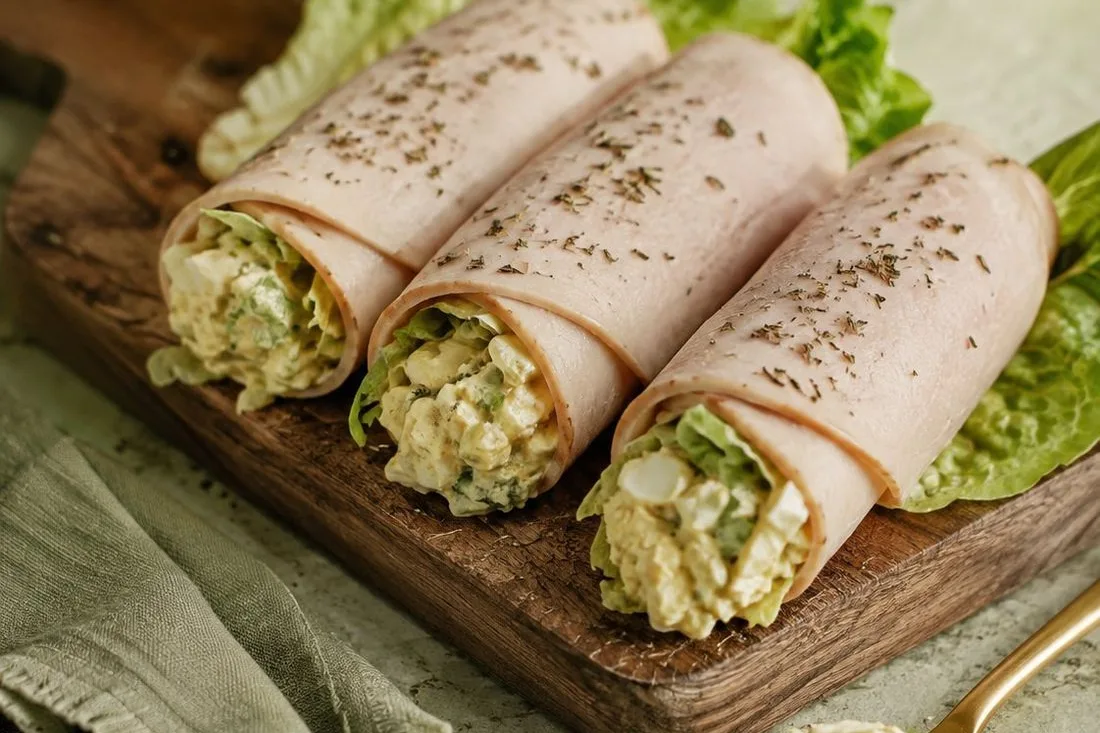
This question comes up constantly in offices: the usual lunch is a sandwich or rice. Turkey egg salad rolls are a portable, high-protein, low-carbohydrate option compared with many sandwiches, though fullness varies from person to person. You can carry them in a box, with no oven and 10 minutes of preparation.
The recipe makes two servings, and a serving (about 3 rolls) has 270 kcal, 30 g protein, 4 g carbohydrate and 15 g fat. The main point is that it fills you with protein from eggs and turkey, and has no bread.
You do not need to follow a low-carb plan to take it. It suits anyone who wants a light lunch that keeps their focus at work: someone trying to lose weight, someone cutting starch, or someone who simply does not like cafeteria sandwiches.
An important caution: protein and eggs are good, but a complete meal needs vegetables and some starch depending on your activity, which we explain shortly. And the central idea of any work lunch is that it travels and stores safely, because many offices do not have a decent fridge.
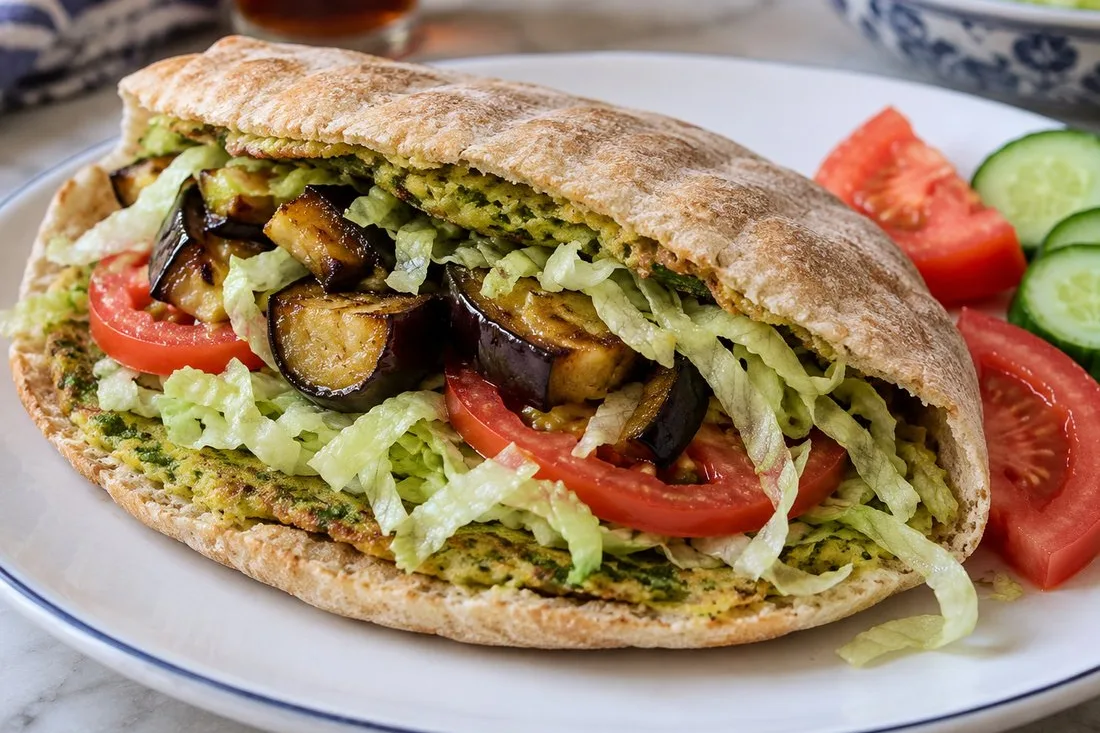
If you want another idea in the same spirit, see the article on the Baladi Falafel Egg Sandwich, an option for a day when you do want baladi bread.
What are the ingredients, and what if turkey is not available?
The quantities for two servings:
1. 5 large boiled, peeled eggs. 2. One cup of finely shredded romaine lettuce. 3. Two tablespoons of Greek yogurt. 4. A quarter teaspoon of fine salt and an eighth of a teaspoon of black pepper. 5. 6 large turkey slices. 6. 3 lettuce leaves for serving. 7. Half a teaspoon of dried thyme.
Sliced turkey is found in large supermarkets and deli counters, but not everywhere. Reasonable swaps:
1. Thin boiled chicken breast slices, closest in taste. 2. Low-fat pastrami or rumi cheese slices, though both are saltier so be careful. 3. Lettuce leaves or long cucumber ribbons as the wrapper in place of meat. 4. Mashed cottage cheese or strained yogurt in place of Greek yogurt. 5. Rocket in place of lettuce for a sharper taste. 6. Dill or cumin instead of thyme. 7. Lemon or a spoon of mustard for a stronger flavour.
If you want the meal lighter on cholesterol, replace two whole eggs with whites only. If you have an egg allergy, the filling can be made from mashed chickpeas with yogurt and lettuce, and of course the numbers will change.
How do I make turkey egg salad rolls, and how do I stop them getting soggy?
1. Mash the eggs roughly with a fork, not too smooth, so they keep some texture. 2. Add the shredded lettuce, yogurt, salt and pepper, and fold gently. 3. Lay out a turkey slice and put about two tablespoons of the salad near one end. 4. Roll the slice around the filling with the seam side down. 5. Arrange the rolls on the lettuce leaves and sprinkle the thyme.
Tips for texture:
1. Cool the eggs completely before mixing. If still warm, give them fifteen minutes in the fridge, because warmth thins the yogurt. 2. Wash and dry the lettuce well. Water makes the salad runny. 3. Do not add much salt before rolling: turkey is already salted. 4. If you prepare ahead, keep the filling and the turkey separate and roll a few minutes before eating. 5. Boil all the eggs once a week and keep them in their shells.
The full recipe is in the Recipe Guide with the same numbers we mentioned: Full recipe in the Recipe Guide.
We also like the idea of weekly prep: the article on Veggie Egg Muffins to Make Ahead has a close idea if you want to prepare breakfast along with lunch.
Is this a complete meal, and what should I add beside it?
The rolls on their own are protein, fat and little carbohydrate, so they lack vegetables and fibre. Harvard's balanced plate idea is: half the plate vegetables and fruit, a quarter protein, a quarter whole grains [3]. Applied to this lunch:
1. A large vegetable salad beside the rolls: cucumber, tomato, rocket and carrot. 2. Fruit afterwards. 3. Starch according to your activity: a small baladi loaf or half a cup of rice or bulgur. If you train after work, add more starch, and on a quiet desk day keep it low.
The World Health Organization's carbohydrate guideline stresses the quality of carbohydrate from whole grains, vegetables, fruit and pulses [2], not removing it altogether.
As for protein, the 30 g per serving is a suitable amount for one meal for most people, and sports nutrition research talks about spreading protein across meals [5]. If you want to understand your own need, the article on Is More Protein Always Better can help.
One reason for fullness is eating bulky, low-calorie foods such as vegetables, salad and soup, which the Mayo Clinic explains [6]. So vegetables beside the rolls are not optional.
Is it fine to eat eggs every day, and what if I have cholesterol?
A serving has about 2.5 eggs, so if you eat the rolls daily you will take a noticeable amount of egg. You cannot set one rule for everyone:
1. Pooled randomized trials found that eggs can raise cholesterol slightly [8]. 2. An umbrella review of observational studies found that moderate egg intake is not tied to a clear rise in heart disease in the general population [9].
So the picture differs from person to person. If you have high cholesterol, heart disease or diabetes, ask your doctor how many per week suit you instead of guessing.
The practical fix if you want fewer eggs: replace two eggs with whites, or rotate days. For example, two days of rolls, two days of grilled chicken with salad and rice, one day of fish with vegetables, and one day of lentils or beans with salad. That gives variety in protein, which Harvard recommends [4].
For organization, see the article on The Best Diet for Weight Loss in Egypt to compare and pick what fits your time, and the article on 7 High-Protein Foods From Home Cooking for more ideas.
If weight is your goal, do not rely on one recipe: many factors are involved and no figure is guaranteed.
Does deli turkey have a lot of salt, and how do I choose well?
Ready-sliced turkey is a processed meat, and most of it contains salt and preservatives. The World Health Organization advises keeping salt under 5 g a day [1], and Harvard advises limiting processed meat [4]. That does not make the rolls forbidden, but some choices make a difference:
1. Read the label and pick the type lowest in salt and additives. 2. Sometimes replace the turkey with chicken breast you boil yourself, so you control the salt. 3. Add no more than a quarter teaspoon of salt to the egg salad, as the recipe already does. 4. Add more herbs, lemon and pepper instead of salt. 5. Do not rely on processed meat every day. Rotate with other sources.
Another point: if you have blood pressure or kidney problems, salt matters more, so ask your doctor what suits you.
This explains why the recipe is a very good option from time to time but not for every meal. On other days take a meal from the article on Light Dinner for a Diet: Chicken Stuffed Eggplant, whose flavour comes from vegetables and herbs more than from processed meat.
I have diabetes: are these rolls suitable for lunch?
The rolls have only 4 g of carbohydrate per serving, so they fit easily into carbohydrate counting, one of the meal planning methods the CDC describes [10]. Their plate method is: half the plate non-starchy vegetables, a quarter protein, a quarter carbohydrate [10]. So the rolls are the protein quarter, a big salad goes beside them, and the carbohydrate quarter follows your plan.
But there are limits we should state plainly:
1. The recipe is not a treatment for diabetes and does not replace any medication. 2. Every body responds to food differently, so check after a new meal as agreed with your doctor. 3. Processed food (the turkey) has salt, and if you have blood pressure or kidney problems, ask. 4. Large daily amounts of egg need follow up if you have cholesterol.
In short: it is a practical option for a measured meal, and the final decision on amount and timing is with your doctor and dietitian.
In the same direction, the article on Low-Carb Zucchini Lasagna has a low-carbohydrate dinner, and the article on 70-Calorie Chocolate Cake with Oat Flour and Yogurt gives a measured sweet.
How do I carry the rolls to the office and keep them from spoiling?
Food containing egg and meat needs care in transport:
1. Hard-boiled eggs in the shell keep in the fridge for about a week, and peeled ones should be eaten quickly [7]. 2. Egg salad in a closed box keeps 3 to 4 days in the fridge [12]. 3. Refrigerate food within two hours, or within one hour if the weather is hot, above 32 degrees C [12]. 4. For the office: an insulated box with an ice pack, eaten within two hours of leaving the fridge. 5. Do not freeze them, since eggs turn rubbery after freezing and lettuce turns watery. 6. Clean your hands and tools before preparing. Bacteria such as staph pass from hands to food and multiply in warmth [11].
If food stayed out of the fridge too long, it is better to throw it away. You save nothing if you get ill.
At the office: if there is a fridge, put the box in as soon as you arrive. If there is none, the ice pack is the answer.
The whole weekly prep idea is practical: boil the eggs once, keep them in the shell, and make the filling every two days. For any question about a meal plan that suits your job, Book a nutrition consultation, and the La Rose team in Maadi and Fifth Settlement will help you.
How do I build a work lunch week around the rolls without boredom?
Two days of rolls a week is enough, and the rest is variety:
1. Sunday and Tuesday: turkey egg salad rolls with a salad and fruit. 2. Monday and Wednesday: grilled chicken with salad and half a cup of rice. 3. Thursday: fish with vegetables. 4. Another day: lentils or beans with a salad.
For weekly prep: boil 10 eggs on Sunday and store them in their shells. Wash and dry the lettuce. In the morning, roll the rolls in two minutes.
Do not try to make everything perfect. If one day you go to a restaurant or a family visit and eat differently, return to your routine, and the week is not lost over one meal.
On the goal: if you are trying to lose weight, the approximate numbers help, but no result is guaranteed, and the effect of lunch depends on the rest of your day, sleep and movement. And of course any big health decision is taken with your doctor.
If you want another idea for something sweet after lunch, see the article on 70-Calorie Chocolate Cake with Oat Flour and Yogurt: a small slice completes the meal without breaking the plan.