What should I eat for dinner when I am trying to lose weight but still want to feel full?
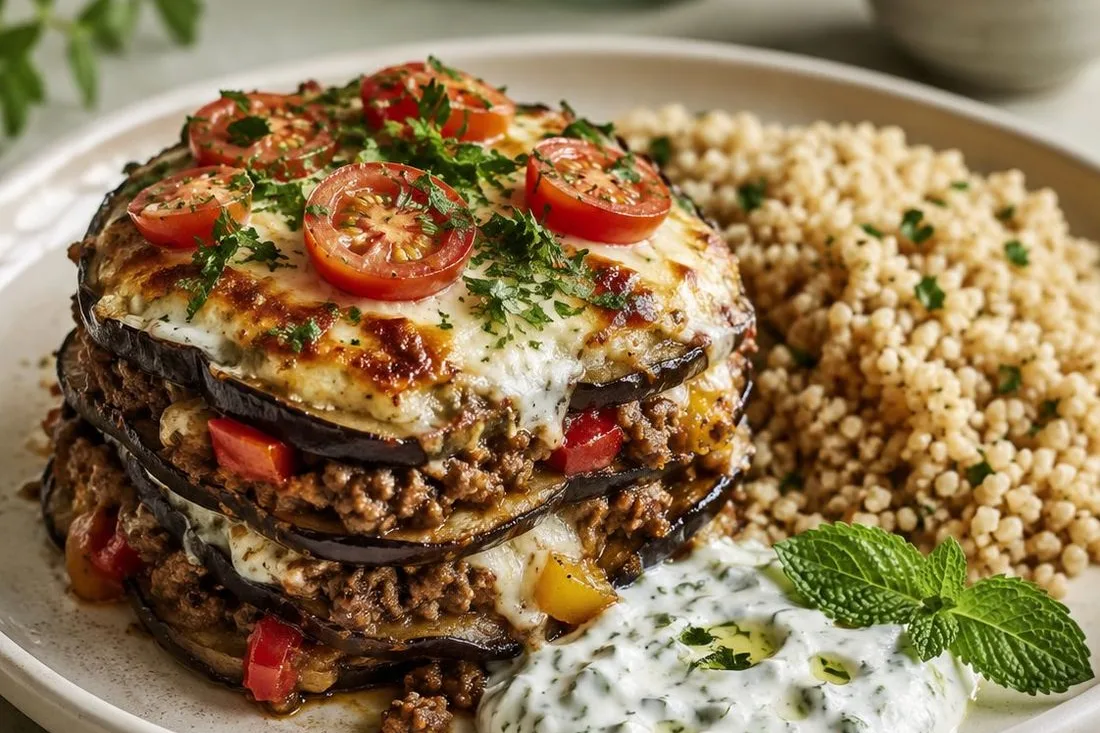
This question comes up almost every day: what do I eat on a diet, and what is a light dinner that fills me up so I do not go to bed hungry? The practical answer is that a good dinner puts three things on one plate: a clear portion of protein, plenty of vegetables, and a small amount of starch and fat. Chicken stuffed eggplant does exactly that, which is why it is one of the easiest answers if you are looking for new diet food that does not feel like punishment.
One serving (one large stuffed eggplant) has 460 kcal and 45 g of protein, and it sits comfortably next to a plain salad. Harvard's healthy plate idea is simple: half the plate vegetables and fruit, a quarter healthy protein, a quarter whole grains [2]. The eggplant is the vegetable, the chicken is the protein quarter, and the sweetcorn and mozzarella finish the flavour without turning it into a heavy meal.
This recipe is very suitable for a diet and helps if you are trying to lose weight, but it is also just a good family dinner for anyone who likes well seasoned, satisfying food. No single meal guarantees a number on the scale, yet food that fills you for a sensible number of calories makes it easier to keep your habits going day after day [13].
For more everyday meals built on protein, read the article on 7 High-Protein Foods for Weight Loss from Everyday Meals, then come back to finish this recipe.
How many calories and how much protein are in chicken stuffed eggplant?
The recipe serves two, one large eggplant each. The Recipe Guide figures per serving are 460 kcal, 45 g protein, 34 g carbohydrate and 17 g fat. These are estimates for the quantities written, and they move a little with the size of the eggplant, the type of cheese and the amount of oil.
The 45 g of protein is the number that matters most. The International Society of Sports Nutrition position stand discusses roughly 20 to 40 g of protein in a main meal for people who train [11], so this serving sits at the high end, meaning it is a high-protein meal. You can reduce the chicken in the filling according to your total daily protein, and if you train, the daily total and its distribution across meals matter most. If you want a smaller portion, eat one eggplant with less filling and fill the rest of the plate with salad. Harvard also reminds us that the protein source matters, and chicken, fish and pulses are good options to rotate between [3].
The 34 g of carbohydrate comes from the eggplant, sweetcorn and onion, and it arrives with fibre. Fibre lengthens fullness and is linked in large reviews to better heart health [4, 5, 6], and research on carbohydrate quality favours carbohydrate from vegetables and whole grains over white flour and sugar [7]. So eggplant and sweetcorn are a sensible choice.
The 17 g of fat comes from the cream cheese, the mozzarella and the light spoon of oil. To lighten it, use reduced-fat mozzarella without changing the method.
What do I buy from the market, and what can I swap if something is missing?
The quantities for two portions:
1. Two large eggplants (about 600 g). Pick shiny ones that feel heavy in the hand, not wrinkled. 2. 300 g chicken breast, cut into small cubes. 3. Half a teaspoon of salt and one teaspoon of mixed spices. 4. One small onion, about 60 g, finely chopped. 5. About 100 g of green pepper, chopped. 6. Half a cup of sweetcorn, about 80 g. 7. Two tablespoons of light cream cheese, about 30 g. 8. Half a cup of grated mozzarella, about 60 g. 9. 20 g of sliced green olives.
Egyptian swaps are easy. If you have no breast, use minced chicken or lean minced beef. The sweetcorn can be replaced with peas, the cream cheese with Greek yogurt or mashed cottage cheese, and the mozzarella with a little grated rumi cheese, though that one is saltier. If you avoid dairy, keep the filling to chicken and vegetables and top it with a spoon of tahini loosened with lemon instead of cheese.
The cheese and olives carry salt, and the World Health Organization recommends staying under 5 g of salt across the whole day [1], so control the added salt and let spices, onion and lemon provide the flavour. Cheese and milk are also a good source of calcium [12].
How do I make chicken stuffed eggplant step by step?
Total time is about an hour, with only around 30 minutes of hands-on work.
1. Switch the oven on to 200 degrees C so it is hot by the time the eggplants are ready. Halve the eggplants lengthways and score the flesh in squares with a knife without cutting through the skin. 2. Put them on a tray, sprinkle a light pinch of salt and a quick spray of oil, and bake 20 minutes until the flesh softens. 3. Meanwhile cook the chicken in a non-stick pan with the salt, spices, onion and pepper for 8 minutes, until it is completely changed in colour inside and reaches 74 degrees C. That is the temperature the CDC gives for chicken safety [8]. 4. Scoop the flesh out of the eggplants, chop it small and return it to the pan with the sweetcorn and cream cheese. Stir for a minute. 5. Fill the eggplant boats with the mixture and top with the mozzarella and olives. 6. Return the tray to the oven for 10 minutes until the cheese melts and turns lightly golden.
One caution: do not rinse raw chicken under the tap, because it sprays bacteria onto the sink and surfaces [8]. Wash your hands, the knife and the tools after touching raw chicken. The exact gram weights sit on the Full recipe in the Recipe Guide if you want them open while you cook.
Should I bake or fry the eggplant, and how do I avoid bitterness and extra oil?
Eggplant is a real sponge. Fried, it drinks a lot of oil and raises the calories without you noticing. That is why this recipe bakes it with about a spoon of oil for the whole tray, and the result is tender with almost the same taste. This is the main difference between a diet stuffed eggplant and the traditional fried version.
If your eggplant tastes slightly bitter, sprinkle coarse salt on the cut flesh for 15 minutes, then rinse and dry it well before baking. That pulls out some bitterness and water. Watch the salt that stays on it, though, and do not add more salt to the filling afterwards. Small, fresh eggplants are usually less bitter than big old ones.
A few tips that change the texture:
1. Score the flesh before baking so the heat reaches the inside. 2. Do not hollow the eggplant out so much that the skin weakens and tears. Leave about a centimetre. 3. If the filling turns out wet, stir it over low heat for two more minutes to dry off the water. 4. For a crisp top, put the tray under the oven grill for two minutes at the end, and stay by it.
On fat: healthy plant oils in sensible amounts are part of Harvard's balanced plate [2], so you do not need to remove oil completely. You only need to measure it with a spoon rather than by eye.
What is the best dinner for a diet, and how do I build the plate around the eggplant?
There is no single magic dinner, but the dinners that fill you and sit well always combine protein and fibre. Chicken stuffed eggplant gives you both, so all you need beside it is something simple. Choose one of these three:
1. A large vegetable salad (cucumber, tomato and rocket) with a squeeze of lemon and a small spoon of olive oil. Bulky, low calorie vegetables fill the plate and the stomach [13]. 2. A light lentil soup in cold weather, because lentils add plant protein and fibre. 3. A quarter of a baladi loaf or two tablespoons of rice or bulgur if your day was physical or you will train after dinner. Whole grains are better than white flour when you can get them [7].
Rotate these through the week so the diet does not get boring. A helpful rule is that half the plate stays vegetables even when the main dish is cooked with cheese [2].
Small habits matter too: drink water before eating, eat slowly, and sit at the table rather than in front of your phone. If you feel hungry an hour later, read the article on Why am I hungry soon after a meal and what do I do? before you decide to add more food. If you want one simple habit for after your biggest meal, read the article on A walk after the hardest meal of your day.
What can I eat at night without piling on calories or going to bed heavy?
Many people ask about eating at night on a diet. The truth is that the clock alone does not add calories by magic. What matters is the total of your day and the size and type of the meal. What really hurts is a heavy, fried, fatty meal shortly before sleep, which causes heartburn or heaviness for many people.
Chicken stuffed eggplant suits the evening because:
1. It is baked, not fried, and the fat is moderate. 2. The protein is high, so you do not go to bed hungry and wake up searching the fridge. 3. It has plenty of vegetables, a large volume on the plate for reasonable calories [13].
If you eat dinner late, split the plate: eat the eggplant with salad and leave the rice or bread for lunch. Try to leave at least two hours between dinner and bed if heartburn bothers you. If hunger wakes you at night, the cause is often a small lunch or a very light dinner, so review the spread of your whole day, not only dinner.
Watch the snacks after dinner too. A cup of unsweetened tea or a small handful of nuts is very different from a bag of crisps. And if you want something sweet after the meal, the article on 70-Calorie Chocolate Cake with Oat Flour and Yogurt gives you a slice for only 70 kcal.
How do I vary the meals every week without getting bored?
The biggest reason people quit a diet is boredom with the same meals. So think of stuffed eggplant as a template whose filling you can change. Here are versions that keep the same idea:
1. Chicken week: the original recipe. 2. Beef week: 300 g lean minced beef instead of chicken, with cumin and black pepper. 3. Vegetarian week: boiled lentils, chickpeas and chopped vegetables in place of the chicken, with cottage cheese. 4. Courgette week: stuff courgette with the same filling, with a shorter baking time.
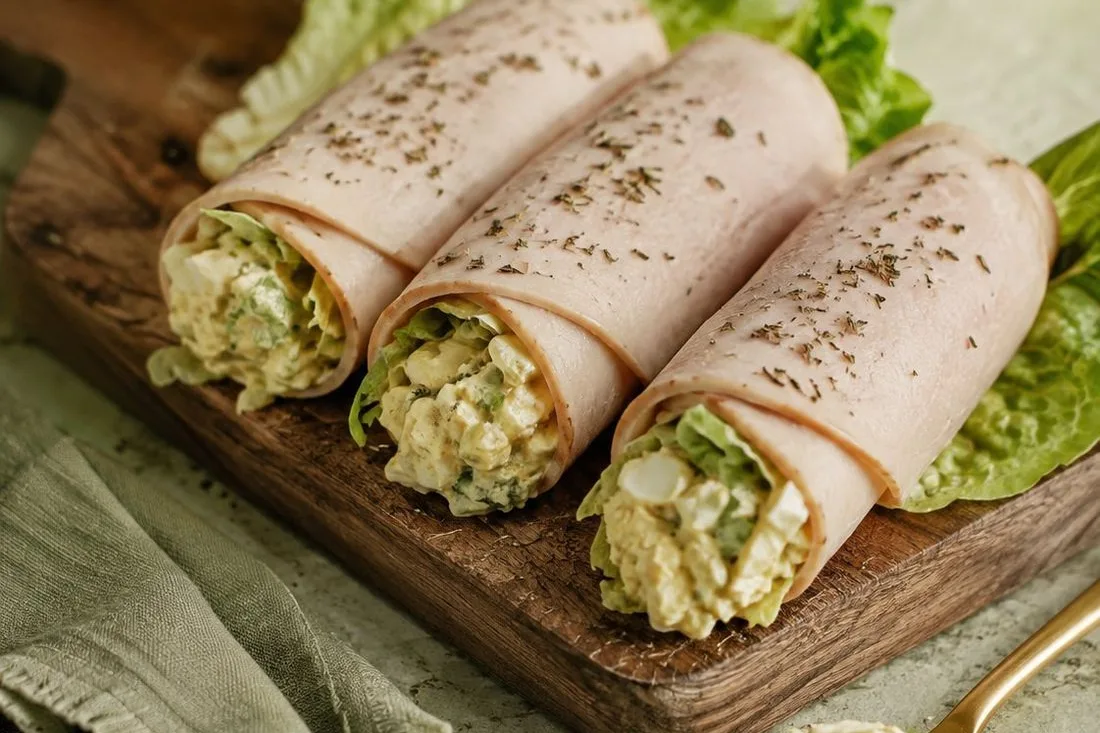
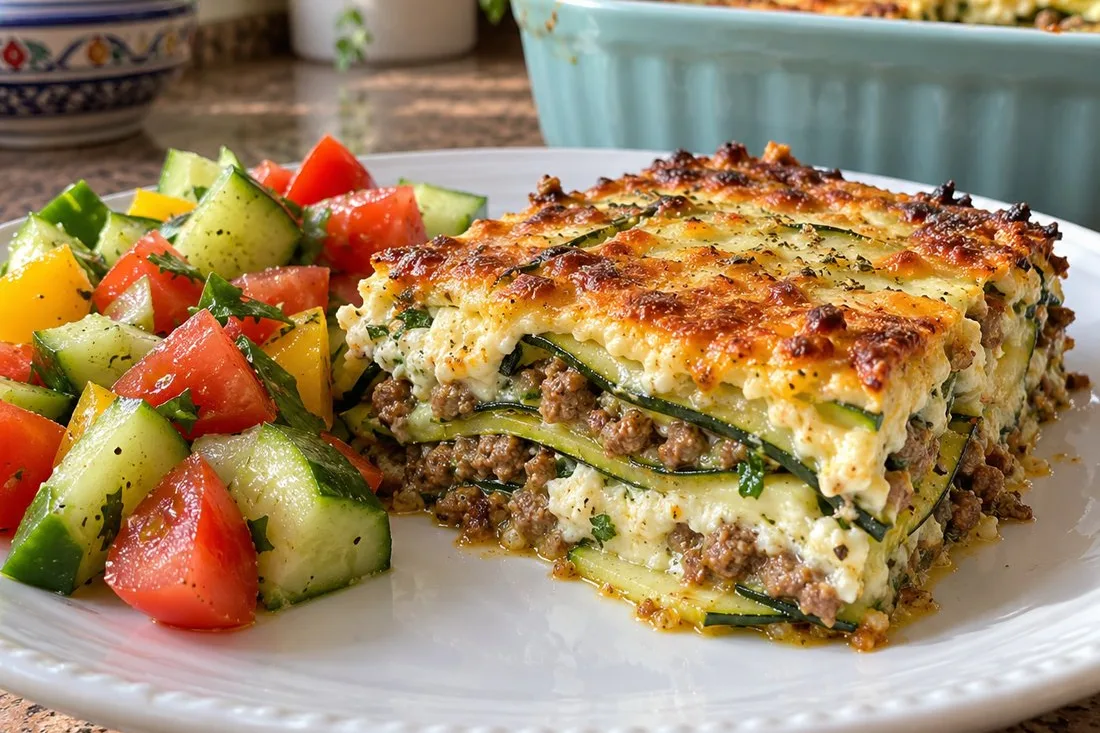
You can also build the rest of your week around other Egyptian meals. If you want a lunch prepared ahead, try the article on Air Fryer Chicken and Rice for Meal Prep. For a light work lunch without much starch, see the article on Turkey Egg Salad Rolls. And for a hot low-carb oven dish in the same spirit, there is the article on Low-Carb Zucchini Lasagna.
Write a simple weekly table and rotate the options, because eating a wider variety gives you more fibre and vitamins than repeating one dish [1]. If the scale does not move despite your effort, read the article on The scale is stuck but my measurements are dropping to see why the scale is not the only measure.
How do I store and reheat the stuffed eggplant safely?
Cooked chicken and cheese dishes must cool and be stored quickly. The CDC advises refrigerating leftovers within two hours, or within one hour when it is hot, above 32 degrees C [9]. So do not leave the tray on the counter after dinner and go to sleep.
1. Divide portions into airtight boxes while they are still slightly warm, so they cool faster than they would in one big tray. 2. In the fridge they keep for 2 to 3 days. 3. To reheat, use the oven or microwave until the dish is hot all the way through, and do not reheat the same portion more than once. 4. If you carry it to work for lunch, use an insulated box with an ice pack. Food is exposed to bacteria if it stays at room temperature, and keeping hot food hot and cold food cold is a basic part of prevention [10].
If you want to prepare a large batch, make only the filling ahead and keep it in the fridge, then bake the eggplant at serving time, so the texture stays better. Baked eggplant is a little softer after reheating, and that is normal. For trips, do not carry this dish without keeping it cold.
When do I need personal follow up instead of a ready recipe?
This recipe and others give you a practical idea, but your body is not anyone else's body. If you have diabetes, blood pressure, cholesterol, kidney or digestive problems, or if you train seriously and want to set protein and calories precisely, a written plan built on your case is better. And if your weight has been stuck for a long time despite your effort, follow up helps more than changing a recipe.
Before you make a big change to how you eat, ask your doctor if you take long term medication. No single recipe guarantees a particular result. What matters is keeping up habits that suit you.
The clinical nutrition team at La Rose clinics in Maadi and Fifth Settlement reviews your needs and builds a plan around your day and your Egyptian food, and you can book here: Book a nutrition consultation.
If you want to continue the light eating journey, open the article on Diet Chocolate Cake for something sweet, the article on Turkey Egg Salad Rolls for a quick lunch, and the article on Low-Carb Zucchini Lasagna if you want an oven dish with less carbohydrate. They all come from the same group, so each recipe completes the others.