Can One Cooking Session Give Me a Quick Healthy Breakfast for Several Days?
Yes, and veggie egg muffins are the easiest way to do it. You whisk 6 eggs with cherry tomatoes, yellow pepper and light mozzarella, pour the mix into a muffin tin, bake 15 to 18 minutes, and end up with 8 muffins that fit comfortably in your hand. One serving (two muffins) gives about 155 kcal, 14 g protein, 4 g carbohydrate and 9 g fat, a low-carb breakfast that does not feel like deprivation.
What I like about this recipe is that it needs no skill. There is no stirring over a flame, no flipping, and no eggs sticking to the pan. It also serves many people at once: the office worker who eats breakfast at the desk, the student who carries it in a bag, the parent packing children for school, and the person training who wants protein with no effort. They can all eat from the same tray.
Eggs are a complete protein source, and Harvard lists eggs among good protein foods next to yogurt, cheese, legumes and nuts, while stressing variety [1]. The World Health Organization treats variety and food safety as core parts of a healthy diet [8]. Food safety matters a lot here because the muffins are prepared ahead and stored, which we explain in detail below.
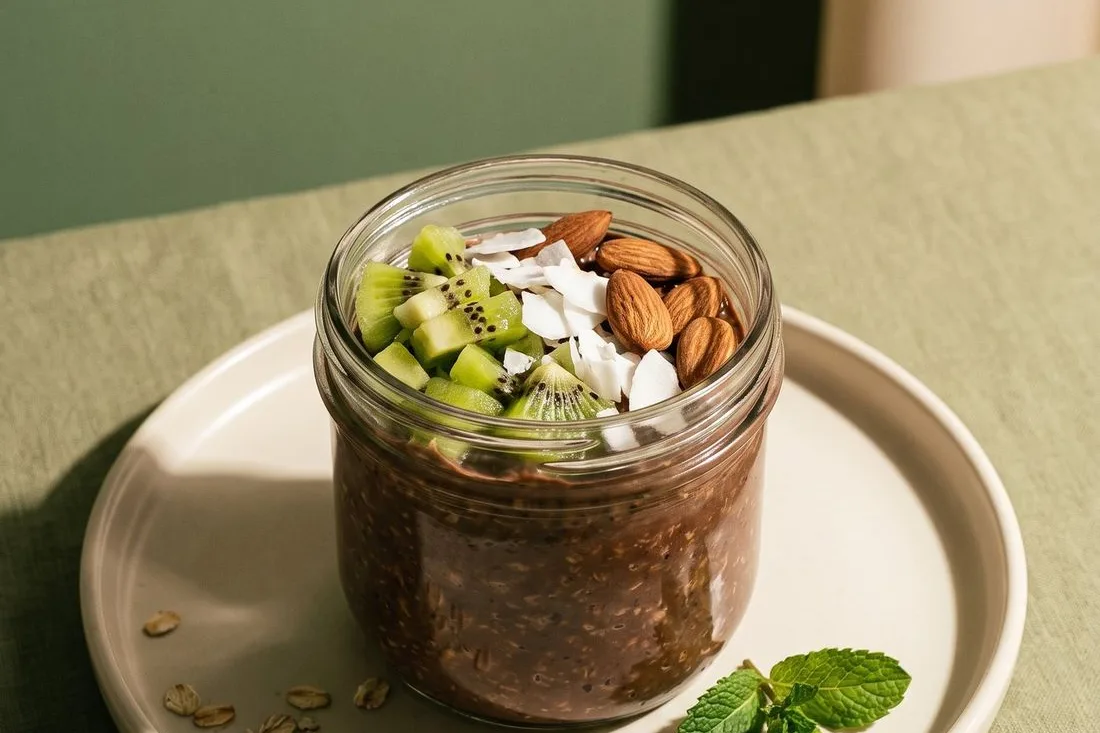
If you want a second breakfast you can prepare the night before without any oven, read the article on chocolate banana overnight oats, so you have two options to alternate through the week.
How Many Calories and How Much Protein Are in a Serving?
The recipe makes 8 muffins, and the serving in the Recipe Guide is two muffins. The numbers per serving:
1. Calories: about 155 kcal. 2. Protein: 14 g. 3. Carbohydrate: 4 g. 4. Fat: 9 g.
So one muffin is roughly 78 kcal and 7 g protein. The numbers move if you change the cheese or add oil, so if you track precisely, follow the recipe quantities exactly.
This serving counts as a light breakfast or a big snack. If you want it to carry you to lunch, there are 3 ways:
1. Eat 3 muffins instead of 2, which brings you to about 21 g protein. 2. Add a cup of yogurt or two spoons of cottage cheese beside the muffins, which adds protein and calcium. 3. Add a piece of baladi or brown bread or a slice of brown toast, because whole carbohydrate completes the plate. The Harvard Healthy Eating Plate suggests a quarter of the plate whole grains, a quarter protein and half vegetables and fruit [10].
The important comparison: the carbohydrate per serving is low (4 g), but blood sugar response varies from person to person, so count it within your meal and follow your treatment plan if you have diabetes. If you add a lot of white bread the picture changes. The US CDC explains that building a meal on non-starchy vegetables, protein and a reasonable carbohydrate portion is a practical approach for people with diabetes [11].
For athletes, the International Society of Sports Nutrition position stand discusses high-quality protein servings of 20 to 40 g spread across the day [2], so two muffins alone fall below that figure, and a third muffin with yogurt brings you close.
What Goes Into the Muffins, and Which Vegetables Will Not Make Them Soggy?
Ingredients for 8 muffins:
1. 6 large eggs. 2. 8 cherry tomatoes, halved. 3. Half a medium yellow pepper, diced very small. 4. Half a cup of grated light mozzarella. 5. A quarter teaspoon of salt and a quarter teaspoon of black pepper. 6. 6 sprays of oil for the tin.
The secret is in the vegetables: a good muffin must stay firm, which means vegetables that release a lot of water need care. Cherry tomatoes and pepper release relatively little water, so they work well. Leafy vegetables like spinach and molokhia release a lot, so if you use them, cook them first, squeeze them well and chop them small. Zucchini, eggplant and mushrooms are also better cooked before they go into the muffins.
Great choices from an Egyptian home kitchen:
1. Parsley, dill and coriander chopped fine (they do not release water). 2. Finely grated carrot. 3. Spring onion. 4. Broccoli blanched for one minute and chopped (this is the swap suggested in the recipe instead of pepper).
Fibre matters here. Harvard explains that vegetables, fruit, legumes, whole grains and nuts are fibre sources [7], the WHO treats vegetables and fruit as a foundation [8], and wide reviews link higher fibre intake to several health benefits [9][16]. So the more chopped vegetables you add, the more fibre you gain without many calories.
About salt: the recipe has only a quarter teaspoon for 6 eggs, and the cheese itself carries salt. If you are cutting sodium, leave the added salt out and let the cheese be enough.
How Do I Bake Veggie Egg Muffins Step by Step?
Prep takes 10 minutes and baking about 18:
1. Heat the oven to 180 C and spray 8 cups of a muffin tin with oil. 2. Whisk the eggs with the salt and black pepper in a large bowl until uniform. 3. Fold in the tomatoes, pepper and cheese. 4. Divide the mix between the cups, filling each only three quarters, because the muffins rise. 5. Bake 15 to 18 minutes, until the tops puff, turn golden and are set. 6. Leave the tin for 5 minutes, then release the muffins with a thin knife.
Important tip: let the muffins cool completely before sealing them in a box. If you close them while hot, the steam turns to water, ruins the texture and helps bacteria grow. The tested quantities sit in the full recipe in the Recipe Guide.
A silicone tin needs little oil, while a metal tin needs paper cases or extra spray. If your oven runs hot, cut the time to 15 minutes and watch them.
By the way, if you like to spread your effort across the week, bake the muffins on Friday and prepare the overnight oats on Sunday night, and you cover 7 days of breakfast without standing in the kitchen every day.
How Long Do the Muffins Keep, and How Do I Reheat Them Without Ruining Them?
Cooked egg food is a little delicate, so let us be clear. The US FDA says cooked egg dishes keep 3 to 4 days in the fridge, that eggs must be cooked until the yolk and white are firm, and that reheating should reach 74 degrees Celsius (165 F) [3]. For leftovers in general, USDA FSIS advises chilling quickly and storing in shallow containers [13].
Practical rules:
1. Cool the muffins on a rack or a spread-out plate, not in a pile. 2. Put them in the fridge within two hours of baking at most, or within one hour if it is hotter than 32 degrees Celsius, as USDA FSIS recommends [13]. Staph bacteria multiply when cooked food sits warm and is handled with unwashed hands, so wash your hands before packing [4]. 3. Store in a tight box, preferably with kitchen paper between the layers. 4. Write the date on the box, and after 4 days discard them even if they look fine. 5. For the freezer: wrap each muffin separately and place them in a freezer bag, and they stay good for several weeks. Thaw in the fridge overnight, not on the counter.
Ways to reheat:
1. Microwave: 30 to 45 seconds per muffin, covered with slightly damp kitchen paper until hot through. 2. Oven or air fryer: 5 to 8 minutes at 160 C, which gives the best texture. 3. The muffin must be hot in the centre, not just on the surface.
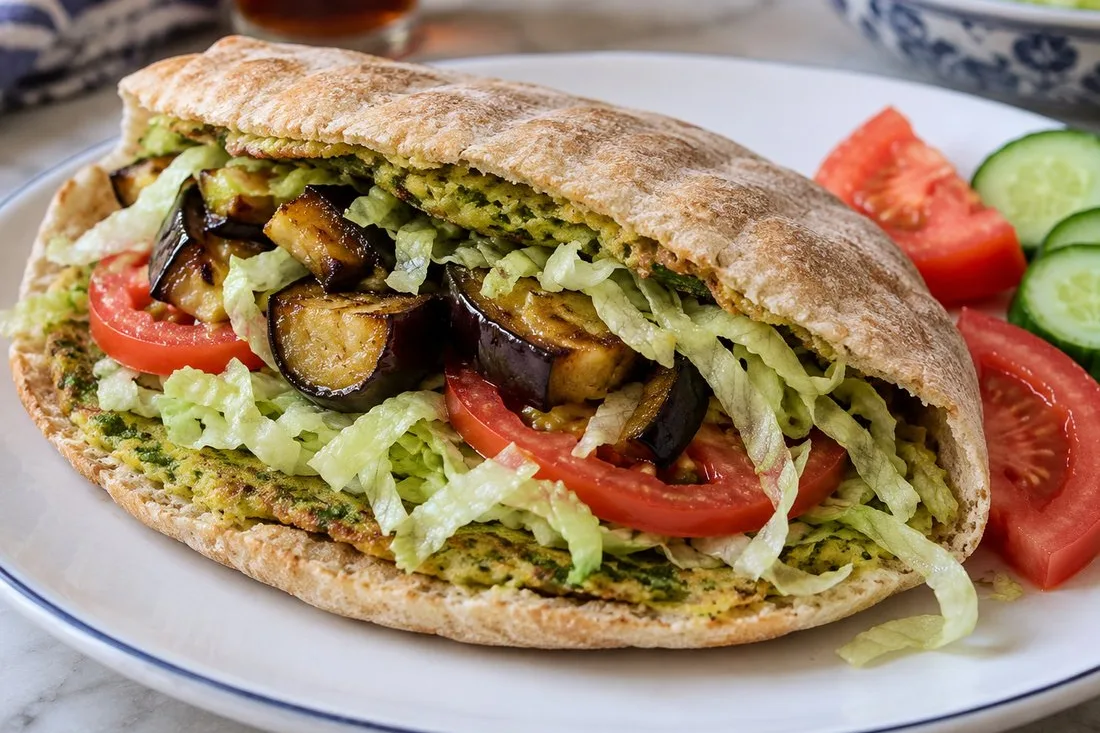
For the office or school: if you carry the muffins without a fridge, use an insulated bag with an ice pack, and eat them within about 4 hours of taking them out of the fridge. If there is no fridge and no ice, take something else such as the falafel and egg sandwich, and see the article on healthy sandwiches for work and school for how to keep it.
I Eat Many Eggs. Is That Bad for Cholesterol?
This question comes up often, and the honest answer is that it is not black and white. A review of randomised controlled trials found that higher egg intake in healthy people affected some blood lipid measures, and the researchers cautioned that long-term follow-up is needed [6]. A broad review of observational studies found no simple, uniform link between moderate egg intake and health problems [5]. That means the matter differs from one person to another.
In plain terms:
1. If you are healthy and your blood lipids are normal, moderation (about one egg a day) is acceptable for most people within a varied diet. 2. If you have high cholesterol, heart disease or diabetes, discuss the amount with your doctor or dietitian before you make 6 eggs a day a habit. 3. One muffin holds about three quarters of an egg, so a serving of two muffins is about an egg and a half.
This also answers a common question: can I eat them every day? If you have eggs at breakfast every day, keep the rest of the day light on eggs and rotate your protein between eggs, legumes, yogurt and fish.
On cooking method: baking the muffins with little oil is better than deep frying. On the meal level, put vegetables and fibre beside the eggs, because fibre slows absorption and improves fullness [7].
How Many Muffins Will Keep Me Full, and What Should I Add?
The base serving is two muffins, but needs differ. A quick guide:
1. Light breakfast or snack: two muffins with cucumber and tomato. 2. A filling breakfast for an employee or student: 3 muffins with yogurt or a piece of fruit and a small piece of baladi bread. 3. After training: 3 or 4 muffins with a banana or a piece of bread, because the body needs both protein and carbohydrate. 4. For children: one or two muffins depending on age, cut into small pieces.
Dishes that go well with it: the article on taameya egg pancakes offers another meal with similar ingredients, useful if you want variety. And if the goal is weight loss, see high-protein foods for weight loss, which gives ideas to complete the day.
On the question of hunger after breakfast: Mayo Clinic explains that lower energy-density foods (vegetables, fruit, whole grains) give a bigger portion for fewer calories [14], and these muffins are full of vegetables, so they fit that idea. If you want more fullness without many calories, add fresh vegetables beside them.
For studying or work: the muffins help because they do not cause the sharp drop that sugary foods do. But take water with you, since tea and coffee alone are not enough. The NHS advises water as the foundation of hydration [15].
What Can I Change for a Dairy Allergy or Different Tastes?
The muffins are very flexible, and these are the main changes:
1. Dairy-free: leave out the cheese and add more fresh herbs. If the cheese matters for taste, rely on parsley and spices. 2. Vegetarian: eggs are included, so this is lacto-ovo vegetarian. For a strict vegetarian, this recipe is not suitable, and chickpeas make a better base. 3. Without pepper: broccoli blanched for one minute. 4. Spicy: chilli flakes or finely chopped hot pepper. 5. More protein: add a spoonful of Greek yogurt to the mix, or a drained can of tuna. 6. Lower fat: use 4 whole eggs and 2 whites, though the muffin will be less rich.
About children: the muffins can be a good option for breakfast or the lunch box, but keep food safety in mind. Cut them into slices or small pieces for small children, and do not put large pieces of hard vegetables (like raw carrot) in them, since they are a choking hazard. The CDC lists the foods that cause choking in young children [12].
For variety in snacks, date and oat granola bars need no oven and travel in the same bag. The portions are in that same article.
When Should I See a Dietitian Instead of Relying on Myself?
Veggie egg muffins suit most people, but in some cases it is better to get specialist advice:
1. High cholesterol or heart disease, and you want to know how many eggs per week. 2. Egg or dairy allergy, or suspected allergy. 3. A specific weight loss or muscle gain plan where breakfast needs counting. 4. Pregnancy: eggs must be cooked well and storage matters. Ask about suitable vegetables. 5. Children who eat selectively and need a plan.
If none of these applies, try the recipe and see how you feel. For variety, look at the article on turkey and egg salad rolls, low in carbohydrate, since it offers a lunch idea in the same spirit.
If you want a plan that fits your day, your lipids and your weight, book a nutrition consultation at La Rose, and we will help you turn recipes into a realistic schedule.