Can I Make a Quick Healthy Breakfast the Night Before?
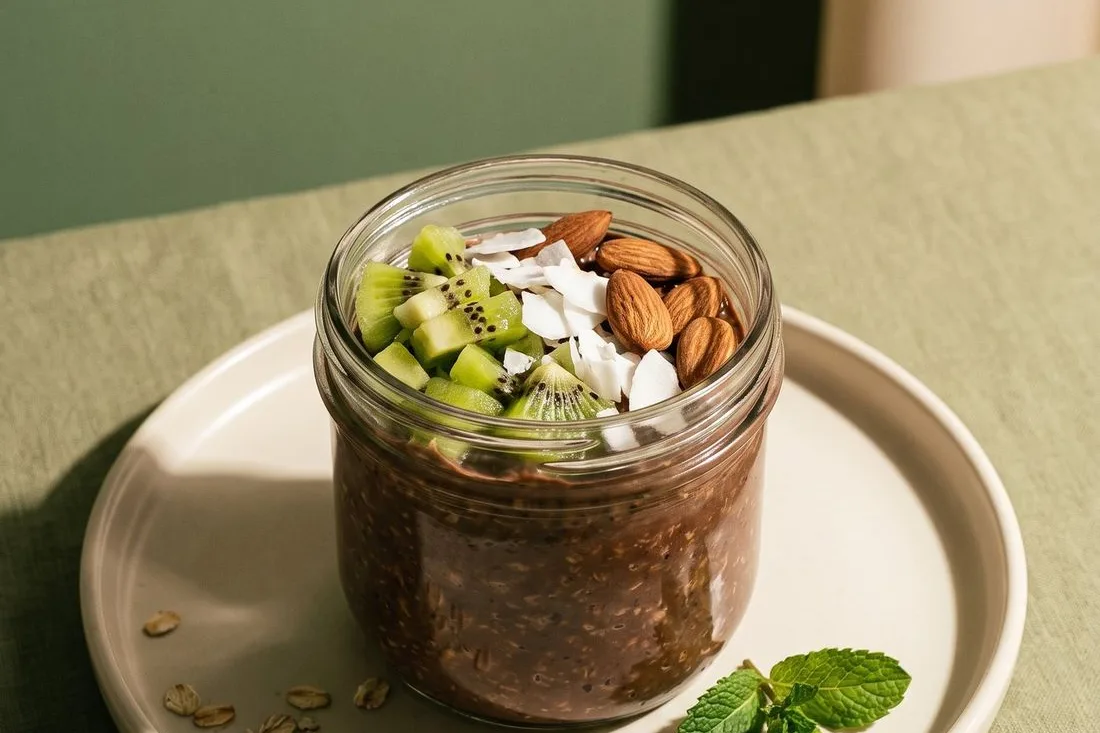
Yes, and that is exactly what overnight oats are for. You put oats, chia, milk and banana in a jar before bed, leave it in the fridge, and wake up to a cold breakfast that is ready in 30 seconds. No cooking, no pile of dishes, no stress in the morning rush. The version in this article uses banana with cocoa, kiwi, coconut and almonds, and comes to about 350 kcal with 13 g protein, 52 g carbohydrate and 11 g fat per jar.
It suits anyone with a tight morning: a university student with an 8 a.m. lecture, an office worker leaving before the traffic, a parent packing everyone else first, or someone who trains early and wants nothing heavy on the stomach. It is for everyone, and if you fill three jars on Sunday night you have breakfast for Monday, Tuesday and Wednesday.
Oats are the backbone because they contain a soluble fibre called beta-glucan. The Harvard T.H. Chan School of Public Health notes that this fibre may help with fullness and with blood sugar and cholesterol, while warning that part of the evidence is about whole grains in general rather than oats alone [1]. Large population reviews also link higher fibre intake with better heart and metabolic health [5][6]. So this breakfast is more than calories: it is an easy way to raise the fibre in your day.
If you want more protein ideas to build the rest of the day, read the article on high-protein foods for weight loss.
How Many Calories and How Much Protein Are in One Jar?
One jar (one serving) gives about 350 kcal, made up of 13 g protein, 52 g carbohydrate and 11 g fat. The figures come from the La Rose Recipe Guide and will shift if you change the milk or add more nuts, so it helps to know where they come from:
1. Half a cup of oats: most of the carbohydrate and fibre. 2. One large banana: natural sugar and potassium, and the reason you need no added sugar. 3. One tablespoon of chia: fibre and plant fat, and it makes the texture creamy. 4. Half a cup of milk or almond milk: protein varies, cow's milk gives more than almond milk. 5. Almonds and coconut: fat and crunch.
13 g protein is respectable for a light breakfast but not high. The World Health Organization describes a healthy diet as a balance of whole grains, vegetables, fruit and protein foods [3], and Harvard warns that protein should not push out fruit and whole grains [7]. If you train, the International Society of Sports Nutrition position stand mentions that healthy exercisers may need 1.4 to 2.0 g of protein per kilogram of body weight per day [11]. One jar will not cover that on its own, and it does not need to, because it is one meal, not a whole day.
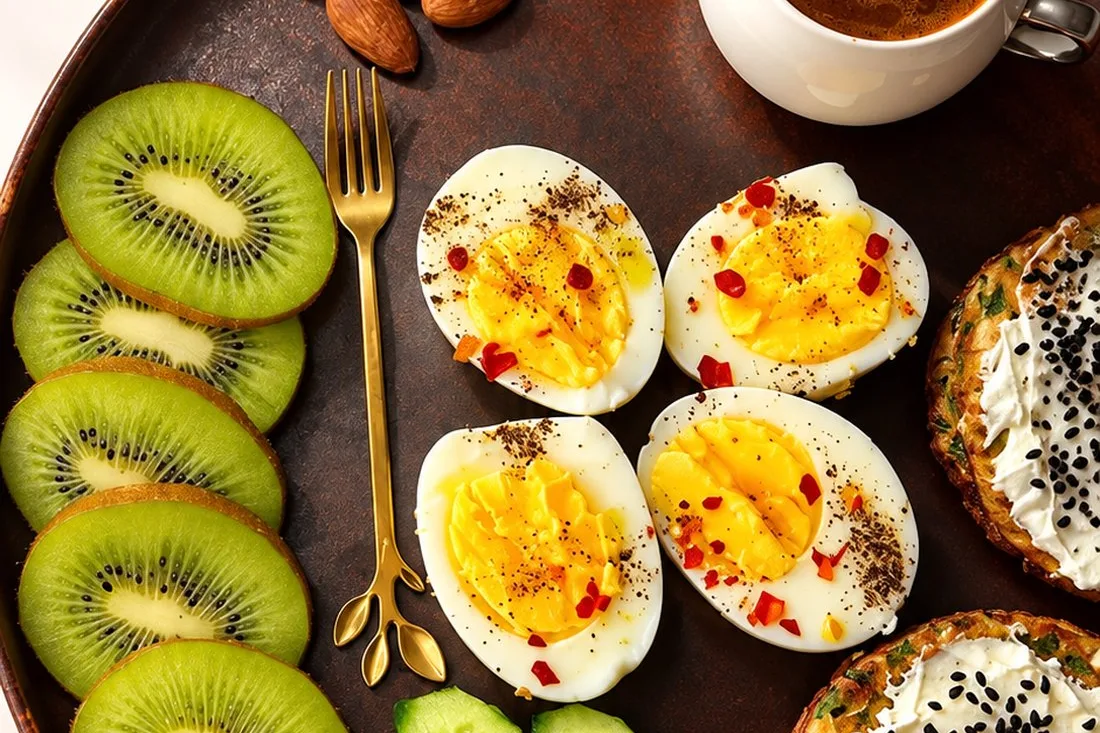
You can raise the protein without ruining the taste: add 3 tablespoons of Greek or regular yogurt, or replace the milk with thinned yogurt, which adds roughly 6 to 8 g depending on the type. A boiled egg on the side also makes it a more filling breakfast.
If you track blood sugar: the large banana and the oats are carbohydrate, so with diabetes or insulin resistance agree the right portion with a dietitian. The US CDC explains that managing carbohydrate portions is part of meal planning [10].
What Goes in the Jar, and What Is the Right Oat to Liquid Ratio?
The rule that works for any jar: oats and liquid in a ratio close to 1 to 1, so 120 ml of oats to 120 ml of milk, and the chia absorbs extra liquid so the texture ends up a little thicker. If you like it runny add two more tablespoons of milk, and if you like it thick use less.
Exactly what goes in one jar:
1. One large banana, sliced, in the bottom of the jar. 2. Half a cup of rolled oats. 3. One tablespoon of chia. 4. One tablespoon of raw unsweetened cacao. 5. Zero-calorie sweetener to taste (optional, and most people do not need it with the banana). 6. Half a cup of milk or almond milk. 7. Half a kiwi, diced, to go on top in the morning. 8. One teaspoon of coconut flakes and 5 almonds.
Why does the order matter? The banana at the bottom gets lightly mashed under the weight of everything else and sweetens the whole jar naturally. The cacao and chia go in with the dry oats first so they spread out and do not clump. The kiwi goes on in the morning because its acidity and its enzyme can make milk taste bitter if they sit together for many hours.
A note on chia: do not eat it dry by the spoonful and wash it down with water, because it swells and turns to gel. In the jar it soaks in milk all night and is soft and safe, which is the right way to use it.
About raw cacao: it contains a small amount of caffeine, so if you are sensitive to caffeine, or pregnant and watching the daily limit, use less or swap it for a spoon of peanut butter. The WHO advises limiting free sugars, which is why this recipe relies on banana rather than added sugar [3], and Harvard favours carbohydrate that comes with fibre, like oats [2].
How Do I Make Chocolate Banana Overnight Oats, Step by Step?
Prep takes 10 minutes with no cooking. The steps:
1. Put the banana slices in the bottom of a glass jar of about 350 to 400 ml, leaving some room at the rim. 2. Add half a cup of oats on top of the banana. 3. Add the cacao, the chia and the sweetener if you use it. 4. Pour in half a cup of milk and stir well with a spoon until there is no dry oat along the sides. 5. Close the jar and put it in the fridge for 6 to 8 hours or overnight. 6. In the morning add the kiwi, coconut and almonds on top and eat it cold straight from the jar.
If you forgot: put the closed jar in the freezer for two hours and stir once halfway. It will be close to the right texture. For the exact recorded quantities open the full recipe in the Recipe Guide.
How many jars should you make at once? Make 3 in the same session, because the slicing and stirring take almost the same time. Keep the kiwi and almonds in a small separate box and add them in the morning for freshness and crunch.
If you have more time at the weekend, try the article on air-fryer chicken and rice meal prep for the week, to cover lunches, so breakfast and lunch are prepared in a single session.
How Long Do Overnight Oats Keep, and What Happens to the Texture?
In a well-sealed fridge, overnight oats with banana stay good to eat for about 3 days. The general rule for home-prepared food is 3 to 4 days in the fridge [13], but with banana and fruit we shorten it because the texture declines before safety becomes the issue.
Texture, day by day:
1. After one night: creamy and soft with a light chew, the best texture for most people. 2. After two nights: thicker, because the chia and oats keep absorbing milk. You can stir in a spoonful of milk. 3. After three nights: softer with less chew, and the banana is darker. Still safe if the fridge is cold, but the taste is less pleasant.
When should you throw it away? If it smells sour, shows mould or has odd liquid, discard it without tasting. If it has been out of the fridge for more than two hours, discard it too. The US CDC advises chilling perishable food within two hours, or within one hour when the temperature is above 32 degrees Celsius [12], which matters in an Egyptian summer if the jar is in a bag without ice.
Practical tips for university and work:
1. Close the jar with a tight lid and put it in a bag with a small ice pack or a frozen water bottle. 2. If there is no fridge where you go, prepare it in the morning instead: carry the oats and chia in one box and the liquid in a small bottle, and mix at breakfast time. Oats absorb the liquid in 20 to 30 minutes and are fine to eat. 3. Use a clean spoon every time, because saliva and crumbs in the jar shorten its life.
For exam week, prepare 3 jars on the first night and 3 more later, so you do not have to think about breakfast under pressure. If you also want a portable protein meal, read the article on veggie egg muffins, which are baked in one batch and last up to 4 days.
Will It Keep Me Full Until Lunch, and What If I Am Hungry Two Hours Later?
The jar combines protein and fibre and may help with fullness, though how long it lasts varies from person to person, because it carries fibre from the oats, chia and banana, fat from the almonds and chia, and a moderate amount of protein. Soluble fibre slows digestion, and Harvard notes that fibre from whole grains, fruit, legumes and nuts is valuable and that oat beta-glucan may help with fullness [2]. Broad reviews also link higher fibre intake with better blood sugar, lipid and blood pressure markers in people generally [4], so this small habit builds up over time.
If you are hungry two hours later, that does not mean the recipe is wrong. Common reasons:
1. The protein at breakfast is lower than your need, especially if you train or have a larger body. 2. Short sleep, or breakfast came later than your usual time. 3. You had tea or coffee instead of water, and water changes the feeling of hunger. The NHS advises water as the default drink for hydration [9]. 4. The jar is simply smaller than what you actually need.
Fixes: add Greek yogurt or a boiled egg beside the jar, or increase the oats to 3/4 cup. If the hunger keeps coming back every day, read the article on why we get hungry soon after a meal, which explains causes that go beyond breakfast.
For studying: a light balanced meal is easier on you than a heavy one before a lecture, because a heavy meal can cause drowsiness. Drink water with breakfast and cut back on sweetened drinks. That applies to an employee before a morning meeting just as much as to a student before a lecture.
Can I Swap Ingredients for Allergies, Budget or Taste?
Yes, and the jar is very flexible. Tried and tested swaps:
1. Nut-free: replace almonds with sunflower or pumpkin seeds, which is the safe route for a school or university that bans nuts. If seeds are an issue too, just leave the topping off. 2. Lactose-free: almond, oat or lactose-free milk, and check the label for added sugar. 3. More protein: Greek yogurt, full-fat milk with a spoon of milk powder, or a spoon of peanut butter instead of the cacao (more protein, fat and calories, with no added sugar). 4. Budget-friendly: full-fat milk or thinned yogurt instead of imported almond milk, seasonal banana instead of kiwi, and loose oats instead of small boxes. The cost drops a lot without losing nutritional value. 5. Without cacao: a spoon of cinnamon and a drop of vanilla, and the banana sweetness is enough. 6. A lighter texture: less chia (half a tablespoon) and more milk.
If you want to change the whole look: add berries, grated apple or chopped dates. For dates, read the article on date and oat granola bars because it explains the right amounts and how concentrated the sweetness is.
For reference, the WHO notes that the better carbohydrates are those that come with fibre and are not refined [3], which is why rolled oats are a better pick than sweetened instant oats.
A note about young children: if you serve this to a small child, mash the nuts or leave them out, because whole nuts and hard pieces are a choking hazard.
After Breakfast, How Do I Pack Lunch for Work or University Without It Spoiling?
Breakfast is only the first piece, but lunch is what ruins the day if it spoils. A simple idea: whatever you do for breakfast, do for lunch, which means prepare the night before and keep the delicate food cold.
If you want to take the falafel and egg sandwich from the article on healthy sandwiches for work and school, carry it in a cool bag with an ice pack and do not leave it at room temperature for more than two hours (one hour in hot weather). The fresh vegetables go beside it, not inside it, so the bread does not go soggy.
A lunch plate can follow the Harvard Healthy Eating Plate: half the plate vegetables and fruit, a quarter whole grains and a quarter healthy protein [8]. Anything with animal protein (egg, chicken) should be chilled immediately and not left out for more than two hours [12].
Across the week, spread the foods out so the same meal does not repeat five days in a row, because boredom is the biggest reason people give up on advance preparation. Change the flavour (cocoa, cinnamon, berries) and the toppings each day, and keep the base the same.
Finally, if your workplace or university has a small kitchen, claim a shelf in the fridge or label the jar with your name and the preparation date in marker, so nobody throws it out and its age is clear.
When Should I Book a Nutrition Consultation Instead of Experimenting Alone?
Overnight oats are simple food, but in some cases it is better to follow up with a specialist:
1. You have diabetes or insulin resistance and want to know the right portion of banana and oats. 2. You are trying to lose or gain weight on a specific plan and want breakfast counted inside it. 3. You train and want to spread protein across the day. 4. You have a food allergy or irritable bowel and feel unwell after oats or chia. 5. You feel constant hunger or morning fatigue with no clear reason.
A consultation builds a plan around your needs, not around the average person. If you want to start, book a nutrition consultation at La Rose.
In every case, start with one small step: prepare one jar tonight and notice how you feel in the morning. If you like it, increase the number. By the way, this recipe is one of many in the La Rose Recipe Guide, and all of them are open for anyone to try.