Healthy Drinks: Beetroot, Pomegranate and Date Juice, and How to Count It Properly
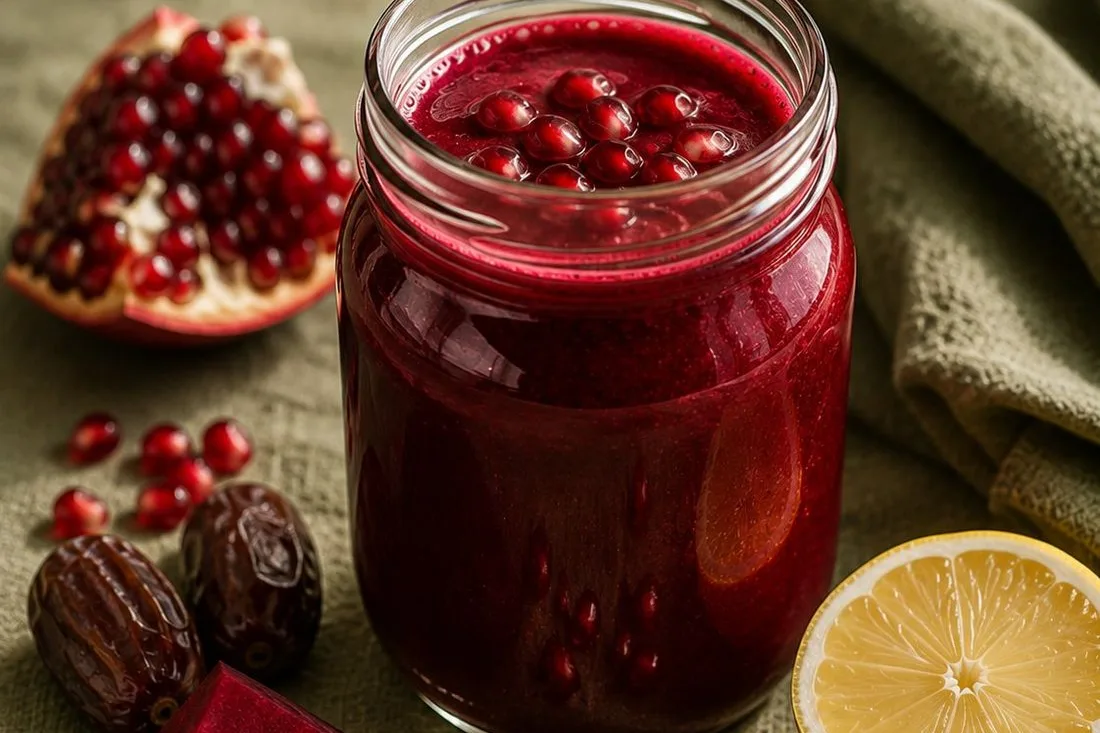
Beetroot, pomegranate and date juice has a lovely ruby colour and a sweet taste with a light tartness, and many people look for it as a healthy drink. The La Rose Recipe Guide makes one glass: a medium beetroot, a cup of pomegranate arils, 3 small pitted dates, half a cup of cold water or coconut water, and the juice of half a lemon. It takes 10 minutes with no cooking, and one glass has 260 kcal, 4 g of protein, 62 g of carbohydrate and 1 g of fat.
The number everyone should notice is 62 g of carbohydrate in one glass. There is no added sugar in the recipe, but all that sugar is fruit sugar released from the fibre of the fruit when it is juiced and strained. The World Health Organization counts the sugars in fruit juices among "free sugars", which it advises keeping below 10 percent of daily energy [1]. So the juice is a nice drink, but it is not water and not a replacement for whole fruit.
This juice is healthy and suits most of the family as an occasional drink, as long as you know the size of the glass you drink. The same recipe can be split into two small glasses instead of one large one, making each about 130 kcal.
In this article you will find answers to what people ask: does the juice lower blood pressure, does it treat anaemia, is it fine with diabetes, is it better before or after training, how to store it, and what to use when pomegranate is out of season. If you want to compare it with a warm drink with no added sugar, the article on the hot raw cocoa drink offers another idea for cold days.
How Much Sugar and How Many Calories Are in the Glass, and How Is It Different from Whole Fruit?
Per glass: 260 kcal, 4 g of protein, 62 g of carbohydrate and 1 g of fat. Most of the carbohydrate comes from three sources: the dates (about a third), the pomegranate and the beetroot. The dates alone give concentrated sweetness, and 3 small dates are roughly 60 kcal.
The difference between juice and whole fruit is fibre. Harvard explains that fibre slows sugar absorption and adds fullness [5]. When you strain a juice you lose a good part of it. That is why whole pomegranate arils or cooked beetroot are more filling than the glass.
This is also why the NHS advises that fruit juice and smoothies together should not exceed 150 ml a day, ideally with a meal [2]. Harvard treats water, tea and coffee without sugar as the best everyday drinks and warns against heavy juice intake [3].
So the full glass (about 350 ml) is more than twice that amount. That does not mean it is forbidden, but treat it as a healthier liquid dessert: once or twice a week, or split into two small glasses.
Ways to lighten the sugar:
1. Reduce the dates from 3 to 1 or 2. 2. Add more water or coconut water in place of some of the pomegranate. 3. Leave the beetroot raw and grated rather than strained, so the fibre stays in the glass. 4. Add ice rather than extra fruit. 5. Sip it slowly with a meal and not on an empty stomach.
For a comparison with a protein snack, the article on Greek yogurt protein bowl with eggs offers a filling meal with 32 g of protein, a very different choice in fullness.
Does the Juice Really Lower Blood Pressure and Improve Sports Performance?
Beetroot is rich in nitrate, and the body converts part of it to compounds that help blood vessels relax. In a systematic review published by Siervo and colleagues in 2013, nitrate from beetroot or leafy vegetables lowered systolic blood pressure by an average of about 4.4 mmHg [6]. A newer review by Bahadoran and colleagues in 2017 found an average reduction of about 3.55 mmHg in systolic pressure [7]. These are small to moderate numbers that depend on the dose and the length of use, and they are not a replacement for blood pressure medicine or for measuring it.
So if you take blood pressure medicine, talk to your doctor before making the juice a daily habit, especially if you take drugs that affect potassium or kidney function.
For sports performance, the results are mixed. The review by Dominguez and colleagues in 2017 found improvement in some endurance measures in some people [8], while a 2022 systematic review in female athletes (López-Torres and colleagues) found no conclusive effect of beetroot juice on aerobic performance and called for more studies [9]. So it may help some people and not others.
A practical suggestion if you want to try it before training: drink a small glass two hours before, and watch how you feel over 3 sessions. If you notice no difference, there is no reason to continue just because it is fashionable.
If you already train and wonder what to eat afterwards, the article on Greek yogurt protein bowl with eggs covers the protein that the juice lacks.
The bottom line is that the juice is tasty and helpful as part of a diet rich in vegetables and fruit, but your expectations for blood pressure and performance should be realistic.
How Do I Make Beetroot, Pomegranate and Date Juice at Home?
Ingredients for one glass: a medium beetroot (raw or lightly boiled), a cup of pomegranate arils, 3 small pitted dates, half a cup of cold water or coconut water, and the juice of half a lemon.
Steps:
1. Wash the beetroot well with a brush under running water to remove soil, then peel it and cut it into small cubes so the blender works easily. 2. Soak the dates in water for 5 minutes if they are dry so they soften. 3. Place the beetroot, pomegranate, dates and water in the blender and blend for a minute until smooth. 4. Add the lemon juice and blend a few seconds. 5. Strain it if you like a thin texture, or leave it unstrained to keep the fibre. 6. Serve cold with ice or without.
To sum up the roles: beetroot gives the colour, an earthy flavour and nitrate; pomegranate gives tartness and arils that add some fullness; dates give sweetness; lemon keeps the colour fresh; and water sets the texture. There is no need to exaggerate claims about the ingredients: there is no decisive study on the pomegranate and date combination.
The detailed recorded recipe is in the full recipe in the Recipe Guide.
As for beetroot changing the colour of urine or stool, this is normal and usually harmless. But if you see actual blood or other symptoms, consult your doctor.
Can the Juice Treat Anaemia or Raise Iron?
No, the juice is not a treatment for anaemia. Beetroot, pomegranate and dates contain small amounts of iron, and some people assume the red colour means it builds blood. In reality, treatment of iron deficiency is decided after tests and finding the cause. The NHS explains that treatment for iron deficiency anaemia is usually iron supplements prescribed by a doctor, together with treating the underlying cause [4].
So if you have symptoms such as tiredness, pale skin, palpitations or headaches, or you are pregnant or have heavy periods, get a blood count and ferritin test and see a doctor. Whether ferritin is low while the count is normal is a topic explained in the article on Low iron stores with a normal blood count: what does it mean?, and reading the blood count is covered in the article on Anaemia symptoms and the blood count: how to read it.
In everyday food you can support iron by combining sources such as legumes, eggs and meat with a source of vitamin C (like the lemon in the juice), because it helps absorb iron from plant food. But this is support for the diet, not treatment.
Avoid relying on the juice in place of prescribed medicine. And do not start iron supplements on your own because excess can harm. Testing comes first.
If you find you need to organise your food around low iron, blood pressure or sugar, our team at La Rose clinics builds a personal plan.
Is It Suitable for People with Diabetes, and What Is Better?
This juice has no added sugar, but it carries 62 g of carbohydrate from fruit sugar in one glass. For someone with diabetes, sugary liquids reach the blood faster than whole fruit. The National Institute of Diabetes and Digestive and Kidney Diseases (NIDDK) advises people with diabetes to manage carbohydrate, spread it across the day and pay attention to fibre [10]. No drink treats diabetes or changes its course, and medicine should never be stopped or changed because of any juice.
If you monitor your sugar, it is better to:
1. Ask your doctor or dietitian before including the juice regularly. 2. Drink a small glass (100 to 150 ml) with a meal, not alone. 3. Check your glucose two hours later and see how it affects you. 4. Use one date instead of 3 and leave the fibre in the glass. 5. Prefer whole fruit on most days.
For comparison, a whole pomegranate and boiled beetroot in a salad contain nearly the same elements with more fibre and slower sugar absorption.
The same advice applies to people trying to manage weight. A large glass is 260 kcal, about half a light meal. If you drink it and are hungry again, that is normal because liquids are less filling.
Also if you have had kidney stones before, ask your doctor or dietitian whether beetroot suits your plan, because the NIDDK advises people with calcium oxalate stones to talk with a professional about food sources of oxalate [13].
How Do I Store It, and What Are the Swaps When Pomegranate Is Out of Season?
Fresh juice is best. If you want to keep it, put it in a clean airtight container in the fridge. The CDC advises not leaving prepared food outside the fridge for more than two hours, or one hour if the temperature is above 32 C (90 F), and sets the fridge at 4 C or below [11]. So drink it within a day or two.
Unpasteurised fruit juice (made at home or at shops) carries a higher risk. The FDA advises pregnant women and young children to choose pasteurised or otherwise treated juice and to avoid untreated fresh-squeezed juice sold by the glass; if you cannot confirm the juice was treated, either do not drink it or boil it [12]. At home wash fruit and vegetables well and use clean utensils.
Swaps by season:
1. Strawberries instead of pomegranate in spring. 2. Orange in winter: sweetness and vitamin C. 3. Green apple: tartness and fibre if unpeeled. 4. A small piece of fresh ginger: a sharp flavour. 5. Mint: refreshment in summer. 6. Cucumber or lettuce to lighten the sugar and add volume.
You can freeze the cut beetroot ready and blend it with the other ingredients fresh.
For a version suitable for every family member, reduce the dates and increase the water. In pregnancy, the juice can be drunk in small amounts if it is pasteurised or, if unpasteurised, boiled first, and it complements rather than replaces food such as the article on pregnancy breakfast with eggs, yogurt and chickpeas.
If you serve it to children, make sure it is a small glass and that it does not replace milk or water.
What Are the Common Mistakes, and How Do I Fit the Juice into My Routine?
Mistakes that repeat with juices:
1. Treating them as a replacement for water. The NHS and Harvard agree that water is the main drink [2][3]. 2. Drinking a full glass daily without counting the sugar. 3. Relying on "detox" or "immunity" talk. No drink cleanses the body, the liver and kidneys do that. 4. Straining out all the fibre. 5. Adding honey or extra sugar on top of the dates. 6. Drinking it on an empty stomach with high sugar. 7. Leaving the juice in the heat for hours.
How to place it in your routine:
- Once or twice a week, a small glass with a meal. - As a side after a protein rich meal, not a replacement meal. - If you train, drink it beside your meal and do not expect magic results. - Alternate with whole fruit on most days.
Health is not decided by one drink but by the overall pattern of your food, sleep and movement.
If you need a plan tailored to your tests, medicines and goal, book a nutrition consultation with our team at La Rose clinics in Maadi and the 5th Settlement.