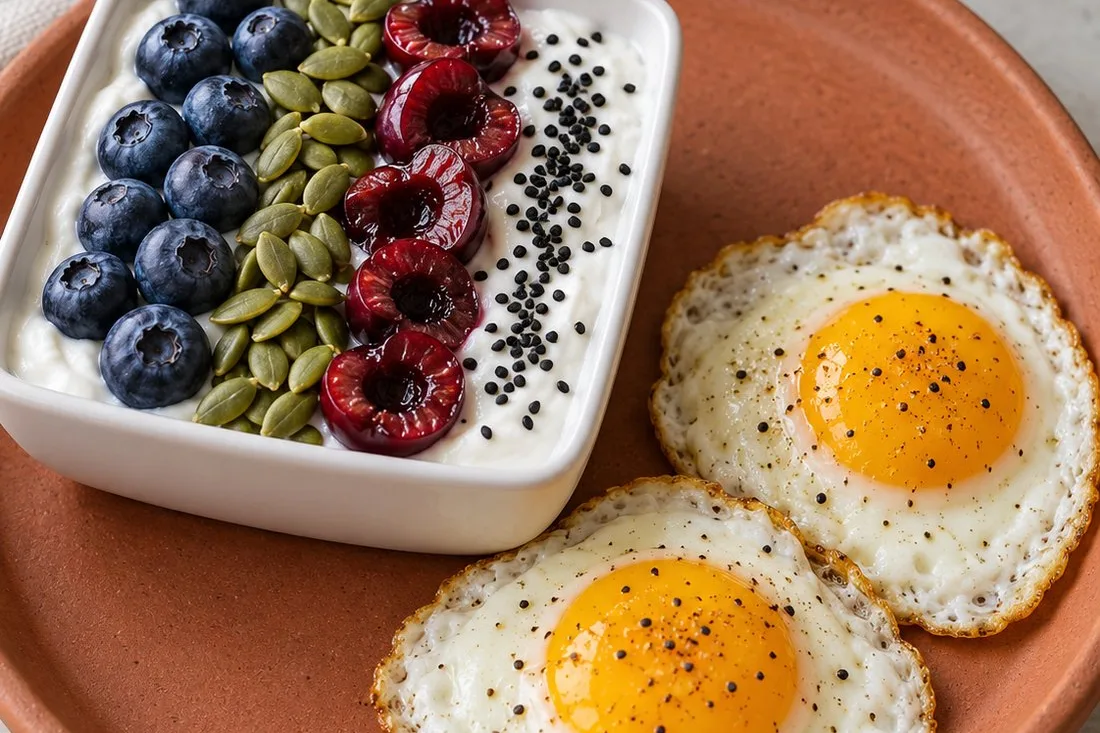
What Should I Eat After the Gym? A Greek Yogurt and Egg Bowl with 32 g of Protein
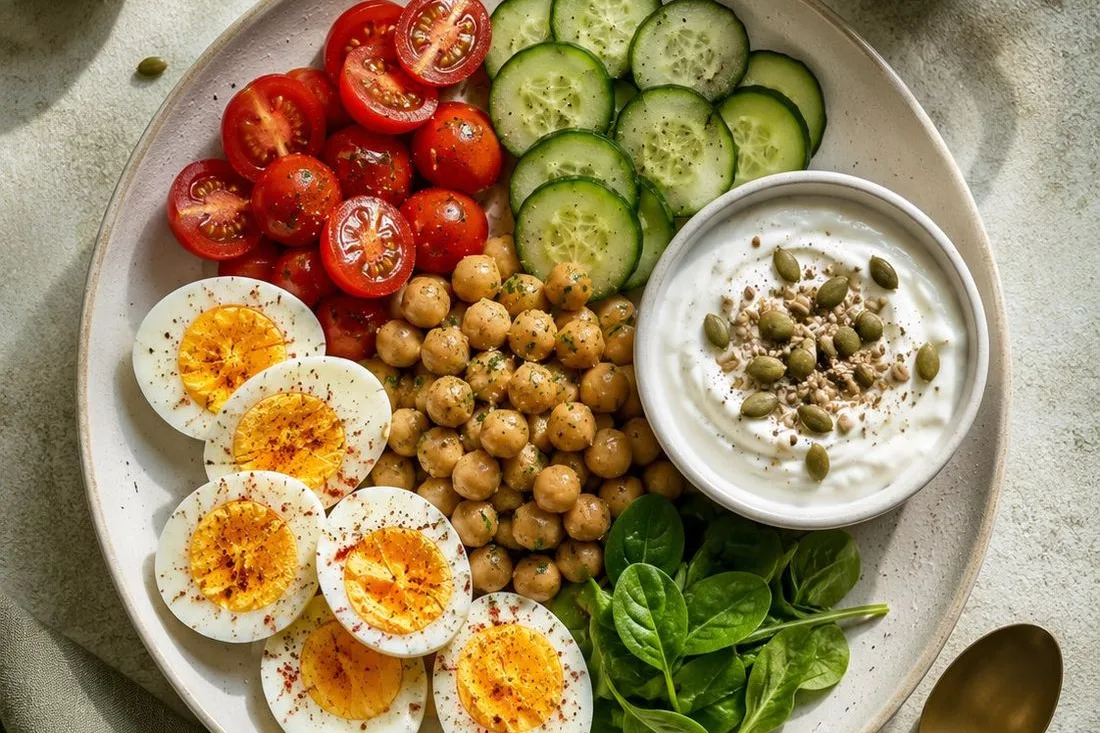
If you ask yourself what to eat after training without a long kitchen session and without protein powder, this bowl is a quick answer: low fat Greek yogurt with blueberries, cherries, pumpkin seeds and two eggs, ready in 10 minutes. One serving has 333 kcal, 32 g of protein, 18 g of carbohydrate and 15 g of fat, according to the La Rose Recipe Guide.
It is healthy food for anyone who trains at the gym or at home or who walks a lot, man or woman, and for anyone who wants a filling high protein snack at any time of day. The recipe's old name hinted at one group, but the numbers are the same for everyone, and the only difference between people is the portion size that suits their weight and goal.
The core idea is simple. After training the body benefits from a meal with complete protein and some carbohydrate, and that is no secret. What matters is that the meal actually gets eaten, is easy, affordable and not loaded with added sugar. Greek yogurt gives the creamy base, eggs raise the protein, and fruit gives natural sweetness without opening a pot of flavoured yogurt that carries added sugar.
The article covers the questions people search most: how many grams of protein are enough, when to eat, how to choose yogurt at the supermarket, and how to swap if you have an allergy or want something lighter. If you are looking for an oats idea after training, the article on Chocolate protein oats with banana after training offers a warmer alternative.
How Much Protein and How Many Calories Exactly?
One bowl gives you 333 kcal, 32 g of protein, 18 g of carbohydrate and 15 g of fat. Breaking the 32 g of protein down roughly:
- About 15 g from 150 g of low fat Greek yogurt. - About 13 g from two eggs. - About 3 g from 10 g of pumpkin seeds. - About 1 g from the berries and cherries.
The 18 g of carbohydrate comes from the fruit (30 g of blueberries and 40 g of cherries) and the lactose in yogurt. That is relatively low, so the bowl suits a snack after light training, or a meal with bread if the session was hard. To add energy, add 40 g of baladi bread or a third of a cup of oats, which adds about 110 kcal and 20 g of carbohydrate.
For weight loss: one egg instead of two saves about 70 kcal and removes about 6 g of protein. Boiled eggs instead of fried save about 40 kcal. Full fat yogurt instead of low fat adds about 55 kcal and 7 g of fat.
On quality, Harvard places yogurt, eggs, legumes, nuts and seeds among healthy protein sources and warns against processed meat [2]. Its Healthy Eating Plate puts healthy protein on a quarter of the plate alongside vegetables and whole grains [3], so as a main meal this bowl sits well beside a salad or a piece of fruit.
As for eggs, large observational reviews have not found a uniform link between moderate intake and adverse outcomes [4].
How Much Protein Do I Need Per Day and Per Meal?
The International Society of Sports Nutrition (ISSN) position stand says people who train benefit from a daily protein intake above the general population minimum, in a range of 1.4 to 2.0 g per kg of body weight per day, with a single serving of roughly 0.25 g per kg, or about 20 to 40 g, spread every 3 to 4 hours [1].
In numbers: for a 65 kg person the daily range is about 91 to 130 g, and a single meal is about 16 g at 0.25 g per kg, or a bit more after a hard session. A 32 g bowl covers a full meal comfortably, or two light meals if you split it.
Note that this range is for healthy people who train, not a recommendation for everyone. With kidney disease or any medical condition, the amount should be set with your doctor. Harvard also warns that raising protein should not crowd out fruit, whole grains and fibre [2].
To be clear, training alone is not enough, and enough protein across the day matters more than catching a short window of minutes after the session. The better habit is to spread protein across meals.
If your goal is weight loss while protecting muscle, the article on How to protect muscle while losing weight explains how to set protein alongside a calorie deficit.
Why Greek Yogurt, Berries and Eggs in This Bowl?
The ingredients are few and each has a reason:
1. 150 g of 0% Greek yogurt: a creamy base concentrated in protein because it is strained. It also brings calcium, and the NHS says adults need 700 mg a day [7]. 2. Two eggs: complete protein and iron. The NHS notes that iron helps carry oxygen around the body [6], which matters to anyone who trains often. 3. 30 g blueberries and 40 g pitted cherries: colour, natural sweetness and a little fibre. Harvard lists fruit among useful fibre sources [10]. 4. 10 g pumpkin seeds: crunch and useful fats. 5. 1/2 tsp nigella and black pepper: flavour with almost no calories.
Dairy also contributes iodine. The NHS presents iodine as a mineral important for the thyroid, found in milk, dairy and fish [8].
You may wonder why not honey or sugar. The answer is that fruit is enough, and the World Health Organization recommends keeping free sugars below 10 percent of total energy [9]. This bowl keeps added sugar at zero.
For texture, spread the yogurt first and place the hot eggs on top a minute before serving, which warms the bowl slightly without thinning the yogurt.
How Do I Make the Bowl in 10 Minutes?
Preparation is 5 minutes and cooking is 5 minutes:
1. Heat a non-stick pan over medium heat with a drop of oil or a spray. 2. Crack in the two eggs and leave them for 3 to 4 minutes, flipping if you like them cooked on both sides, until white and yolk are firm. For safety, fully cooked is best. 3. While waiting, put 150 g of Greek yogurt in a bowl and spread it. 4. Scatter 30 g of blueberries and 40 g of pitted cherries over the yogurt. 5. Place the eggs on top and sprinkle 10 g of pumpkin seeds, 1/2 tsp nigella and black pepper. 6. Serve immediately.
For a pan free version: boil the eggs the day before, cut them, and assemble the yogurt and fruit as usual. If you store anything, keep the eggs apart from the yogurt and add the seeds only at serving time.
For the exact recorded details, open the full recipe in the Recipe Guide.
Should I Eat It Before or After Training, and How Do I Time It?
The honest answer is that flexible timing works. The ISSN points out that spreading protein across meals every 3 to 4 hours is useful [1], so the bowl can be eaten before or after depending on your schedule:
- 1.5 to 2 hours before training: possible, but lighten the fat and fibre so you do not feel heavy. Choose one egg, yogurt and fruit. - Within two hours after training: the full version with both eggs, and if the session was hard add the carbohydrate options above. - If you train early in the morning and have no appetite, drink water first and eat the bowl 30 minutes later. - In the evening, make the bowl your last substantial meal and leave two hours before bed.
What matters most is the total for the day, not the minute. The article on What to Eat Before and After a Workout: A Practical Guide gives detailed examples for different kinds of training.
If the goal is weight loss, treat the bowl as a meal and not as an add-on, meaning it should not be eaten on top of ordinary meals just because the protein is high.
How Do I Pick a Good Greek Yogurt at the Supermarket?
Supermarket shelves in Egypt carry many kinds of yogurt: plain, Greek, labneh, and flavoured or high protein versions. A quick buying checklist:
1. Turn the pot around and read the nutrition table. Protein per 100 g in a true Greek yogurt is usually clearly higher than in ordinary yogurt. 2. Check sugar. The sugar in plain yogurt is mostly natural lactose, but flavoured versions add sugar. The World Health Organization advises limiting free sugars [9]. Choose plain and sweeten it with fruit. 3. Read the ingredients: milk and live cultures should be enough. A long list of sweeteners, stabilisers and starch means it is a different product. 4. Choose pasteurised if the food is for a pregnant woman, children or older adults [12]. 5. Fat: low fat suits you if you want fewer calories, and full fat gives longer fullness.
Ordinary yogurt, labneh and Greek yogurt: ordinary is lighter in protein and cheaper, labneh is strained further and richer in fat and salt, and Greek sits in the middle. You can make a home Greek style by straining ordinary yogurt in a clean cloth for two hours in the fridge.
For lactose intolerance try lactose free yogurt or a fortified plant version, remembering that its protein is often lower.
Who Is This Bowl For, and What Are the Swaps for Allergies or a Lighter Version?
The bowl suits any adult who trains or wants protein, and works as a light family meal too. It is also healthy and safe in pregnancy provided the eggs are fully cooked and the yogurt is pasteurised [12]. If you need to avoid something, the swaps are ready:
1. Cottage cheese, 100 g, in place of the eggs: similar protein and lighter if you are limiting cholesterol. 2. Strawberries or frozen berries in place of blueberries and cherries, following the season. 3. Seed allergy: leave out the pumpkin seeds and subtract about 55 kcal. 4. Lactose free yogurt if lactose bothers you. 5. Plant based version: fortified soy yogurt and fried tofu in place of eggs. 6. For something warm, replace the fruit with apple stewed with cinnamon.
Protein with fibre helps build a balanced breakfast, and if you have PCOS or insulin resistance, the article on PCOS and weight: understanding the link and what helps gives more detail. If your iron is low, food advice helps but treatment depends on the blood test [6].
For variety within the same day, consider the article on pregnancy breakfast with eggs, yogurt and chickpeas as another breakfast, and the article on beetroot, pomegranate and date juice as a drink after eating, if you need one.
How Do I Store It, and Which Mistakes Spoil the Bowl?
Storage is simple: keep the components apart. Boiled eggs keep in the fridge for up to a week according to the FDA [5], Greek yogurt follows the date on the pot, and cut fruit lasts a day or two. An assembled bowl should be eaten within two hours outside the fridge, or one hour in hot weather, according to the CDC [11].
Common mistakes:
1. Using a flavoured protein yogurt with high added sugar instead of plain. 2. Loading the bowl with honey and granola so sugar and calories rise unnoticed. 3. Serving runny eggs to pregnant women or children [12]. 4. Adding the seeds too early so they lose their crunch. 5. Treating the bowl as the only meal for every day. Rotating protein sources is better: legumes, fish and poultry. 6. Forgetting vegetables and fibre. Harvard notes that fibre matters for digestion and the heart [10].
For the best result, plan your week: two days of yogurt and egg bowl, two days of oats, one day of fish. If you want a personal plan based on your weight and goal, book a nutrition consultation with the clinical nutrition team at La Rose clinics in Maadi and the 5th Settlement.
And if you would like a warm drink after eating in winter, the article on the hot raw cocoa drink explains a cup with 9 g of protein and no added sugar.