What Should I Eat for Breakfast While Pregnant? An Egg, Yogurt and Chickpea Tray the Whole Family Can Share
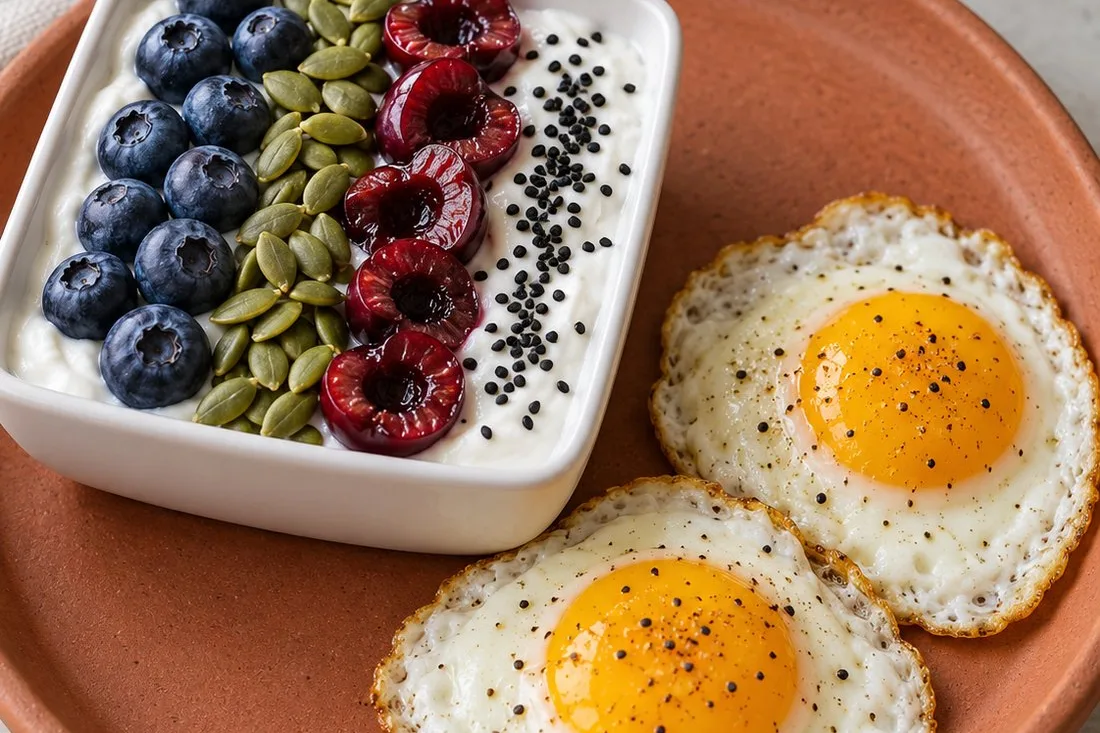
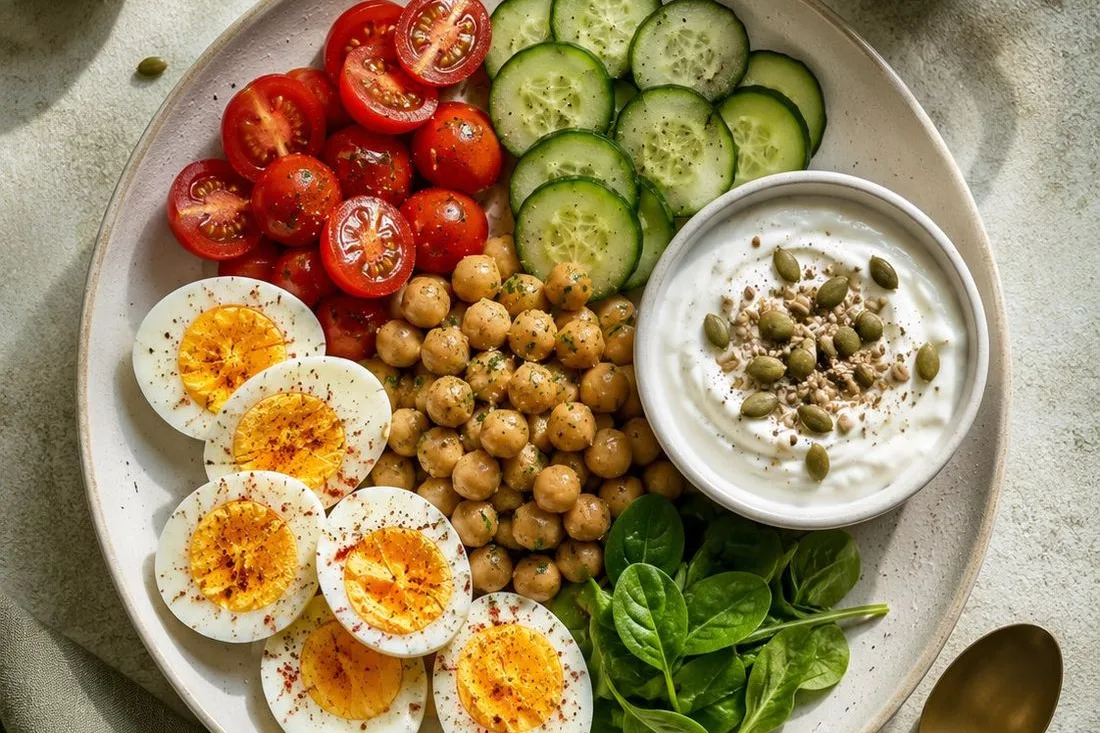
This is one of the most common questions in nutrition clinics: what can I eat for breakfast in pregnancy that fills me up and does not leave me queasy an hour later? The practical answer is one tray with well boiled eggs, Greek yogurt, cooked chickpeas, crunchy vegetables and seeds. It is very healthy and safe for pregnancy, and it works just as well for anyone else at the table who wants a breakfast that lasts until lunch, because every ingredient is ordinary food rather than special food.
According to the La Rose Recipe Guide, one serving has 535 kcal, 39 g of protein, 42 g of carbohydrate and 23 g of fat, and it takes about 12 minutes. That pattern matches the NHS advice that pregnancy eating should be varied, with fruit, vegetables, starchy foods, protein and dairy or alternatives [1]. It is not an exotic recipe. It is a familiar Egyptian plate put together in a sensible order.
What changes in pregnancy is not the ingredients but the cooking and storage. Eggs need to be boiled until the white and yolk are firm, and the yogurt must be made from pasteurised milk [2][7]. Once those two points are covered, this is one of the easiest breakfasts to repeat several mornings a week.
In this article we go through the questions people actually ask: calories, safety, nausea, preparing ahead, swaps, and when food alone is not enough. For ideas beyond breakfast, the article on baked eggplant with minced meat adds a warm family dinner to the same day.
How Many Calories and How Much Protein Are in One Tray?
The numbers per serving are 535 kcal, 39 g of protein, 42 g of carbohydrate and 23 g of fat. They are estimates from the Recipe Guide and can shift a little with egg size and the type of yogurt.
The protein comes from three sources working together. Three large eggs give the biggest share, the Greek yogurt (about 170 g) gives another large share, and half a cup of cooked chickpeas plus a spoon of pumpkin seeds finish the total. Mixing sources is better than leaning on one, because chickpeas also bring fibre, and Harvard describes legumes as a food that delivers protein and fibre together [9].
The 42 g of carbohydrate comes mostly from chickpeas, tomatoes, cucumber and yogurt, and the base tray has no bread. If your appetite is big or your morning is physical, add half a baladi loaf, which adds roughly 80 to 100 kcal and extra fibre if it is wholemeal.
Eggs are a regular part of healthy eating patterns. An umbrella review of observational studies found that moderate egg intake was not consistently linked with adverse outcomes, while noting that these studies are observational [10]. Fully cooked eggs can fit into a balanced breakfast, and the amount depends on your needs and the rest of your day; anyone with high cholesterol or heart disease should settle the quantity with their own doctor.
The 23 g of fat comes from the yolks, the pumpkin seeds and any olive oil you add, mostly useful fats. The small black coffee adds almost no calories at that size.
Why These Three Foods for a Pregnancy Breakfast?
Every ingredient on the tray has a clear job:
1. Eggs: three, boiled well. Complete protein and long lasting fullness, and easy to prepare the day before. The safety condition is that the yolk is firm. 2. Greek yogurt: about 170 g. It brings protein and calcium, and the NHS says calcium helps build the baby's bones and that adults need 700 mg a day [5]. Milk and dairy are also sources of iodine, which matters in pregnancy [6]. 3. Cooked chickpeas: half a cup. Fibre, plant protein and iron, and the NHS lists pulses among iron sources [4]. 4. Cherry tomatoes and cucumber: fluid, vitamin C and crunch, with almost no calories. 5. Pumpkin seeds and nigella: useful fats and flavour. The amount is tiny because the point is taste and texture. 6. Salt, black pepper and a little chilli: 1/4 tsp salt, 1/8 tsp pepper and 1/4 tsp chilli, and you can cut the chilli if heartburn bothers you.
The small coffee beside the tray is about 120 ml. The NHS caps caffeine at 200 mg a day in pregnancy and puts a mug of instant coffee at about 100 mg [2]. Caffeine varies with the type of coffee and how it is made, so work it out from the product label and count any tea, cola or chocolate you have later.
The article on 10 Good Foods for Pregnancy: Egyptian Choices and Safety Rules widens this circle to the rest of the day.
How Do I Make This Breakfast in 12 Minutes?
The steps are simple, and the order saves time:
1. Put 3 eggs in cold water to cover, bring to a boil, then let them boil for 10 to 12 minutes. That time makes sure the yolk is firm. 2. While waiting, drain half a cup of cooked chickpeas. If they are canned, rinse them well under running water to reduce the salt. 3. Halve 6 cherry tomatoes and dice half a small cucumber. 4. Put 170 g of Greek yogurt in a deep plate and spread it with a spoon. 5. Cool the eggs under cold water, peel them and cut them into quarters. 6. Arrange the chickpeas, vegetables and eggs around or on top of the yogurt. 7. Sprinkle a spoon of pumpkin seeds and 1/2 tsp nigella, then the salt, pepper and chilli. 8. Serve the tray with the small coffee or a glass of water.
For texture: if the yogurt is runny, strain it for 10 minutes in a clean cloth. For hygiene: wash your hands before and after handling the eggs and use a clean knife and board for the vegetables, since cleanliness is part of food safety in pregnancy and is repeated in FDA guidance [7].
For the exact recorded quantities, open the full recipe in the Recipe Guide.
How Do I Make Sure the Eggs and Yogurt Are Safe in Pregnancy?
Safety in pregnancy comes down to a short list you can memorise:
- Eggs are boiled or cooked until white and yolk are firm. Avoid runny eggs, homemade mayonnaise and desserts that contain raw egg [2][7]. - Yogurt, milk and cheese come from pasteurised milk. The FDA advises choosing pasteurised dairy in pregnancy [7], and the NHS warns against unpasteurised milk and soft mould ripened cheeses [2]. - Cottage cheese and ready packed white cheese should come from a known brand with pasteurisation on the label, and should not be eaten if the pack has been open for a while. - Avoid raw sprouts of every kind (alfalfa, clover, radish, mung bean and others); if you use them, cook them thoroughly until steaming hot. Washing alone is not enough for sprouts [14]. - Boiled eggs keep in the fridge for up to a week, according to the FDA [8] and the cold storage charts on FoodSafety.gov [13]. - Cooked or cut food left outside the fridge for more than two hours should be thrown away, and one hour when the weather is hot, above about 32 C, according to the CDC [11]. - Smoked salmon, raw sushi and pickles from unknown sources are simply not part of this tray.
The detail people forget is the boiled egg in a bag. If you carry breakfast to work, keep it with an ice pack rather than in a warm bag.
In every case, food prepared at home and kept clean is easier to keep safe than ready made food, which is also why this tray suits everyone else in the family: the safety steps cost nothing in taste.
What If Nausea or Heartburn Makes Breakfast Hard?
In the first months many women find a big breakfast heavy. The answer is not to skip breakfast, it is to split it:
1. Start with something small and ready by the bed: one boiled egg, a cup of yogurt or a slice of baladi toast, then finish the tray half an hour later. 2. Serve the yogurt and eggs cold, since cold food smells less than hot food for many people. 3. Cut the chilli and sharp seasoning and keep to salt and lemon juice. 4. Take small bites slowly, and drink between meals rather than a large amount with the food. The NHS suggests roughly 6 to 8 glasses of fluid a day [12]. 5. If heartburn is the issue, reduce the coffee and finish breakfast at least two hours before lying down. If it keeps coming back, read the article on Heartburn in Pregnancy: When to Talk to Your Care Team to see which signs need assessment.
In the first trimester, if a full plate will not go down, the golden rule is that any safe food beats no food. Spread the tray over three or four small moments in the morning.
If vomiting is frequent and stops you keeping fluids down, tell your doctor, because that is a condition with treatment.
Who Is This Breakfast For, and How Do I Prepare It the Night Before?
This breakfast suits anyone who wants good protein in the morning: pregnant women, a husband with a busy start to the day, a student, or an older relative who needs protein to protect muscle. Without assigning it to one person, here is a prep timetable that keeps it ready:
- The night before: boil 6 eggs (enough for two days), drain the chickpeas into a container, slice the cucumber, and keep everything separate in the fridge. - In the morning: put the yogurt, peeled eggs, chickpeas and vegetables on a plate in two minutes. - For day three: boil a fresh batch and do not keep eggs longer than a week [8].
Cut the vegetables in the morning so they do not release water into the yogurt, and add the seeds last so they stay crunchy.
If you cannot chop anything at all, take the quick version: two boiled eggs, a cup of yogurt, a handful of chickpeas and tomatoes, which gives about half of the numbers. If you repeat this breakfast daily, change the toppings every few days for variety.
If you are following iron levels or anaemia in pregnancy, the article on Anaemia Symptoms: How to Read a Blood Count explains the numbers in the report. If your doctor tells you that you have gestational diabetes, read I Was Diagnosed with Gestational Diabetes: What Can I Eat Without Harming the Pregnancy? because the chickpea and bread portions will be adjusted.
Can I Swap Ingredients? Ful, Lentils, Cottage Cheese and Allergy Options
Of course, the tray is flexible:
1. Ful medames instead of chickpeas: about the same half cup, a staple Egyptian pulse. Reduce the salt and hot seasoning if heartburn is present. 2. Cooked lentils instead of chickpeas: iron and fibre, and gentler for anyone who struggles with chickpeas. 3. Pasteurised cottage cheese, 100 g, in place of one or two eggs if eggs are not tolerated during nausea. Add cucumber and tomato beside it. 4. Regular yogurt instead of Greek: protein drops a little because Greek yogurt is strained and concentrated. Choose plain yogurt without added sugar, and watch fruit flavoured yogurts, which carry more added sugar. 5. Seed allergy swaps: a spoon of crushed walnuts in place of the pumpkin seeds, or leave seeds out and subtract about 60 kcal. 6. Lactose intolerance: lactose free yogurt, or a plant based yogurt fortified with calcium. 7. Extra fibre: a handful of lettuce and rocket, or a slice of wholemeal baladi bread.
Not every swap keeps the 39 g of protein. The recorded values belong to the base recipe, and any change needs recalculating. Beyond swaps, if this becomes your routine, try replacing the whole plate with a different breakfast once a week for variety across the month.
Is Food Enough or Do I Need Supplements, and When Should I Book a Consultation?
A good breakfast does not replace the supplements your doctor prescribes. The NHS recommends 400 micrograms of folic acid daily until week 12 of pregnancy, because it is hard to cover from food alone [3]. Iron is also decided after a blood test, and the NHS explains that food sources help but treatment depends on blood results [4]. Iodine is found in milk and dairy [6], and calcium, 700 mg for adults, comes from yogurt, cheese, fortified bread and leafy greens [5].
So this tray delivers a meaningful share of protein, calcium, iodine and plant iron, but therapeutic doses are not its job. If you take supplements, take the version your doctor specified and ask before adding anything new.
When should you book a nutrition consultation? If you have any of these: nausea that has limited eating for more than two weeks, weight that rises or falls quickly, gestational diabetes, confirmed anaemia, a food allergy, or anxiety around food. We then build a plan around your tests and habits.
Book a nutrition consultation for pregnancy with the La Rose clinical nutrition team, in Maadi or the 5th Settlement.
If you want to continue the day's plan, the article on the Greek yogurt protein bowl with eggs, the article on beetroot, pomegranate and date juice and the article on the hot raw cocoa drink offer companion ideas, and the cocoa in particular contains caffeine that counts toward the 200 mg daily limit.