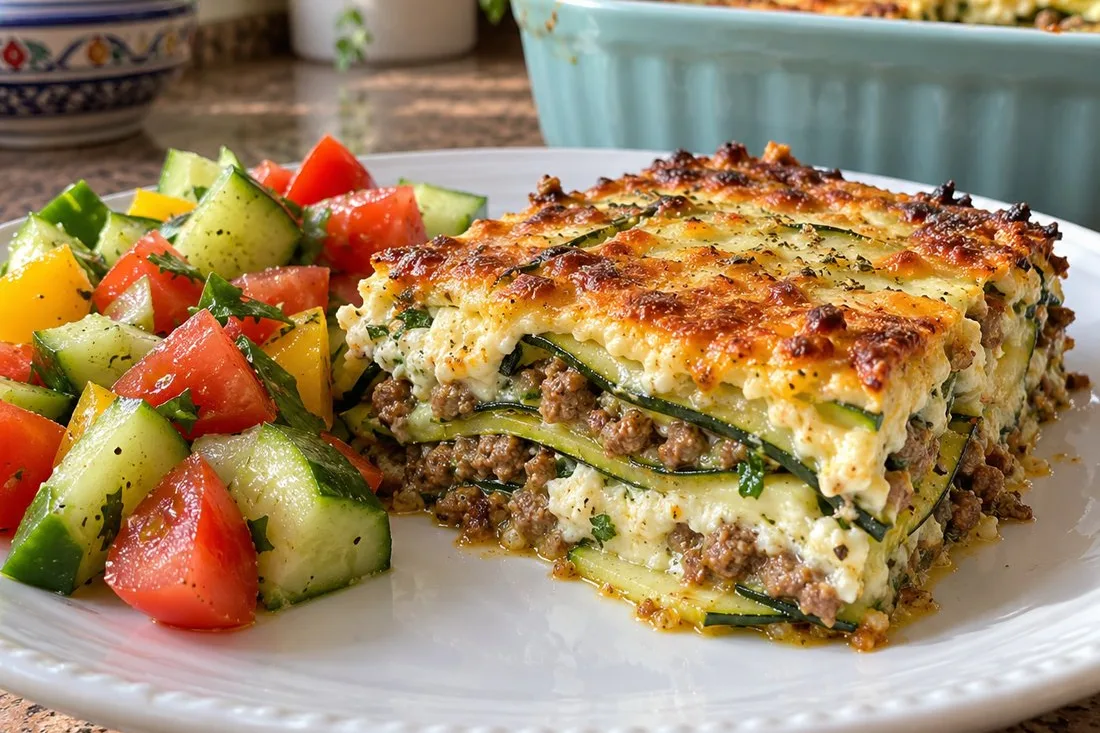
Is baked eggplant with minced beef really a healthy meal for the whole family?
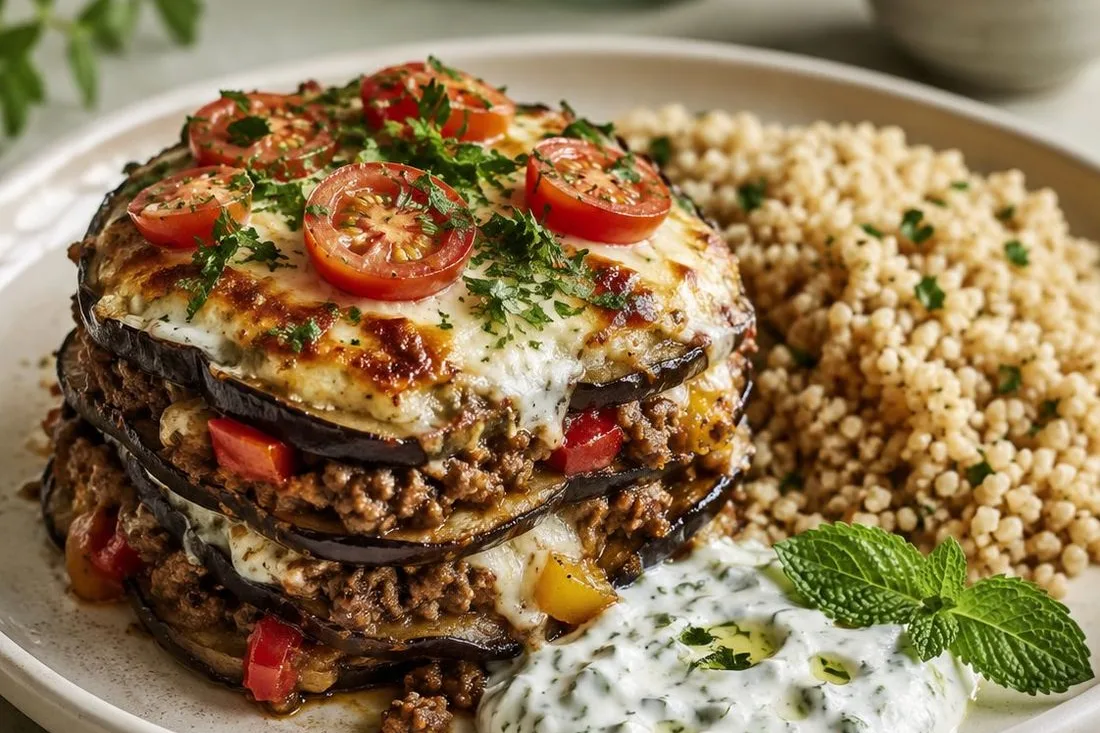
Yes, and it is one of the few dishes where adults and children both reach for the tray. According to the La Rose Recipe Guide, one serving of the baked eggplant stack has 380 kcal and 29 g of protein, and the recipe feeds 6 people. That makes it a full main dish: vegetables, meat, cheese, slow-digesting starch from bulgur and a herbed yogurt sauce in place of heavy gravies.
The whole idea is that the eggplant browns in the oven with one tablespoon of olive oil for a tray holding 3 large eggplants, instead of soaking up frying oil the way classic moussaka does. Eggplant is spongy and drinks oil the moment it touches a hot pan, but oven roasting gives you the same browned colour and smoky flavour without the extra oil. That fits the WHO advice to cut saturated and trans fats and prefer unsaturated fats such as olive oil [1].
It is not written around any one person. It is for the whole household: the father who wants a dinner that holds him, the mother watching the oil, the children who love melted cheese and the grandparent who eats slowly. Everyone adjusts portion and side to their own needs, and the next sections cover how.
If you are looking for more healthy family meals in the same direction, read the article on healthy Egyptian breakfast next, to carry the day on with a no-fry protein breakfast. We link them all together at the end.
How many calories, how much protein and fibre are in one serving?
These are the Recipe Guide figures for one serving, meaning one eggplant stack with half a cup of bulgur and a quarter cup of yogurt sauce: 380 kcal, 29 g protein, 35 g carbohydrate and 14 g fat. The level is moderate, with 20 minutes of prep and 45 minutes of cooking.
The 29 g of protein is a solid number for one meal. Most of it comes from 300 g of lean minced beef (about 50 g raw per serving) and 120 g of light mozzarella split six ways. Harvard explains that the body needs varied protein sources and that choosing options lower in saturated fat is better for the heart [3].
Fibre comes from three places: the eggplant with its skin, the bulgur (cracked wheat that keeps its outer layer) and the peppers and tomatoes. Harvard notes that fibre slows digestion and helps with fullness, blood sugar and cholesterol [4], and a large umbrella review of studies linked higher fibre intake with lower risk of heart disease and type 2 diabetes [5]. We are not claiming the dish treats anything, only that it puts real fibre into the meal.
On fullness, Mayo Clinic explains that foods rich in water and vegetables take up more room in the stomach for fewer calories [6]. That is exactly what happens here: a big stack on the plate for 380 kcal.
Practical tip: if you track numbers, measure the bulgur by the cup after cooking and keep the yogurt sauce to a quarter cup per serving, because calories change quickly in the side, not in the stack itself.
What goes into the tray and why is each ingredient there?
The list is simple and comes from an ordinary market: 3 large eggplants cut into thick lengthwise slices, a tablespoon of olive oil, salt, black pepper and seven-spice, 300 g lean minced beef, an onion and finely diced coloured peppers, a cup of grated tomato or passata, 120 g light mozzarella, 12 cherry tomatoes, a quarter cup of parsley, 3 cups of cooked bulgur, 1 1/2 cups of low-fat yogurt, the juice of a lemon, and mint, dill and a clove of garlic.
Why thick slices? Thin eggplant wilts and cannot carry the filling. Choose eggplant with glossy skin that feels heavy in the hand, with few seeds, which also softens any bitterness.
The lean mince makes the calorie difference. Ask the butcher to mince a clean cut with the fat trimmed and to grind it just once. If the mince is fatty, you will see a layer of oil after cooking, and you should blot it with kitchen paper.
Bulgur is a better side than white rice because it is almost a whole grain, so it digests more slowly. The WHO advises whole grains as part of the daily diet [1]. The yogurt sauce with mint, dill, garlic and lemon gives the plate a fresh flavour and removes the need for any creamy white sauce.
The principle in Harvard's Healthy Eating Plate is that half the plate is vegetables and fruit, a quarter healthy protein and a quarter whole grains [2]. The stack with bulgur lands close to that ratio if you add a green salad beside it.
None of this has to be followed to the letter: if you cannot find dill, mint is enough, and if cherry tomatoes are pricey out of season, ordinary tomato slices work.
How do I make baked eggplant without frying, step by step?
Preheat the oven to 200°C. Then in order:
1. Arrange the eggplant slices on a lined tray, brush half a tablespoon of olive oil over the tops and sprinkle half the salt and pepper. 2. Roast for 25 to 30 minutes, turning once halfway, until tender with browned edges. 3. In a pan, cook the beef with the onion and peppers for 6 to 8 minutes until browned. 4. Add the tomato and remaining spices and simmer for 5 minutes until thick with no extra liquid. 5. Stir the yogurt with the lemon, mint, dill and garlic and keep it in the fridge until serving. 6. Make 6 bases from the roasted slices, spoon half the filling and half the mozzarella over them and cover each with another slice. 7. Top with the remaining filling, cheese and cherry tomato rounds and bake for 10 minutes until the cheese melts. 8. Sprinkle the parsley and serve each hot stack with half a cup of bulgur and a quarter cup of yogurt sauce.
The two points that matter most: the filling must be relatively dry, because extra liquid makes the stack collapse on the plate, and the slices must be evenly thick so they all cook together.
You will find the full recipe in the Recipe Guide, with quantities and per-serving figures, free to use. And if you wonder whether eggplant must be salted before the oven: fresh eggplant does not need it, but if yours tastes slightly bitter, sprinkle the slices with salt for 10 minutes and pat them dry.
How often can we eat red meat, and does minced beef count?
This question crosses many minds when they see a beef dish on the table, and the answer is not alarming. The World Cancer Research Fund (WCRF) recommends limiting red meat to about 3 portions a week, which is 350 to 500 g cooked weight, and eating as little processed meat as possible, such as sausage, pastrami and mortadella [7]. Fresh minced beef counts as ordinary red meat, not processed meat.
In the classification by the WHO's cancer agency IARC, red meat is "probably carcinogenic" and processed meat is "carcinogenic", but the WHO itself explains that the categories measure the strength of evidence, not the size of risk at a given amount [8]. This is not a call for fear. It is a call for moderation.
In plain terms: this recipe uses about 50 g of raw beef per person, a small amount set beside plenty of vegetables and bulgur, which is better than a large steak. If red meat appears three times a week in similar amounts, you are within what WCRF describes.
You can change the protein source on other weeks: minced chicken, turkey, or cooked lentils mashed lightly. The article on stuffed chicken eggplant uses the same no-fry oven idea if you want a version with no red meat at all.
Keep in mind that the count is for the whole week, not one day. If you serve the tray on Thursday, Friday's lunch can simply be fish or grilled chicken.
How do I get children to like it, and keep it safe for younger ones?
Eggplant is not the vegetable children love most, so the trick lies in look and taste. Peel half the skin in alternating stripes if the child dislikes the texture. Use half the seven-spice and no chilli, and let the tray take its flavour from the tomato and cheese. When children see melted cheese and cherry tomatoes on top, they usually agree to try it.
On safety: the CDC warns that small, round, hard foods, such as whole grapes, large pieces of raw vegetables or nuts, are among the leading choking hazards for young children [9]. In this tray everything is cooked and soft, which helps. But cut the cherry tomato rounds into quarters for a younger child, cut the stack into small pieces with a fork, and do not hand a child a big mouthful of very hot cheese before it cools.
Watch the temperature: the cheese and filling hold heat for a while, so wait two minutes before serving and test it yourself.
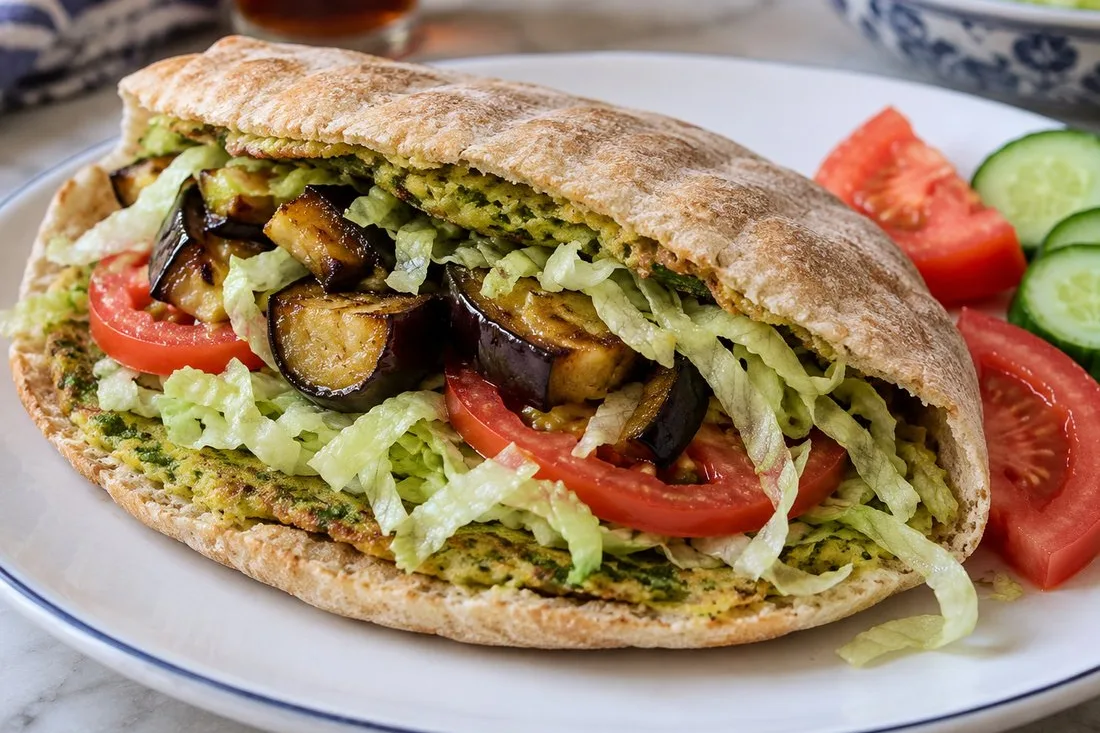
If a child eats little meat, the filling can go into a baladi bread sandwich or small eggplant pizzas. You can continue in that direction with our piece on healthy food kids actually like, which has a small cottage cheese pizza in the same home-cooked spirit.
How do I prepare it ahead and store it, and how long does it keep?
This dish helps when work is busy, because every part can be prepared on its own. The roasted eggplant and filling can be made the day before, with assembly and baking half an hour before dinner. The yogurt sauce waits in the fridge from the morning.
On food safety, the USDA advises refrigerating cooked food within two hours, or one hour when the temperature is above 32°C, which matters in an Egyptian summer [12]. Leftovers then keep in sealed containers in the fridge for 3 to 4 days, according to the FoodSafety.gov chart [13]. Reheating should bring the food to full heat all the way through, and only once.
One point that gets forgotten: staph bacteria multiply when food sits at room temperature and produce toxins that heating does not destroy, so avoid leaving the tray on the table for hours. The CDC explains that the answer is hand washing, quick cooling and not leaving food in warm conditions [11].
For practical storage, divide leftover stacks into single containers and write the date. The freezer holds them for weeks, and it is best to thaw them in the fridge overnight before reheating. Yogurt sauce does not freeze well, so make it fresh.
All of this saves the family time: on Sunday roast the eggplant and make the filling, and mid-week assemble and bake. In this way one tray covers two meals.
What can I swap if someone has diabetes, high cholesterol or does not eat beef?
Swaps are easy because the tray is built from separate parts:
1. Diabetes: keep the portion at one stack with half a cup of bulgur and increase the vegetables beside it. The CDC recommends the plate method: half the plate non-starchy vegetables, a quarter protein and a quarter starch [10]. The stack with bulgur covers the protein and starch quarters. 2. High cholesterol: use less cheese, more herbs and olive oil only, which goes with the WHO advice to favour unsaturated fats [1]. If the test results themselves need reading, the article on high cholesterol explains how to understand the result and decide on the next step. 3. Insulin resistance: the fibre in eggplant and bulgur helps, and this is covered in the article on an insulin-resistance diet, which discusses a balanced plate without banning starch entirely. 4. Someone who dislikes beef: replace half the meat with cooked brown lentils, or use minced chicken entirely. 5. Gluten sensitivity: swap the bulgur for cooked brown rice, as the recipe itself suggests. 6. Dairy allergy: the tray works without mozzarella, and a tahini and lemon sauce replaces the yogurt.
There is no swap that suits everyone, so change one part at a time to learn what worked.
Baked eggplant is naturally compatible with many home diets and does not need two recipes: one stack, and a side that changes by person.
Is home cooking enough or should I see a dietitian?
Well-made home cooking is a strong foundation, but it does not solve everything. If a child is not growing well, or someone at home has diabetes, high blood pressure, high cholesterol or anaemia, or someone is losing weight fast without a reason, it is better to follow a plan built on their tests than a general recipe. The numbers quoted here (380 kcal and 29 g of protein) are Recipe Guide averages, and real needs differ from person to person.
If your family wants to build a weekly schedule around dishes like this, the clinical nutrition team can distribute protein and starch across the week to suit each member.
Book a nutrition consultation at La Rose clinics in Maadi or the 5th Settlement, and the clinical nutrition team will work out the quantities with you.
In the same series, the article on healthy romantic dinner offers a steak with mushroom sauce, the guide to healthy food kids actually like has a small cottage cheese pizza, and the article on healthy Egyptian breakfast has a no-fry taameya pancake. For a snack to finish the day, see our write-up on healthy date and granola bars, and for a morning idea, the article on a healthy egg, yogurt and chickpea breakfast.