A high-protein breakfast: what should you eat before or after the gym in the morning?
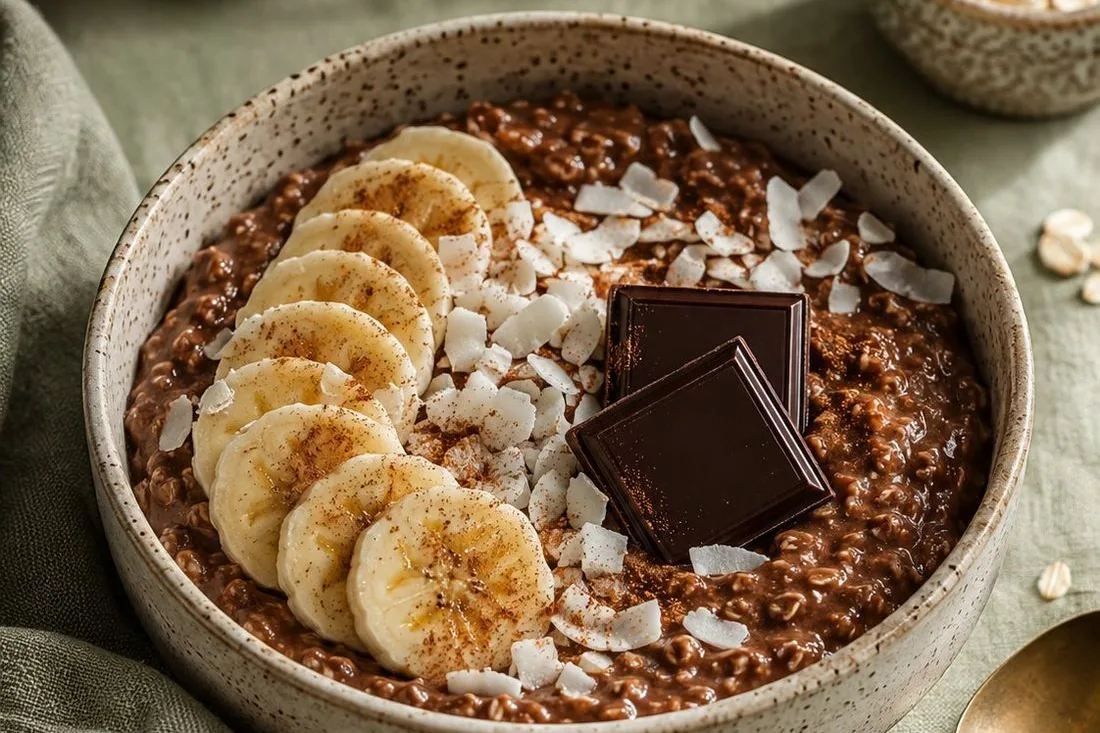
If your question is "what should I eat before or after the gym in the morning?", the short answer is a hot chocolate oat bowl with about 41 g of protein and 590 kcal, ready in roughly 13 minutes from the moment the milk goes on the heat. It suits the hours before and after training very well, and it suits anyone who wants a breakfast that lasts until lunch: an office worker, a student, or a mother making her own meal before the house wakes up.
The idea is simple. A traditional Egyptian breakfast of bread, cheese or ful medames is a good one, but for many people it lands at only 12 to 15 g of protein. The International Society of Sports Nutrition suggests 1.4 to 2.0 g of protein per kilogram of body weight per day for people who train, and describes a useful single serving as roughly 20 to 40 g [1]. This bowl covers most of a breakfast share in one step.
The recipe comes from the La Rose Recipe Guide and uses cups and spoons, so it works in any kitchen without a scale. Below you will find the full arithmetic behind the 41 g, the timing around training, how to adjust the bowl for gaining or losing weight, and what to do when you have no protein powder at all.
A breakfast that keeps you full and supports muscle: how much protein do you need?
The number comes from your body weight, not from fashion. Multiply your weight by 1.4 and by 2.0 and you get a daily range: for a 70 kg person that is 98 to 140 g, for a 90 kg person 126 to 180 g [1]. Then spread it over about 4 meals, because the recommendation is to space protein roughly every 3 to 4 hours instead of taking most of it in one late dinner [1].
In practice a good breakfast delivers about 25 to 40 g. Less is not wrong, you just make it up in later meals. For fullness, protein digests more slowly than refined carbohydrate, and Harvard treats good protein sources as one part of a balanced plate next to vegetables and whole grains [2]. Oats are a whole grain themselves, and their beta-glucan fibre stays in the stomach longer [3].
One important point: eating more protein than you need does not build muscle faster. To see the difference between enough and too much, read the article on whether more protein always gives better results, which answers it with numbers. The World Health Organization also recommends a varied pattern with whole grains, legumes, vegetables and fruit, not protein alone [8].
Where exactly do the 41 g of protein come from?
Per serving: 590 kcal, 41 g protein, 69 g carbohydrate, 17 g fat. Here is the approximate protein breakdown.
Half a cup of rolled oats (about 40 g) gives roughly 5 g. A cup of low-fat milk gives about 8 g. One scoop of protein powder (about 30 g) gives around 24 g if the powder is close to 80 percent protein, which is common. A tablespoon of unsweetened peanut butter adds 3 to 4 g. Half a banana, the dark chocolate and the coconut add under 2 g together. The total lands near 41 g.
The 69 g of carbohydrate is not a flaw here: most of it comes from oats, milk and banana, so it arrives with fibre and vitamins instead of refined sugar. Large reviews link more fibre and whole grains in the diet with lower risk of heart disease and type 2 diabetes [5][6], and fibre specifically with lower cardiovascular risk [7].
If your powder is lower in protein (say 60 percent), the total drops to about 34 g. Read the label and do the sum: scoop weight multiplied by protein percentage.
What does each ingredient do, and how do you get chocolate sweetness without extra sugar?
Oats are the base: slow carbohydrate and fibre. Milk gives the creamy texture and calcium, and the NHS puts adult needs at about 700 mg a day, with dairy among the main sources [11]. The chocolate protein powder brings the flavour and most of the numbers. Peanut butter adds unsaturated fat and a smooth feel. Banana is the natural sweetener, and cinnamon gives a sense of sweetness with almost no calories.
About sweetness: the recipe relies on half a banana, two small squares of dark chocolate (about 10 g) and the sweetness already in the powder. For a sweeter bowl, add more cinnamon or a chopped date instead of sugar, because the World Health Organization advises keeping free sugars under 10 percent of daily calories [8]. If the taste turns slightly bitter once sugar is gone, the small pinch of salt rebalances it.
The coconut does more than decorate: it adds a crunch that keeps the bowl from feeling monotonous. If you dislike coconut, swap in chia seeds or a few flaked almonds without moving the numbers much.
How do you make protein oats without lumps?
The whole method is four steps, and the full recipe with quantities sits in the Recipe Guide: Full recipe in the Recipe Guide.
First, put half a cup of oats, a cup of milk and a pinch of salt (an eighth of a teaspoon) in a small pot over medium heat until it starts to boil gently. Second, lower the heat and cook 5 to 7 minutes, stirring now and then until creamy. Third, the secret: take the pot off the heat, and only then stir in the scoop of protein powder and the spoon of peanut butter. Fourth, pour the hot oats into a bowl and top with banana, coconut, dark chocolate and cinnamon.
Why off the heat? Protein exposed to direct boiling clumps and tastes chalky. If lumps appear anyway, do one of two things: add a splash of cold milk and stir fast, or beat the mixture with a small fork for a minute. For a dairy-free version, unsweetened soy milk gives nearly the same numbers.
Before the gym or after it? Timing around Egyptian meal hours
Both work, and what matters is tuning it. If you train early in the morning and have time, eat the full bowl 90 minutes to 2 hours before, so the stomach settles. If you train fasted or time is tight, eat half the bowl (half a cup of milk, half a scoop, a little less oats) about 30 minutes before, and finish the rest after training.
After training there is no razor-thin magic window, but the International Society of Sports Nutrition notes that total daily protein and its distribution matter most, with a 20 to 40 g dose every 3 to 4 hours being appropriate [1]. So you can eat the bowl before or after training, whichever suits your day. So if you finish at 8 and eat at 9, you are on time. If you train in the afternoon or at night, this bowl becomes a light post-workout dinner because it digests easily.
For more on eating around workouts in general, read the article on What to Eat Before and After a Workout: A Practical Guide, which builds everything from home food. And do not forget fluids: the NHS suggests roughly 6 to 8 glasses a day, more with sweat and exercise [12].
What should I eat to gain weight, and how do I trim the same bowl for losing it?
The bowl is flexible because it runs on a cup and a scoop. To gain weight, raise the oats to three quarters of a cup, use a whole banana and increase peanut butter to two tablespoons. The bowl reaches roughly 800 kcal and 48 g protein, which suits someone trying to gain gradually. Weight gain comes from a small, steady calorie surplus, not one giant meal a day, and protein should stay inside the 1.4 to 2.0 g per kilogram range [1].
To lose weight, drop the peanut butter, coconut and dark chocolate and use half milk, half water. The bowl falls to about 420 kcal with 37 g protein. You keep protein high to protect muscle and feel full. These numbers are estimates, so adjust them to what you actually buy.
In both cases this bowl is one meal in your day, not the whole solution: complete the rest with varied food on the Healthy Eating Plate pattern, half vegetables and fruit, a quarter protein, a quarter whole grains [9].
No protein powder? High-protein breakfasts from everyday food
The powder is not essential. You can build the bowl on ordinary food: replace the scoop with half a cup of Greek or strained yoghurt, and whisk in two eggs over gentle heat during the last two minutes. That reaches about 28 to 32 g of protein from home ingredients.
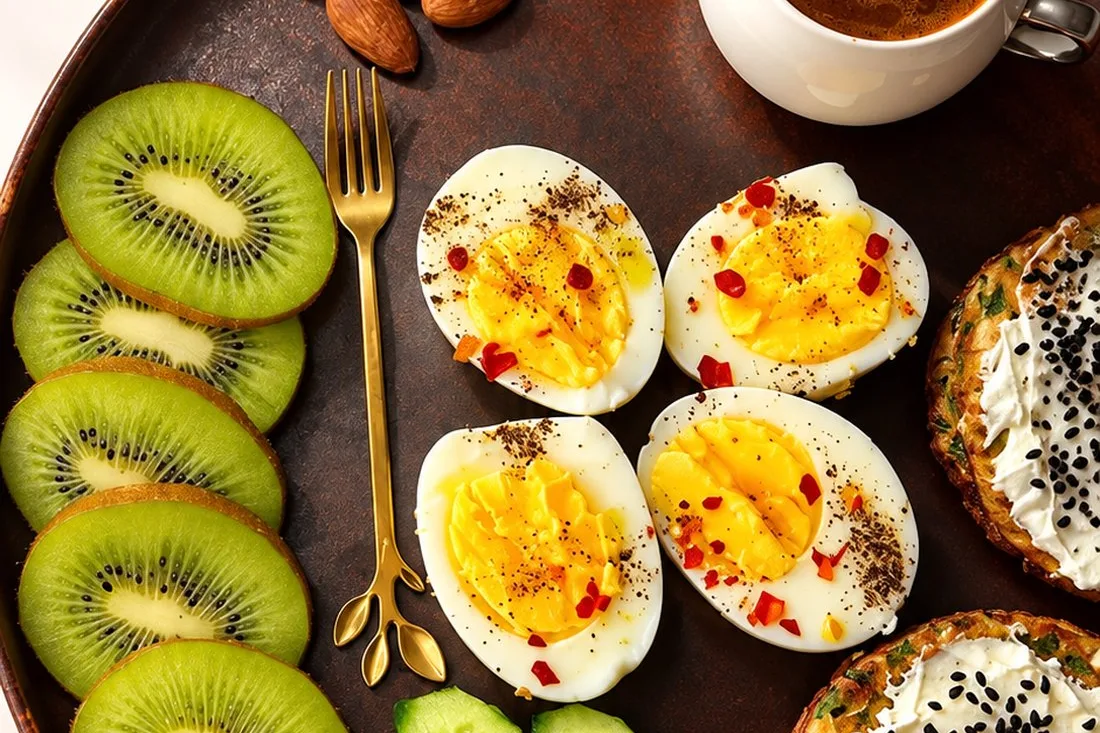
Egypt has plenty of practical alternatives: a plate of ful medames with olive oil and a boiled egg, or cottage cheese with cucumber and baladi bread, or yoghurt with fruit and nuts. A ful plate gives plant protein and fibre, and Harvard counts legumes as an excellent source of both [2].
You can also rotate through the week: this bowl one day, the egg-base skillet pizza another day as in the article on healthy pizza for weight loss, and a post-workout sweet as in the article on high-protein healthy desserts. For a lighter yoghurt idea, see the article on the Greek yogurt protein bowl. Just do not let powder replace real food: sports supplements complete a diet, they do not take its place.
Can you prepare it ahead? Make-ahead and safe storage
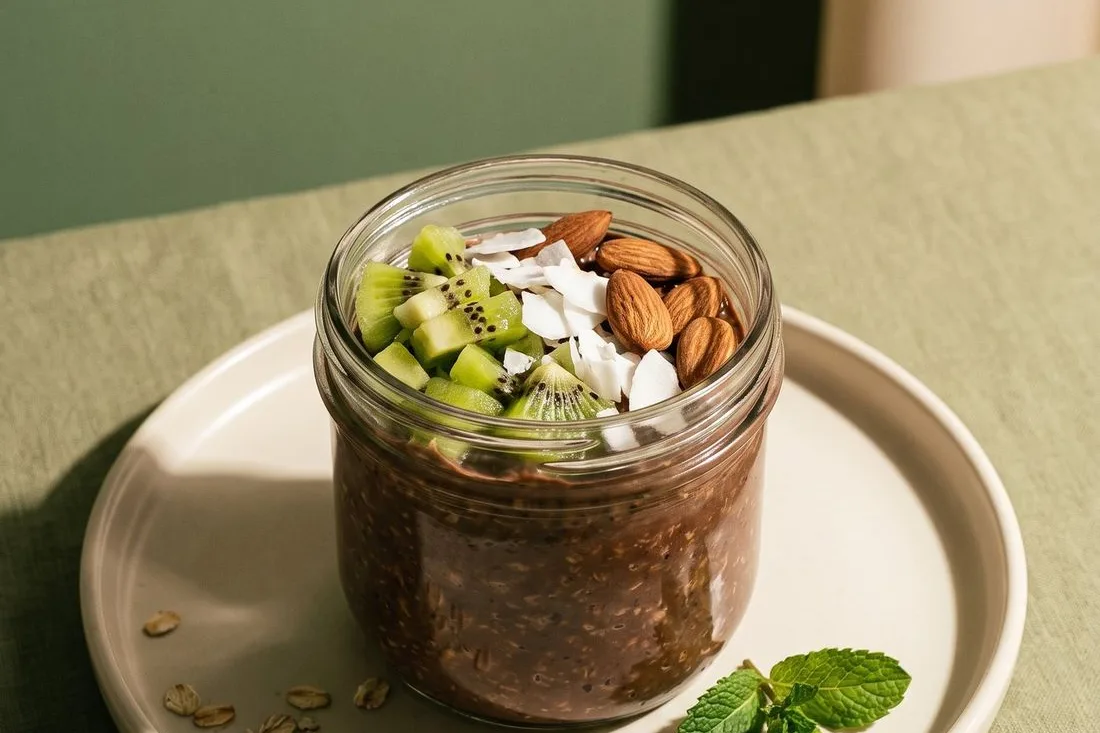
Oats cope well with advance prep if done properly. Cook only the oats and milk (no powder or peanut butter) in an amount for two days, and once cooled, split it into small containers and refrigerate within two hours of cooking. The CDC advises chilling cooked food promptly and not leaving it at room temperature for long [10]. At serving time, reheat, then stir in the powder and peanut butter off the heat or after the microwave.
The point is that oats keep absorbing liquid while they sit, so they turn heavy. Add a splash of milk or water while reheating to bring back the creamy texture. Do not slice the banana too far ahead because it browns; add it fresh.
For a whole week, keeping the oats in the fridge up to about two days is the safe plan. And if you want ready lunches alongside this breakfast, see the article on healthy meal prep meals about the chicken and rice you cook once a week.
Three other versions of the same bowl when the morning is tight (numbers are estimates per portion):
- Cold overnight oats: 1/2 cup oats with 1 cup low-fat milk, a spoon of cocoa and a spoon of protein powder, in a closed jar in the fridge overnight. It keeps 1 to 2 days in the fridge, and one portion is about 450 kcal and 39 g protein. The article on chocolate banana overnight oats has the full details. - Baked oats: 1/2 cup oats with 1/3 cup milk, an egg, half a banana and a spoon of protein powder in a small dish, baked at 180 degrees Celsius for 20 to 25 minutes. One portion is about 470 kcal and 42 g protein, and it keeps 3 days in the fridge. - Portable oat cakes: a batch of 6 from two cups of oats, a cup of milk, two eggs, a banana and two spoons of protein powder, baked at 180 degrees Celsius for 18 minutes. One cake is about 170 kcal and 14 g protein, two make a snack, and they keep 3 days in the fridge or a month in the freezer.
For the baked versions, reheat until steaming hot all the way through before eating.
Who is this bowl for, and when is a dietitian's opinion worth having?
The bowl suits a wide range of people: someone training at the gym or at home, an office worker who wants breakfast to last until lunch, a student in exam season, or a family tired of the same breakfast routine. If you are sensitive to dairy, use soy milk; if you are sensitive to peanuts, use ground sunflower seed butter.
The numbers here are general estimates, and some situations need a personal calculation: kidney disease, tracking blood sugar, digestive disorders, or preparing for competition. In those cases a written plan built on your tests and goal beats a general figure. If you want to follow up with a dietitian, you can book here: Book a nutrition consultation.
And remember that a varied eating pattern is the foundation [8]. The oat bowl is just one good step inside it.