Healthy pizza without dough: how do I make a skillet pizza on an egg base?
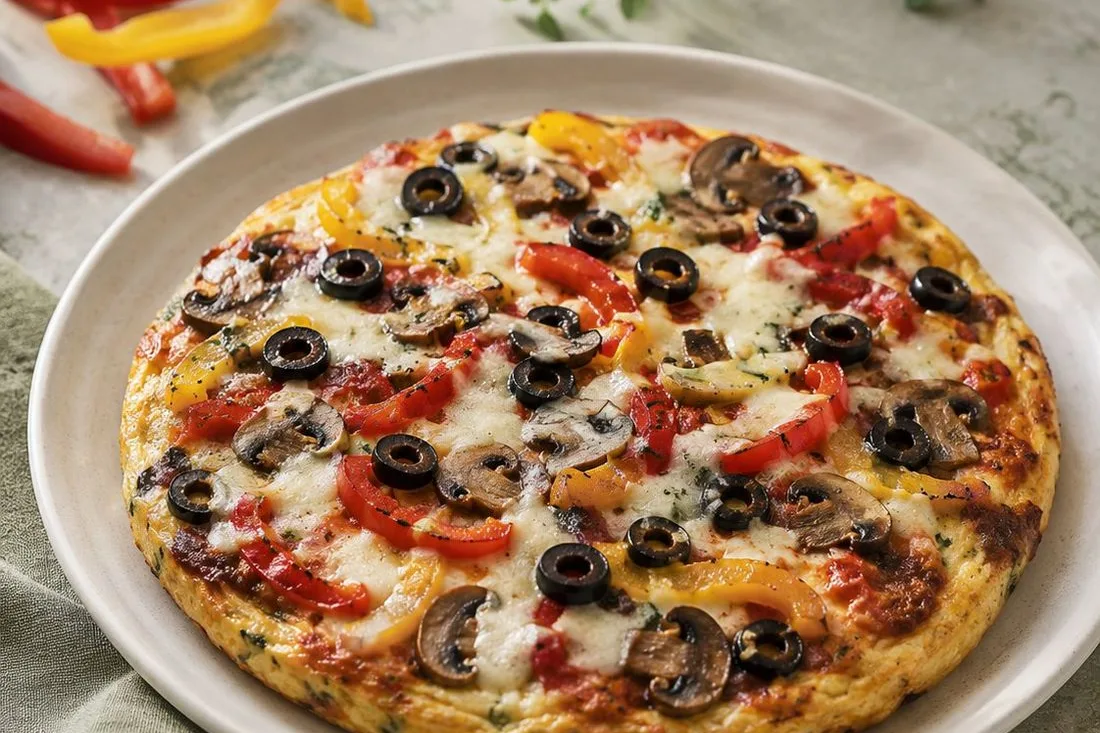
The egg-base pizza is a skillet pizza that replaces the dough with a base of 3 eggs, so one serving comes to about 305 kcal, 23 g protein, 11 g carbohydrate and 19 g fat. It is ready in under 15 minutes in a small pan on the stove, with no oven, no kneading and no waiting.
The idea suits anyone who wants a lighter pizza: the person watching their weight, the person trimming starches, the person who trains and wants a protein dinner, the family looking for an alternative to delivery pizza, and the student who owns just one pan. It also keeps the real pizza feeling: tomato sauce, stretchy cheese and colourful vegetables.
In this article you will see why refined dough is the problem and not pizza itself, how to stop the base from tearing, when to cover the pan and when to lower the heat, Egyptian swaps such as cottage cheese, how the pan compares with the oven and the air fryer, how to reheat leftovers, and how to serve it with a salad so it truly fills you.
Why isn't regular pizza friendly to weight loss, and is the dough the problem?
Restaurant pizza is not bad because it is pizza; it is because the portion is large and the dough is refined white flour, topped with full-fat cheese and processed meats such as pepperoni and sausage. One serving can pass 600 kcal and often carries little protein for those calories, and how full you feel afterwards varies from person to person.
Refined carbohydrate is digested faster than whole grains. Scientific reviews link whole grains and fibre to better health outcomes than refined grains [7][10][11]. As for processed meats, the World Health Organization advises limiting them as part of a healthy eating pattern [8].
The approach here is different: an egg base that gives protein and fullness in place of refined starch, plenty of vegetables in place of processed meat, and a small amount of cheese (only 10 g of mozzarella) that gives flavour without heaviness. That is exactly the difference between a pizza that sends you hunting for another meal in an hour and one that carries you through half the day.
What goes in it, and why is each ingredient there?
The base: 3 large eggs with a quarter teaspoon of salt, an eighth of a teaspoon of pepper and half a teaspoon of olive oil to grease the pan. The egg is the dough itself, and each egg gives about 6 g protein, so the three eggs account for most of the 23 g in a serving.
The sauce: 2 tablespoons of tomato sauce and a quarter teaspoon of oregano. Use tomato sauce with no added sugar if you can, or crush fresh tomatoes. The toppings: a quarter cup of diced red and yellow pepper, a quarter cup of mushrooms, a tablespoon of black olives and 10 g of grated mozzarella. The vegetables add colour and fibre, and fibre is an important part of fullness and digestive health [7].
About the eggs: results differ by study type: the observational umbrella review [5] set no amount for eggs, while the meta-analysis of randomised trials [6] found a modest rise in LDL cholesterol when egg intake increased. So the suitable amount depends on your whole diet and your situation, and if you have high cholesterol or heart disease, check with your doctor.
If you have a gluten allergy or coeliac disease: eggs and vegetables are naturally gluten free, but read the labels of the sauce, spices and cheese, because some can contain traces of gluten, and use clean tools and surfaces kept for gluten-free cooking to avoid cross-contamination.
Pizza in a pan without dough: the steps in detail
The complete quantities and steps are here: Full recipe in the Recipe Guide. Beat the eggs with the salt and pepper in a bowl. Heat the small non-stick pan over medium heat with the oil, pour in the eggs and swirl the pan to spread them in an even layer. Lower the heat until the base is set underneath but still soft on top, which takes about two minutes.
Spread the tomato sauce leaving a small border, sprinkle the oregano, arrange the pepper, mushrooms and olives and top with the mozzarella. Cover the pan on low heat for 3 to 4 minutes until the cheese melts and the vegetables soften. Slide the pizza gently onto a plate by tilting the pan.
Tip: a small pan gives a thicker base that tears less. If the base is thin it will break when you move it. For variety, use thin courgette slices in place of the mushrooms.
How do I keep the base from tearing, and when do I cover the pan?
Tearing usually has one of three causes: high heat that scorches the bottom before the middle sets, a pan that is too large so the base is thin, or moving it too early. If the base sticks, the pan is not non-stick enough or the oil is too little. Add half a teaspoon of oil and spread it with a paper towel.
Signs of readiness: the surface is still slightly glossy but does not run when you tilt the pan. That is when to add the sauce. If you wait until the surface dries completely, the base turns rubbery. The lid does the oven's work: it traps steam, melts the cheese and softens the vegetables, so use a lid that covers the pan well, or an upturned plate.
On heat: medium for pouring, low for covering. After 3 minutes under the lid, run a simple test: shake the pan, and if the base moves as a single piece it is ready. Safety matters here: cook the eggs through and not half-set, because the US Food and Drug Administration advises cooking eggs until yolks and whites are firm [3].
What are the Egyptian swaps? Cottage cheese, vegetables and add-ons
Mozzarella can swap for cottage cheese, a little grated Romi cheese, or feta. A tablespoon of cottage cheese over the sauce adds protein and lowers the fat. Bell peppers can swap for sliced tomato, spring onion or boiled, squeezed spinach. Tuna in water adds protein if you want it heavier.
For vegetables: grated and squeezed courgette, sliced roasted aubergine, or rocket leaves added off the heat. If you want an Egyptian flavour: a pinch of cumin, thyme or chilli. About the sauce: a teaspoon of tomato paste thinned with water and garlic makes a quick sauce. It is better to avoid full-fat processed cheese and mortadella.
On other days try the morning idea in the article on a high-protein breakfast, a simple sweet after the pizza from the article on high-protein healthy desserts, and for a whole week of cooking the article on healthy meal prep meals. This makes the egg pizza part of a system rather than a standalone meal.
Pan, oven or air fryer? Which is best for this pizza?
The pan is the fastest and easiest: 10 minutes, no oven preheating, and a soft base. The oven (200 degrees, 12 to 15 minutes) gives a firmer base and suits making more than one serving, but takes preheating time. The air fryer (180 degrees for about 8 minutes in a small suitable tray) sits between them and gives a browned top.
If you make more than one serving, spread the base on a greased oven tray and bake it 8 minutes before the toppings. Do not overdo the sauce and cheese, because a thin base will turn soggy. For children: dice the vegetables very small or blend them into the sauce.
On calories: 305 kcal per serving this way, but if you raise the cheese to 30 g, calories rise by about 80. Choose the method that gets you the best consistency, because the most important thing is that you actually make it.
Are there other healthy pizza bases besides eggs? Cottage cheese, chickpea and cauliflower
Yes, and searches for diet pizza usually turn up three common alternatives. A cottage cheese base is made by mixing a cup of cottage cheese with an egg and half a cup of ground oats and baking it 20 minutes; it comes out heavier and higher in protein. A chickpea base is made from chickpea flour and water browned in the pan like a crepe; it suits a plant-based option and carries more fibre. A cauliflower base needs grating, squeezing and thorough drying, takes longer and crumbles easily.
I find the egg base quicker, simpler and lighter on equipment, with no heavy work, and that is its practical advantage. But variety is nice: the chickpea base gives a different flavour and brings the legumes that Harvard recommends eating regularly [2]. Any of these beats refined dough if you are trying to cut refined starch.
But do not assume the word "diet" on a recipe makes it light automatically. Lots of cheese and lots of oil raise calories quickly, and measuring by spoon and gram is the safeguard. If you want to stay at 305 kcal, stick to 10 g of mozzarella and a tablespoon of olives.
What do I serve with it, and how do I reheat leftovers?
Serve it with a big salad plate: lettuce, cucumber, rocket and tomato with lemon juice and a little olive oil. The salad adds volume and fibre with hardly any calories, and moves your plate toward Harvard's model: half the plate vegetables [9]. If you want a bigger meal, add half a cup of chickpeas or a small slice of brown bread.
On reheating: cooked egg dishes reheat best in a non-stick pan on low heat with a drop of water and a lid, or in the air fryer for 3 minutes at 160. The microwave makes it rubbery. If you will eat it again, it must be refrigerated within two hours and eaten within a day or two, because food left in the warmth is exposed to bacterial growth [4].
For people watching their blood sugar: each serving carries only 11 g carbohydrate, which fits most meal plans reasonably, but check your own plan. The CDC's diabetes meal planning guidance is a starting point [12].
Does this pizza fill you up, and is 23 g of protein enough for dinner?
Fullness comes from three things: protein, fibre and volume. The base provides the protein, the vegetables provide fibre and volume, and the salad completes the picture. The International Society of Sports Nutrition suggests a serving of 20 to 40 g per meal [1], so 23 g is within the range, but at the lower end. If you train or have a larger body, add a fourth egg or some cottage cheese.
Harvard stresses that the best protein sources are eggs, legumes, fish and poultry [2]. It helps here to tell real hunger from craving: if you are hungry an hour after a nourishing dinner, drink water and wait ten minutes before deciding. The article on feeling hungry soon after a meal explains the reasons.
For those who train, it counts as a post-workout meal, with details in the article on what to eat before and after a workout. For those losing weight, focus on keeping muscle as in the article on protecting muscle while losing weight. And protein foods are covered in the article on high-protein foods that help with weight loss.
Who needs a specialist's input before relying on this pizza?
If you have an egg or milk allergy, kidney disease, a blood sugar condition that needs exact counting, are pregnant and want to be sure the eggs are fully cooked, or want an organised weight plan, consult a specialist. The numbers here are general and based on the listed ingredients, so any change in quantity or type of cheese will move them.
In everyday cooking a few small mistakes repeat with this pizza: strong heat from the first second burns the base underneath and leaves the top raw, too much sauce makes the base soggy, and too much cheese turns a light meal into a heavy one. Small portions and covering the pan at the right moment solve most of it, and it helps to cook the recipe twice before judging it.
If you eat it for dinner more than twice a week, rotate the toppings between tuna, boiled chicken and different vegetables, and let the rest of the day carry legumes, fruit and fresh vegetables, so the overall picture of your eating stays balanced rather than just eggs and cheese.
If you would like a written plan for your own case, you can book here: Book a nutrition consultation.